
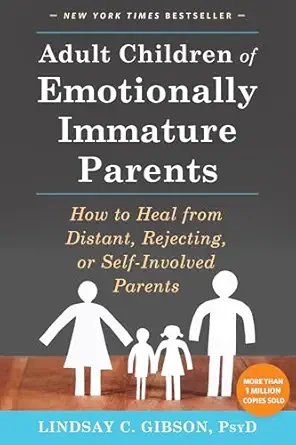
Adult Children of Emotionally Immature Parents Summary
By Lindsay C. Gibson
How to Heal from Distant, Rejecting, or Self-Involved Parents
Summary preview
Some parents look caring from the outside, yet leave their children feeling lonely, unseen, or strangely guilty for having needs at all. That is the quiet pain this book brings into the light. It speaks to adults who grew up with parents who could provide food, shelter, advice, or even affection at times, but could not offer the steady emotional connection a child naturally longs for. The wound is often hard to name because nothing dramatic may have happened. Instead, there was a constant mismatch. The child reached for comfort, understanding, or simple emotional safety, and the parent responded with self absorption, dismissal, unpredictability, or neediness. Lindsay C. Gibson helps you see that emotional immaturity is not just about acting childish. It means being unable to handle feelings in a deep, flexible, and empathic way. Emotionally immature parents are often driven by anxiety, by rigid habits, by old hurts they never faced, and by a strong need to protect their own fragile inner world. Because of that, they make the relationship revolve around them. Their children learn to adapt. They become watchful, pleasing, self doubting, and deeply responsible for everyone else’s mood. Later, as adults, they may feel empty, overgiving, trapped in one sided relationships, or unsure of who they really are. The great gift of this book is that it gives language to experiences many people have carried alone for years. It explains why you may have felt invisible in your own family. It shows why talking to your parent about your pain may have led nowhere, or even made things worse. It helps you understand the different styles these parents tend to have, from explosive and chaotic to passive and withdrawn. And most of all, it offers a way out. You begin to stop chasing the impossible dream that these parents will finally become who you needed. You learn to protect your inner life, set realistic expectations, and build relationships based on mutual respect and emotional honesty. This is not a book about blame. It is about clarity. It asks you to look at your childhood with new eyes so you can stop mistaking survival patterns for your true self. As Lindsay C. Gibson makes clear, recovery begins when you trust your own perceptions. Once you see the pattern, you can step out of old roles and start living from your real feelings, your real values, and your real capacity for connection. What follows is a compassionate map for that awakening.
Sign up to continue reading
Get access to full book summaries, audio of the summaries, and many more.
Similar Books
Books with a similar vibe—explore more like this.
What Your ADHD Child Wishes You Knew
Sharon Saline
Working Together to Empower Kids for Success in School and Life
4.7 (22) mins
What Your Childhood Memories Say About You
Kevin Leman
And What You Can Do about It
4.7 (17)23 mins
Hold On to Your Kids
Gordon Neufeld & Gabor Maté
Why Parents Need to Matter More Than Peers
4.6 (973)24 mins

Who's the Favorite?
Catherine Carr
The Loving, Messy Realities of Sibling Relationships
4.6 (9)22 mins
The Power of Neurodiversity
Thomas Armstrong
Unleashing the Advantages of Your Differently Wired Brain
4.5 (829)27 mins
Raising Securely Attached Kids
Eli Harwood
Using Connection-Focused Parenting to Create Confidence, Empathy, and Resilience
4.5 (726)25 mins
Why Love Matters
Sue Gerhardt
How Affection Shapes a Baby's Brain
4.5 (386)29 mins
The Optimistic Child
Martin E.P. Seligman
A Proven Program to Safeguard Children Against Depression and Build Lifelong Resilience
4.5 (29) mins

Permission to Feel
Marc Brackett
Unlocking the Power of Emotions to Help Our Kids, Ourselves, and Our Society Thrive
4.4 (362)29 mins
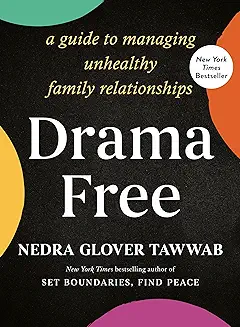
Drama Free
Nedra Glover Tawwab
A Guide to Managing Unhealthy Family Relationships
4.4 (582)23 mins