

AI Superpowers Summary
By Kai-Fu Lee
China, Silicon Valley, and the New World Order
Summary preview
Artificial intelligence is not some distant science fiction dream. It is not a clever machine waking up one morning and deciding to rule the world. It is a tool, a force, and above all a mirror. It reflects the strengths of the societies that build it, the values of the people who deploy it, and the weaknesses of the systems it enters. In AI Superpowers, Kai Fu Lee invites us to look at that force clearly, without fantasy and without fearmongering. He asks us to see where AI really came from, why it is advancing so quickly now, and why the struggle to lead this new era is centered not in one country alone but in two. The United States and China are not simply competing to make better software. They are shaping a new global order. The heart of the story is simple. The first age of AI was powered by discovery, by research, by scientific breakthroughs. That age mattered enormously, and America led it with world class universities, famous labs, and visionary engineers. But the current age of AI is driven by implementation. It runs on data, computing power, talented engineers, fierce entrepreneurs, and a culture willing to iterate fast, copy what works, and scale with astonishing speed. That shift changes everything. It means the countries and companies that can feed AI with oceans of real world data and then turn models into products may hold the advantage, even if they were not the first to invent the core ideas. This is where the book becomes much more than a business or technology argument. It becomes personal, political, and deeply human. The story moves from laboratories and startup offices into hospitals, classrooms, call centers, trucking fleets, and factory floors. It asks who will benefit from AI and who will be displaced by it. It asks why some people still imagine technology as a pure force for progress while others see it as a machine of exclusion. It asks what happens when software learns to do tasks once thought safe for humans, from analyzing scans to approving loans to answering customers with patient, tireless precision. There is also a second layer to the book, one that gives it unusual emotional force. The writer does not speak only as an investor or technologist. He speaks as someone who spent decades inside the rise of both American and Chinese tech, and as someone whose life was interrupted by cancer. That personal reckoning changes the book's center of gravity. What begins as a lively account of competition and innovation gradually becomes a meditation on work, dignity, compassion, and what human beings must protect in an age of intelligent machines. So the real question is not whether AI will transform the world. It already is. The real question is whether we will use this power only to optimize profit and efficiency, or whether we will also build a society that values care, creativity, and love. That is the challenge placed before us.
Sign up to continue reading
Get access to full book summaries, audio of the summaries, and many more.
Similar Books
Books with a similar vibe—explore more like this.
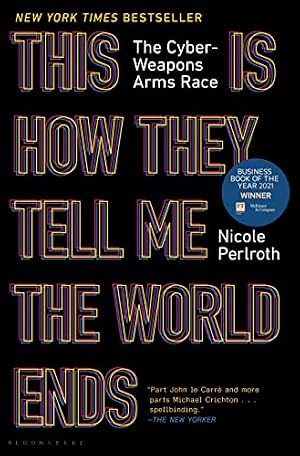
This Is How They Tell Me the World Ends
Nicole Perlroth
The Cyberweapons Arms Race
4.8 (64)33 mins

Cobalt Red
Siddharth Kara
How the Blood of the Congo Powers Our Lives
4.6 (4) mins
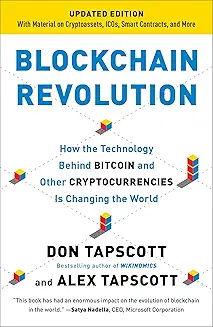
Blockchain Revolution
Don Tapscott & Alex Tapscott
How the Technology Behind Bitcoin Is Changing Money, Business and the World
4.5 (483)26 mins
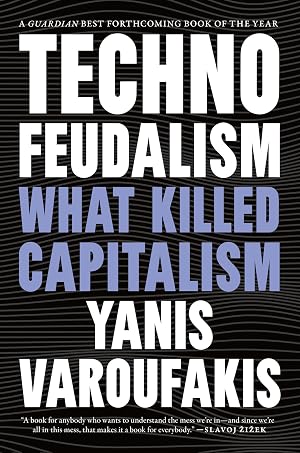
Technofeudalism
Yanis Varoufakis
What Killed Capitalism
4.5 (39) mins
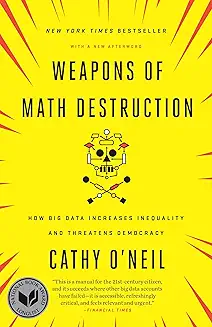
Weapons of Math Destruction
Cathy O'Neil
How Big Data Increases Inequality and Threatens Democracy
4.3 (1617)20 mins
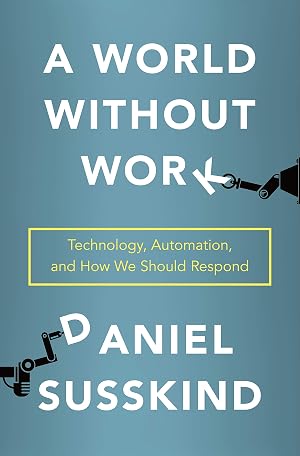
A World Without Work
Daniel Susskind
Technology, Automation, and How We Should Respond
4.3 (32)25 mins
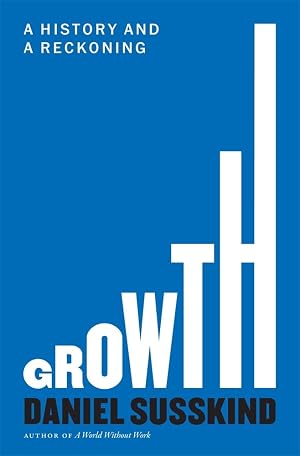
Growth
Daniel Susskind
A History and a Reckoning
4.3 (11) mins
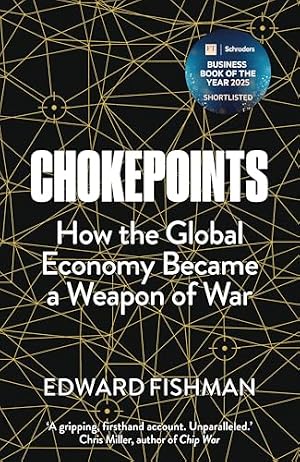
Chokepoints
Edward Fishman
How the Global Economy Became a Weapon of War
4.3 (16) mins
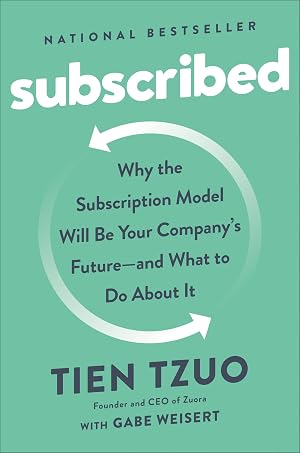
Subscribed
Tien Tzuo with Gabe Weisert
Why the Subscription Model Will Be Your Company's Future – and What to Do About It
4.3 (32) mins
Streaming Wars
Charlotte Henry
How Getting Everything We Wanted Changed Entertainment Forever
4.3 (3)23 mins