
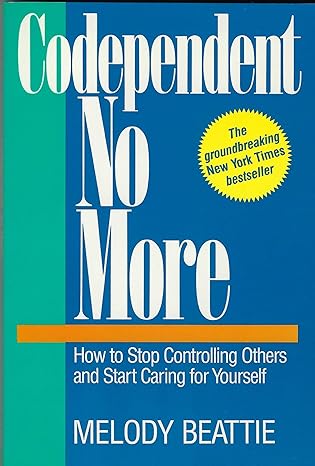
Codependent No More Summary
By Melody Beattie
How to Stop Controlling Others and Start Caring for Yourself
Summary preview
There is a certain kind of pain that comes from loving someone so much that you forget where you end and they begin. You worry about them, manage them, rescue them, cover for them, obsess over their moods, and slowly lose your own center. You tell yourself you are helping. You call it loyalty, devotion, patience, responsibility. But somewhere along the way, your life begins to revolve around another person’s problems, choices, addictions, needs, and chaos. That is the painful trap this book wants to name and gently lead you out of. Melody Beattie wrote this book for people who feel tied in knots by somebody else’s behavior. Often that somebody is an alcoholic, an addict, or another troubled person, but the message reaches much further than addiction. It is for anyone who has become so focused on controlling, pleasing, fixing, or enduring another person that they have stopped living fully themselves. The heart of the book is simple and powerful. You cannot control other people. You cannot cure them by suffering enough, loving hard enough, or thinking about them constantly. What you can do is learn to care about yourself, set boundaries, feel your feelings, and build a life that belongs to you. The book begins by helping you recognize codependency, not as a cold label, but as a pattern of survival. It grows in homes and relationships where there is fear, confusion, instability, addiction, neglect, or emotional dishonesty. People learn to scan the room, predict trouble, smooth things over, and hold everything together. They become experts at reacting to other people and strangers to their own needs. From there, the book moves toward one of its most famous ideas, detachment. This does not mean becoming cruel, indifferent, or abandoning the people you love. It means stepping back from the exhausting belief that their life is yours to manage. As the pages unfold, you are asked to look honestly at behaviors that may feel familiar. Caretaking. Control. Denial. Repression. Weak boundaries. Anger turned inward. Guilt for resting. Fear of being left. Difficulty having fun. Trouble making decisions. The book names these patterns with unusual tenderness. It does not shame you for them. It says, in effect, of course you learned this. Of course you are tired. And now, there is another way. That other way is recovery. It means paying attention to what you feel, what you need, and what is your responsibility. It means learning to receive support, to stop rescuing, to allow consequences, to trust a Higher Power if that language helps you, and to practice self care not as a reward, but as a basic right. This is a practical, compassionate guide to coming home to yourself. It does not ask you to stop loving people. It asks you to stop disappearing because of them.
Sign up to continue reading
Get access to full book summaries, audio of the summaries, and many more.
Similar Books
Books with a similar vibe—explore more like this.
The Opposite of Settling
Case Kenny
Get What You Want in Love and Life, Without Losing Your Spark
4.8 (13) mins

Set Boundaries, Find Peace
Nedra Glover Tawwab
A Guide to Reclaiming Yourself
4.7 (819)27 mins

The Seven Circles
Chelsey Luger & Thosh Collins
Indigenous Teachings for Living Well
4.7 (13) mins
Til Stress Do Us Part
Elizabeth Earnshaw
How to Heal the #1 Issue in Our Relationships
4.6 (139)20 mins
The Inner Work
Mathew Micheletti & Ashley Cottrell
An Invitation to True Freedom and Lasting Happiness
4.6 (76)22 mins
How to be Love(d)
Humble the Poet
Simple Truths for Going Easier on Yourself, Embracing Imperfection & Loving Your Way to a Better Life
4.6 (45) mins

Who's the Favorite?
Catherine Carr
The Loving, Messy Realities of Sibling Relationships
4.6 (9) mins
Everybody, Always
Bob Goff
Becoming Love in a World Full of Setbacks and Difficult People
4.6 (14) mins

Closer to Love
Vex King
How to Attract the Right Relationships and Deepen Your Connections
4.6 (74) mins
Atlas of the Heart
Brené Brown
Mapping Meaningful Connection and the Language of Human Experience
4.5 (1028)31 mins