
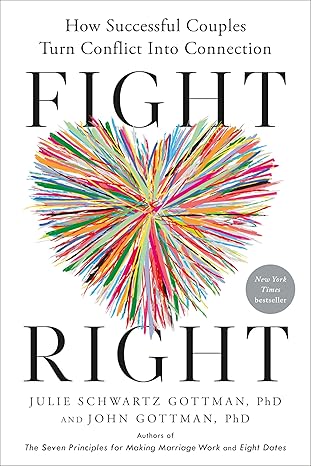
Fight Right Summary
By John Gottman & Julie Schwartz Gottman
How Successful Couples Turn Conflict into Connection
Summary preview
Every close relationship has conflict. That is not a sign that love has failed. It is a sign that two real people are trying to build a life together. Fight Right begins with that simple but powerful truth. The problem is not that couples argue. The problem is that many of us were never taught how to argue in a way that protects love instead of damaging it. We learned by watching our families, by absorbing cultural messages, or by stumbling through painful trial and error. So when tension rises, we defend, attack, shut down, or repeat the same old fight until both people feel lonely, exhausted, and unseen. The heart of this book is a hopeful promise. Conflict can become a path to deeper understanding, trust, and connection when you know what to do. Rather than treating fights as messy interruptions to a good relationship, the book asks you to see them as moments that reveal your needs, your fears, your history, and your longing to matter to each other. When a disagreement is handled well, it can actually make love stronger. When it is handled badly, even small issues can turn into major wounds. John Gottman & Julie Schwartz Gottman build this guidance on decades of research with couples, but the book never feels cold or clinical. It feels practical, human, and compassionate. The message is clear. Couples do not need to eliminate differences. They need to understand the patterns that make conflict spiral and learn the skills that help them repair, listen, and reconnect. Some arguments are about solvable problems, like chores, schedules, money, or parenting decisions. Other arguments are more enduring. They come from deep differences in personality, values, dreams, habits, or life history. Those recurring issues may never disappear completely, but they do not have to poison the relationship. As the book unfolds, you are invited to notice how fights really begin, what makes them go off the rails, and how each partner can take responsibility for changing the dance. You learn that criticism, contempt, defensiveness, and stonewalling are especially dangerous because they turn a disagreement into an emotional threat. You also learn that repair is possible at almost any point when both people know how to slow down, soften their approach, and respond with curiosity instead of combat. What makes this book especially useful is that it does not ask you to become a different person. It asks you to become more aware, more intentional, and more kind under pressure. It helps you understand your own conflict style, your partner's style, and the hidden meaning inside many repeated arguments. The result is not a fantasy of perfect harmony. It is something far more real and more valuable. It is the ability to fight in a way that keeps respect alive, protects emotional safety, and turns even hard moments into opportunities for love.
Sign up to continue reading
Get access to full book summaries, audio of the summaries, and many more.
Similar Books
Books with a similar vibe—explore more like this.

Set Boundaries, Find Peace
Nedra Glover Tawwab
A Guide to Reclaiming Yourself
4.7 (819)27 mins
How to be Love(d)
Humble the Poet
Simple Truths for Going Easier on Yourself, Embracing Imperfection & Loving Your Way to a Better Life
4.6 (45) mins

Closer to Love
Vex King
How to Attract the Right Relationships and Deepen Your Connections
4.6 (74) mins
Atlas of the Heart
Brené Brown
Mapping Meaningful Connection and the Language of Human Experience
4.5 (1028)31 mins
Love Unfu*ked
Gary John Bishop
Getting Your Relationship Sh!t Together
4.4 (28) mins
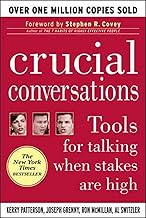
Crucial Conversations
Kerry Patterson, Joseph Grenny, Ron McMillan, Al Switzler
Tools for Talking When Stakes Are High
4.3 (658)32 mins
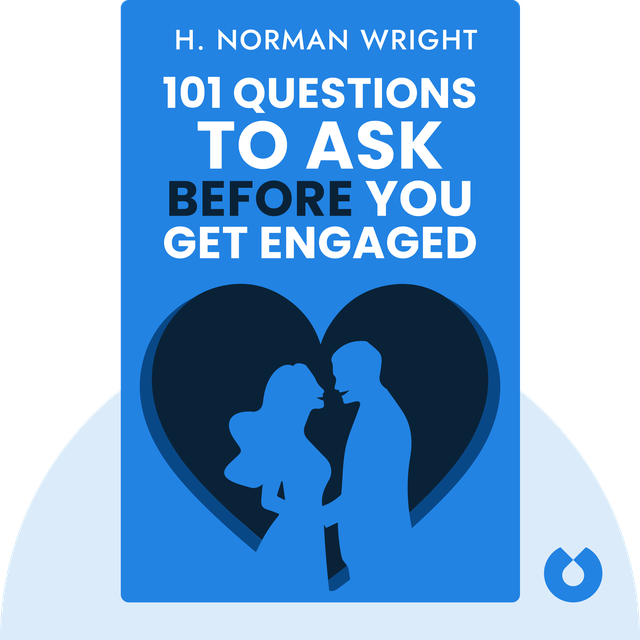
101 Questions to Ask Before You Get Engaged
H. Norman Wright
Essential Inquiries for Lasting Love
4.2 (28) mins

The Ethical Slut
Janet W. Hardy and Dossie Easton
A Practical Guide to Polyamory, Open Relationships, and Other Freedoms in Sex and Love
4.0 (44) mins
How to Love Someone Without Losing Your Mind
Todd Baratz
Forget the Fairy Tale and Get Real
3.9 (255)24 mins
Read the Room
Cavanaugh James
The Holistic Guide to Build and Sustain Meaningful Relationships for Life
3.9 (294)23 mins