

Homo Deus Summary
By Yuval Noah Harari
A Brief History of Tomorrow
Summary preview
For thousands of years, human beings lived inside a world ruled by famine, plague, and war. These were not small troubles. They were the great monsters of history. Kings prayed about them. Priests explained them. Parents buried children because of them. Most people believed such suffering was simply the human condition, something woven into the fabric of existence by angry gods, blind fate, or nature itself. Now step into the modern age and notice how strange our new position is. In much of the world, famine kills far fewer people than obesity. Plague has retreated before medicine, sanitation, and science. War, though still real and brutal, no longer feels like an unavoidable law of nature. For the first time in history, large numbers of people die not because they lack food, but because they eat too much. More people may die from old age than from epidemics. We have not created paradise, of course. Yet compared with our ancestors, we have gained astonishing control. And once human beings solve old problems, they do not retire in satisfaction. They immediately ask for more. If we are no longer mainly fighting starvation, disease, and violence, what will become our next agenda? This is the bold question at the heart of Homo Deus. Yuval Noah Harari invites you to look beyond the achievements of modern humanity and ask what we will desire next. The answer is both thrilling and unsettling. We may aim for immortality, happiness, and divinity itself. We may try to upgrade Homo sapiens into something like gods, with powers of creation and destruction once reserved for myth. But this is not a simple story of progress. Every gain opens a deeper uncertainty. The same science that can heal bodies can also redesign them. The same data systems that can improve health and safety can also monitor, predict, and manipulate human choices. The same humanism that lifted the individual to the center of meaning may be preparing the ground for a future in which the individual no longer matters. This book moves like a long, fascinating thought experiment. It begins with what humanity has achieved. It then examines the beliefs that gave modern societies their power, especially the worship of human feelings, choices, and rights. Finally, it asks what happens when biotechnology and computer science know us better than we know ourselves. At that point, old ideas about free will, individuality, religion, politics, and meaning may start to crack. Homo Deus is not trying to predict one certain future. It is trying to make you think more clearly about the roads opening before us. It asks what kind of beings we are becoming, what values we may lose, and what new faiths may replace the old ones. It is a book about tomorrow, but even more, it is a book about the fragile stories that make today feel natural.
Sign up to continue reading
Get access to full book summaries, audio of the summaries, and many more.
Similar Books
Books with a similar vibe—explore more like this.
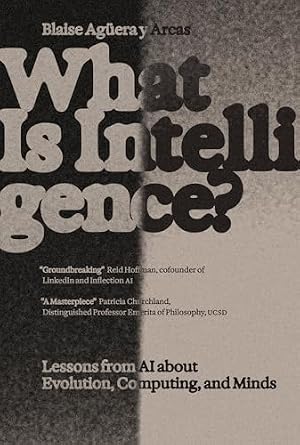
What Is Intelligence?
Blaise Aguera y Arcas
Lessons from AI About Evolution, Computing, and Minds
4.6 (16)23 mins
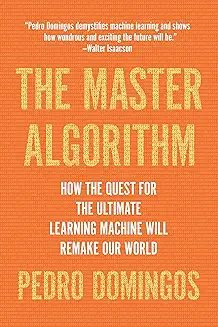
The Master Algorithm
Pedro Domingos
How The Quest For The Ultimate Learning Machine Will Remake Our World
4.5 (2734)36 mins
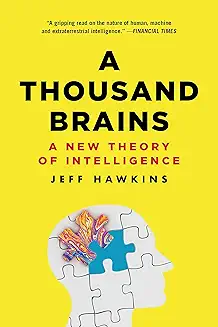
A Thousand Brains
Jeff Hawkins
A New Theory of Intelligence
4.5 (389)23 mins
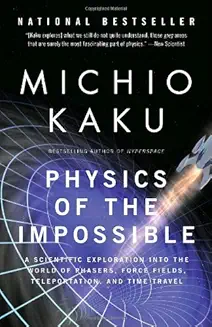
Physics of the Impossible
Michio Kaku
A Scientific Exploration of the World of Phasers, Force Fields, Teleportation, and Time Travel
4.5 (792)35 mins
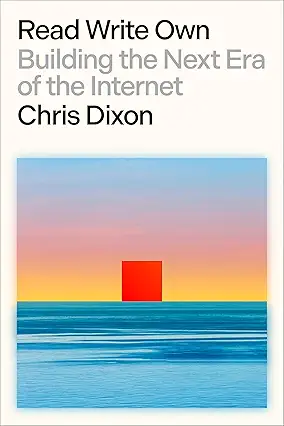
Read Write Own
Chris Dixon
Building the Next Era of the Internet
4.4 (472)15 mins
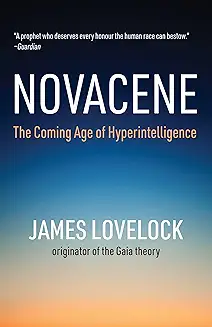
Novacene
James Lovelock
The Coming Age of Hyperintelligence
4.4 (554)25 mins
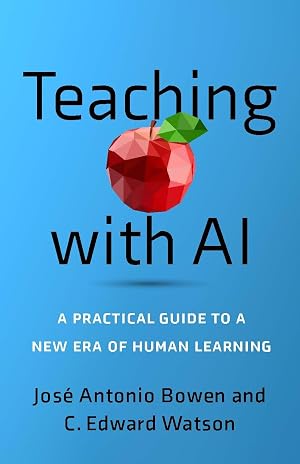
Teaching with AI
José Antonio Bowen, C. Edward Watson
A Practical Guide to a New Era of Human Learning
4.4 (9)25 mins
How We Learn
Stanislas Dehaene
Why Brains Learn Better Than Any Machine . . . for Now
4.3 (460)22 mins
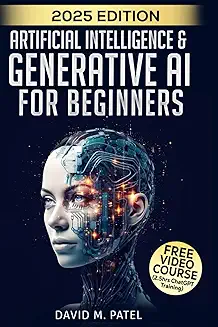
Artificial Intelligence & Generative AI for Beginners
David M. Patel
The Complete Guide (Generative AI & Chat GPT Mastery Series)
4.3 (271)21 mins
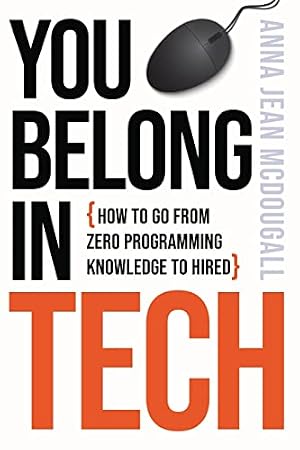
You Belong In Tech
Anna Jean McDougall
How to Go From Zero Programming Knowledge to Hired
4.3 (6)24 mins