

How Economics Explains the World Summary
By Andrew Leigh
A Short History of Humanity
Summary preview
Imagine a lens that transforms everyday life into a vibrant tapestry of costs, choices, and consequences. In How Economics Explains the World, the author warmly invites you to step into the intriguing universe of economic ideas that underpin every decision and event we encounter. From the way prices rise and fall to how governments shape policy and how markets operate across borders, the book serves as a friendly guide that demystifies complex theories and reveals practical truths behind our everyday experiences. At its core, the book challenges the notion that economics is a distant or abstract discipline reserved solely for academics. Instead, it argues that understanding economic principles is akin to having a secret key that unlocks hidden patterns in everything from public policy to personal finances. The narrative is filled with relatable examples that illustrate how individual actions accumulate to create powerful social trends. With a conversational tone, the author ensures that even readers unfamiliar with economic jargon can follow along without feeling overwhelmed. The text methodically weaves together stories of innovation, policy reforms, market dynamics, and the sometimes surprising interplay between personal decisions and large-scale trends. Throughout, it emphasizes that economic behavior is not merely about numbers and charts, but about human interactions, aspirations, and the often unpredictable nature of social life. One of the key messages is that while the principles of supply and demand might seem mechanical, they are deeply influenced by human psychology and behavior. This book does not aim to be a textbook full of dry theories. Instead, it is a lively conversation about why things cost what they do, why certain policies succeed while others falter, and how seemingly simple choices have far-reaching implications for society at large. By focusing on accessible language, relatable anecdotes, and clear reasoning, the author makes the subject inviting and understandable. Whether you are a seasoned economist or a curious reader with no background in the field, the book offers insights that resonate on both personal and global scales. It paints a picture of economics as an art form that explains not only market trends but also the subtleties of everyday life. As the pages unfold, you will find that the economic puzzles discussed are just as relevant when considering personal finances, career choices, or even the dynamics of a local community. Prepare for a journey through ideas that will empower you to look at the world through a new, more informed perspective.
Sign up to continue reading
Get access to full book summaries, audio of the summaries, and many more.
Similar Books
Books with a similar vibe—explore more like this.

The Song of Roland
Anonymous
Enter a World of Medieval Heroism, Where Honor Reigns Supreme
4.9 (3)20 mins

Utilitarianism
John Stuart Mill
Explore a Timeless Ethics Classic
4.8 (46)24 mins

How Music Got Free
Stephen Witt
What happens when an entire generation commits the same crime?
4.8 (8)36 mins
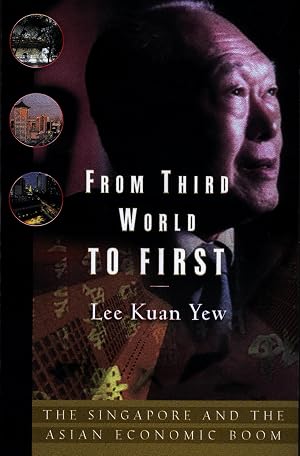
From Third World to First
Lee Kuan Yew
The Singapore Story: 1965-2000
4.7 (16)22 mins

Frankenstein
Mary Shelley
The Modern Prometheus
4.6 (419)24 mins

I Am Malala
Malala Yousafzai
The Girl Who Stood Up for Education and Was Shot by the Taliban
4.6 (720)35 mins

Cobalt Red
Siddharth Kara
How the Blood of the Congo Powers Our Lives
4.6 (4)22 mins
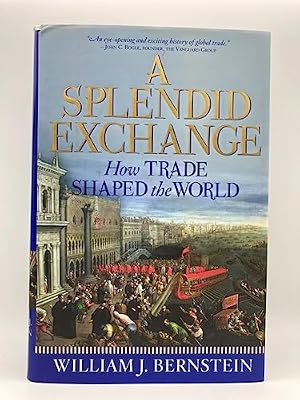
A Splendid Exchange
William J. Bernstein
How Trade Shaped the World
4.6 (7)30 mins

Narconomics
Tom Wainwright
How to Run a Drug Cartel
4.6 (19)29 mins
Thinking in Systems
Donella H. Meadows
A Primer
4.5 (1784)36 mins