

How We Learn Summary
By Stanislas Dehaene
Why Brains Learn Better Than Any Machine . . . for Now
Summary preview
Imagine a world where every time you sit down to learn something new, your brain is not just a passive vessel but an active partner that reshapes itself to meet your goals. How We Learn invites you to take a journey into the vibrant inner workings of your mind. In this inviting narrative, the book unravels the age-old mystery of how our brains absorb, consolidate, and later retrieve new information, painting a picture of learning that is simultaneously scientific and deeply human. At its heart, the book celebrates the brain’s innate capacity for change, illustrating that learning is not merely an intellectual exercise but a dynamic, ever-evolving adventure. The introduction draws you in by emphasizing that learning is a process grounded in biology. It speaks directly to you, not with stern academic language, but with a warm, conversational tone that suggests you are about to uncover secrets once confined to the realm of neuroscience. You are gently led through the idea that our brains come pre-wired with mechanisms that are as much about survival as they are about acquiring knowledge. In doing so, the narrative invites you to reimagine classrooms not as static spaces defined by rigid curricula but as fertile grounds where the natural interplay of memory, attention, and rest can transform the way we learn. The book carefully illustrates why traditional approaches, with their emphasis on repetitive, undifferentiated practice, fall short of tapping into the brain’s full potential. It presents compelling evidence from studies that show how factors like sleep and emotional engagement act as secret ingredients in the recipe for genuine understanding. In this journey, you learn that the brain is not indifferent to the pace or the method of teaching; rather, it thrives on varied practice, timely challenges, and the occasional chance to reframe old ideas in the light of new experiences. You are introduced to the notion of plasticity – the incredible ability of neural circuits to adapt and change over time. With accessible language and vivid imagery, the text explains how every time you encounter a new fact or concept, a small transformation occurs in your brain’s structure, a process that is both exciting and humbling. The narrative does not shy away from the complexities of cognitive science but wraps them in familiar, everyday examples that make the science feel right at home in the rhythms of daily life. As you flip through the pages, the book challenges you to rethink your relationship with errors and setbacks, emphasizing that mistakes are not failures but vital waypoints on your learning journey. It highlights the importance of revisiting old material and engaging in active recall, reminding you that learning is as much about the journey as it is about reaching a destination. This introduction creates a solid foundation for the rest of the book, promising insights that will empower you to harness the full potential of your mind, while also inviting you to reconnect with the wonder of discovering something new.
Sign up to continue reading
Get access to full book summaries, audio of the summaries, and many more.
Similar Books
Books with a similar vibe—explore more like this.
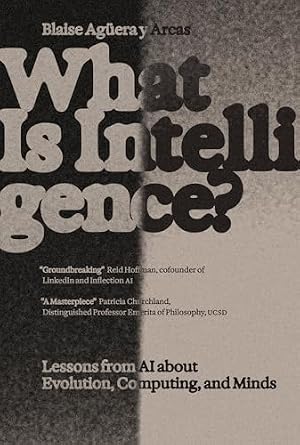
What Is Intelligence?
Blaise Aguera y Arcas
Lessons from AI About Evolution, Computing, and Minds
4.6 (16)23 mins
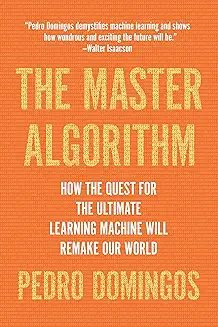
The Master Algorithm
Pedro Domingos
How The Quest For The Ultimate Learning Machine Will Remake Our World
4.5 (2734)36 mins
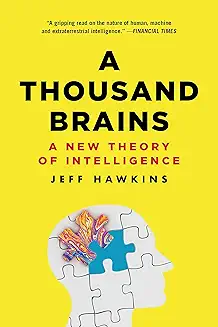
A Thousand Brains
Jeff Hawkins
A New Theory of Intelligence
4.5 (389)23 mins
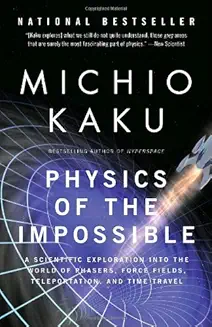
Physics of the Impossible
Michio Kaku
A Scientific Exploration of the World of Phasers, Force Fields, Teleportation, and Time Travel
4.5 (792)35 mins
Read Write Own
Chris Dixon
Building the Next Era of the Internet
4.4 (472)15 mins
Novacene
James Lovelock
The Coming Age of Hyperintelligence
4.4 (554)25 mins
Teaching with AI
José Antonio Bowen, C. Edward Watson
A Practical Guide to a New Era of Human Learning
4.4 (9)25 mins
Artificial Intelligence & Generative AI for Beginners
David M. Patel
The Complete Guide (Generative AI & Chat GPT Mastery Series)
4.3 (271)21 mins
Homo Deus
Yuval Noah Harari
A Brief History of Tomorrow
4.3 (784)33 mins
You Belong In Tech
Anna Jean McDougall
How to Go From Zero Programming Knowledge to Hired
4.3 (6)24 mins