
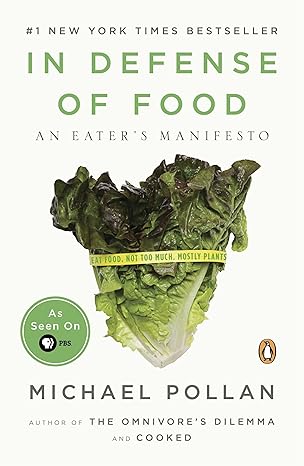
Introduction
If you have ever stood in a supermarket aisle feeling vaguely anxious, trying to decide between low fat yogurt, heart healthy cereal, omega 3 eggs, whole grain crackers, and fortified orange juice, you already know the world this book is trying to make sense of. We live in a culture flooded with food advice, but strangely unsure how to eat. We know more about nutrients than any civilization before us, yet many of us feel less healthy, less confident, and less at home at the table. That confusion is the real subject here. Michael Pollan begins with a simple observation that turns out not to be simple at all. People used to eat food. Now many of us eat what can only be called edible foodlike substances. We no longer trust traditions, tastes, seasons, or cultures to guide us. Instead, we trust labels, experts, studies, and marketing claims. We have been taught to see food not as food but as a delivery system for nutrients. Protein, fiber, antioxidants, saturated fat, complex carbohydrates. Once you start looking at dinner that way, the meal disappears. What remains is a set of chemical parts, and those parts are always being revised by the latest scientific fashion. The book pushes back against that way of thinking. Its famous rule is beautifully short. Eat food. Not too much. Mostly plants. But the power of that advice lies in the long argument behind it. The point is not that science is useless or that nutrition does not matter. The point is that reducing food to nutrients has led us badly astray. It has helped create a food industry that can take apart whole foods, rearrange the pieces, add health claims, and sell the result as progress. It has also encouraged us to abandon older food cultures that often knew, in practical ways, how to feed people well. What follows is part investigation, part history, part common sense manifesto. The book explains how the ideology of nutrition came to dominate the modern diet, how it helped give rise to the Western diet, and why that diet has been linked again and again to chronic disease. It looks at the odd dance between scientists, government panels, journalists, and food companies, each one shaping what the public believes is healthy. And then, after clearing away the confusion, it offers a calmer path forward, grounded in actual food, inherited wisdom, appetite, pleasure, and restraint. This is not a book of rigid rules or moral panic. It is an attempt to help you recover something many modern eaters have lost, a sane relationship with food. The message is modest, almost old fashioned, yet quietly radical. Instead of eating by theory, eat by culture, memory, observation, and experience. Instead of chasing nutrient headlines, return to meals. Instead of fearing food, learn again how to recognize it.
Sign up to continue reading
Get access to full book summaries, audio of the summaries, and many more.
Similar Books
Books with a similar vibe—explore more like this.
Livewired
David Eagleman
The inside story of the Ever-changing brain
4.8 (544)28 mins
The Yoga Sutras of Patanjali
Translated and commentated on by Sri Swami Satchidananda
Timeless Teachings for Mind, Body, and Emotional Harmony
4.8 (320)32 mins
Why We Sleep
Matthew Walker
Unlocking the Power of Sleep and Dreams
4.8 (1560)17 mins
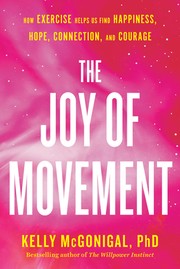
The Joy of Movement
Kelly McGonigal
How Exercise helps us find Happiness, Hope, Connection, and Courage
4.7 (295)25 mins
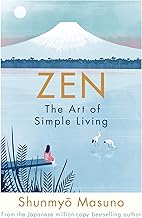
The Art of Simple Living
Shunmyo Masuno
100 Daily Practices from a Japanese Zen Monk for a Lifetime of Calm and Joy
4.7 (1002)26 mins
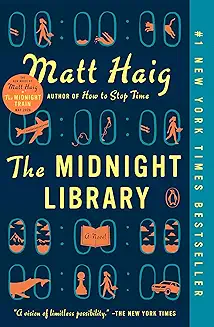
The Midnight Library
Matt Haig
A Fantasy Novel About the Choices That Lead to a Life Well-Lived
4.7 (4782)32 mins
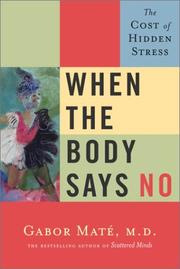
When the Body Says No
Gabor Maté
The Cost of Hidden Stress
4.6 (689)29 mins
Breath
James Nestor
The New Science of a Lost Art
4.6 (919)29 mins
Full Catastrophe Living
Jon Kabat-Zinn
Using the Wisdom of Your Body and Mind to Face Stress, Pain, and Illness
4.6 (226)25 mins
Brain Food
Lisa Mosconi
How to Eat Smart and Sharpen Your Mind
4.6 (702)32 mins