

Lost in Thought Summary
By Zena Hitz
The Hidden Pleasures of an Intellectual Life
Summary preview
What is the point of learning if it brings no money, no prestige, no practical advantage that the world can count? That question sits at the heart of Lost in Thought, and it is not handled as an abstract puzzle. It is lived. The book grows out of a personal crisis, a spiritual search, and a long friendship with books, prayer, and difficult truth. Zena Hitz asks what it means to think for its own sake, to seek what is good and beautiful even when that search earns no reward. She writes against a culture that wants every hour to prove its usefulness. She writes for anyone who has loved reading, studying, wondering, and then felt ashamed of that love because it looked unproductive. The book begins from a wound. A promising academic life collapses under vanity, ambition, and deep unhappiness. The life of the mind, which should have opened into freedom, becomes tangled up with status and performance. Out of that collapse comes a startling turn toward silence, manual labor, and religious life. From there the argument takes shape. Real education is not a luxury for the lucky or a tool for climbing social ladders. It is a human need. It belongs to the poor as much as to the privileged, to prisoners as much as professors, to anyone who wants to turn toward reality and not be swallowed by appetite, entertainment, or fear. The pages move easily between memoir and meditation. Ancient philosophers, Christian saints, political thinkers, poets, and ordinary students all enter the story. For example, we meet people in prison classes who discover through reading that they are more than their crimes or their labels. We see children and workers reaching toward understanding with no guarantee of success except the joy of contact with something true. The point is not that thought solves every social problem. It does not. The point is that inward freedom matters, and serious attention can protect it. Again and again, the book returns to hidden forms of happiness. Not flashy happiness, not the happiness of being admired, but the quiet delight of understanding a line of poetry, wrestling with a philosophical question, or noticing a pattern in the world. That delight can be fragile. It can be crowded out by technology, career anxiety, ideological pressure, and the restless demand to market the self. Yet it persists. It is one of the ways a person becomes fully alive. What follows is both a defense and a confession. It is a defense of intellectual life as a common human good. It is a confession because the writer knows how easily thought can be corrupted by pride. The result is a book that feels intimate and urgent at once. It invites you not to admire learning from a distance, but to recover the courage to love it directly.
Sign up to continue reading
Get access to full book summaries, audio of the summaries, and many more.
Similar Books
Books with a similar vibe—explore more like this.
Lessons in Stoicism
John Sellars
What Ancient Philosophers Teach Us About How to Live
4.5 (704)23 mins
How to Think Like Socrates
Donald J. Robertson
Ancient Philosophy as a Way of Life in the Modern World
4.4 (258)20 mins
Critical Thinkers
Albert Rutherford
Methods for Clear Thinking and Analysis in Everyday Situations from the Greatest Thinkers in History
4.2 (392)30 mins
Groundwork of the Metaphysics of Morals
Immanuel Kant
Identifying and corroborating the supreme principle of morality
4.2 (15)21 mins
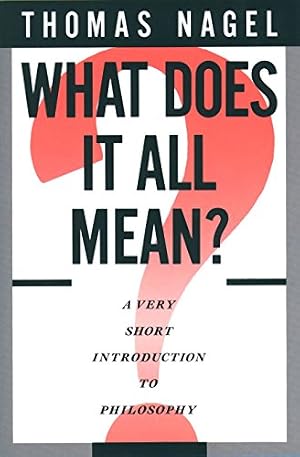
What Does It All Mean?
Thomas Nagel
A Very Short Introduction to Philosophy
4.2 (30) mins

The Sovereign Child
Aaron Stupple
How a Forgotten Philosophy Can Liberate Kids and Their Parents
3.8 (6)23 mins
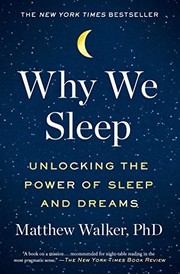
Why We Sleep
Matthew Walker
Unlocking the Power of Sleep and Dreams
4.8 (1560)17 mins
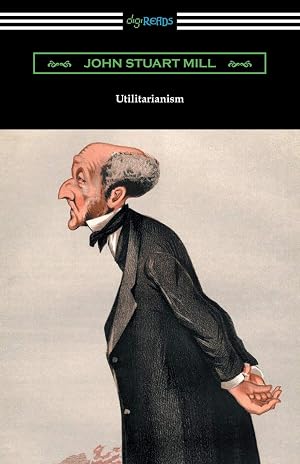
Utilitarianism
John Stuart Mill
Explore a Timeless Ethics Classic
4.8 (46)24 mins

Alice in Wonderland
Lewis Carroll
Follow Alice down a rabbit hole of whimsical, witty absurdity.
4.8 (5) mins
Psychological Types
Carl Jung
Collected works from the supreme theorist of the conscious
4.7 (89) mins