
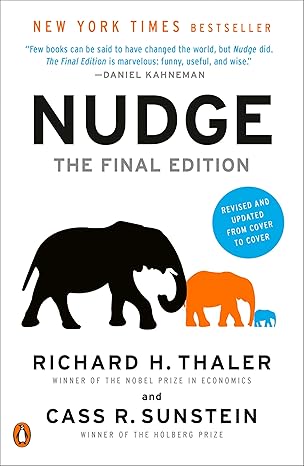
Nudge
By Richard H. Thaler & Cass R. Sunstein
Improving Decisions about Health, Wealth and Happiness
Introduction
Most of us like to believe we move through life making our own decisions with clear eyes and steady hands. We choose what to eat, how much to save, what school to attend, which mortgage to sign, whether to recycle, whether to donate an organ, and how to protect our health. But look a little closer and a more interesting picture appears. Human beings are not perfectly cool calculators. We are busy, distracted, hopeful, forgetful, social, emotional, and deeply shaped by the setting in which choices appear. A menu changes what we order. A form changes what we select. A default changes what we end up doing. Tiny features of the environment can have huge effects on behavior. That is the starting point of this book. Richard H. Thaler & Cass R. Sunstein invite you to notice something that is happening all around you already. Choices are always presented somehow. There is no neutral design. If a cafeteria manager must decide where to place the fruit and the cake, she is shaping decisions. If an employer must decide whether workers are automatically enrolled in a retirement plan or must sign up on their own, that design will matter. If a government builds a website, writes a tax letter, or creates a school application form, the details of that design can either help people or confuse them. The big idea is wonderfully simple. Since choice environments cannot be avoided, they should be designed thoughtfully. A good design can steer people toward choices that will improve their lives, while still leaving them free to go another way. That gentle push is the nudge. It is not a ban, not a command, and not a heavy handed shove. It is a small feature of the environment that predictably alters behavior without taking away options or making alternatives much harder to choose. Behind this idea sits a bold phrase, "libertarian paternalism." At first it sounds like a contradiction. Libertarian because freedom of choice matters. Paternalism because it is legitimate to try to influence choices in ways that make choosers better off, as judged by themselves. The point is not to treat people like children. The point is to recognize that real people often need a little help, especially when decisions are difficult, unfamiliar, infrequent, or full of delayed consequences. What follows is a tour through the worlds where nudges matter most. You will see how they affect money, health, credit, school, medicine, the environment, and even marriage. Along the way, the book mixes psychology, economics, public policy, and practical common sense. Its message is energetic and humane. If we understand how people actually decide, we can build institutions that make life a bit easier, a bit safer, and often a lot better.
Sign up to continue reading
Get access to full book summaries, audio of the summaries, and many more.
Similar Books
Books with a similar vibe—explore more like this.

A Promised Land
Barack Obama
The first memoir of Barack Obama, the 44th president of the United States
4.7 (3246)38 mins
Breaking The Habit of Being Yourself
Joe Dispenza
How to Lose Your Mind and Create a New One
4.5 (415)23 mins
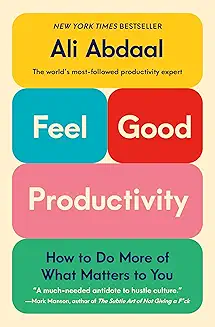
Feel-Good Productivity
Ali Abdaal
How to Do More of What Matters to You
4.5 (1198)15 mins
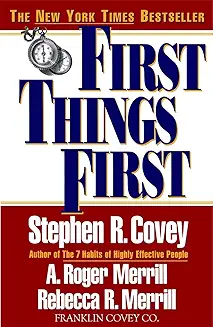
First Things First
Stephen R. Covey
To Live, to Love, to Learn, to Leave a Legacy
4.5 (1293)34 mins
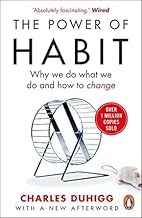
The Power of Habit
Charles Duhigg
Why We Do What We Do in Life and Business
4.3 (3181)30 mins
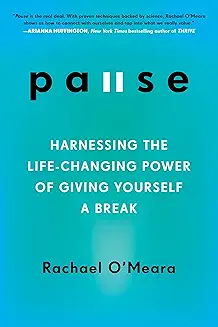
Pause
Rachael O'Meara
Harnessing the Life-Changing Power of Giving Yourself a Break
4.3 (143)23 mins
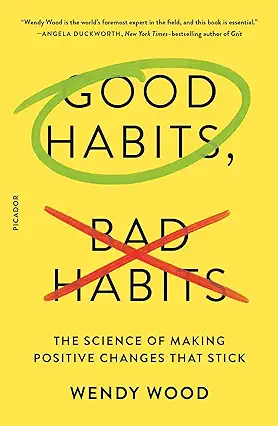
Good Habits, Bad Habits
Wendy Wood
The Science of Making Positive Changes That Stick
3.7 (653)26 mins
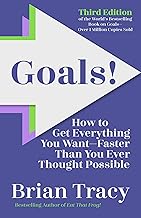
Goals!
Brian Tracy
How to Get Everything You Want – Faster Than You Ever Thought Possible
4.8 (929)29 mins
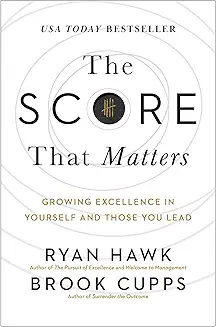
The Score That Matters
Ryan Hawk, Brook Cupps
Growing Excellence in Yourself and Those You Lead
4.7 (368)17 mins
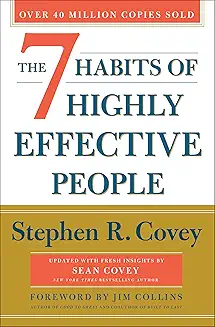
The 7 Habits of Highly Effective People
Stephen R. Covey
Powerful Lessons in Personal Change
4.7 (2172)35 mins