
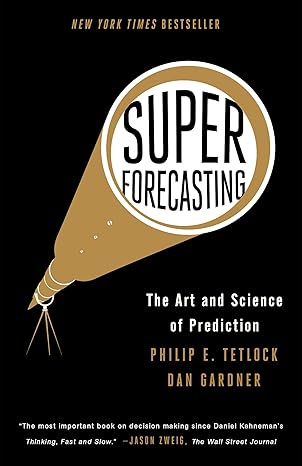
Superforecasting Summary
By Philip E. Tetlock
The Art and Science of Prediction
Summary preview
Most of us like to believe we can see the future a little better than we really can. We watch the news, follow elections, hear experts speak with confidence, and start to feel that the world is more predictable than it is. But when you look closely, confidence and accuracy are not the same thing. That is the heart of Superforecasting. It asks a simple but powerful question. Who actually makes good predictions about uncertain events, and how do they do it? Philip E. Tetlock begins with a problem that touches politics, business, war, finance, and everyday life. We are surrounded by forecasts. Governments make them. CEOs make them. pundits make them on television with bold voices and dramatic certainty. Yet so many of these predictions turn out to be wrong. Not just a little wrong, but deeply, embarrassingly wrong. And still the same kinds of people keep getting invited back to make more. So the book goes looking for something better than charisma, status, or style. It goes looking for skill. What makes this search so exciting is that it is not just theory. It grows out of years of research and a remarkable real world experiment. With support from the intelligence community, teams of ordinary people were asked to forecast major world events. Would a country hold elections on time? Would a leader lose power? Would a conflict expand? These were hard questions, full of uncertainty, changing facts, and political noise. Yet some people consistently did better than others. A lot better. They were not fortune tellers. They were not all famous scholars or insiders with secret access. They were regular people who thought in a special way. The book calls them superforecasters. That name sounds grand, but the lesson is surprisingly humble. These people do not see the future in flashes of brilliance. They break problems apart. They think in probabilities, not certainties. They update their views when new evidence appears. They are serious without being rigid, confident without being arrogant, skeptical without becoming cynical. They know that the world is messy, and they work with that mess instead of pretending it is neat. As the story unfolds, you see a challenge to many habits of mind that feel natural. We prefer clear stories, bold leaders, and simple answers. Good forecasting often looks like the opposite. It is patient, careful, and self correcting. It values questions over slogans. It asks not What do I want to be true, but What is most likely true right now? That is what gives the book its force. It is about prediction, yes, but it is also about thinking well in a world that keeps surprising us. It offers a practical way to become less wrong, more often. And in a world shaped by uncertainty, that is no small thing.
Sign up to continue reading
Get access to full book summaries, audio of the summaries, and many more.
Similar Books
Books with a similar vibe—explore more like this.
Productive Failure
Manu Kapur
Unlocking Deeper Learning Through the Science of Failing
4.5 (211)22 mins
Mindset
Carol Dweck
The New Psychology of Success
4.4 (2959)33 mins
More Than Words
Maryellen MacDonald
How Talking Sharpens the Mind and Shapes Our World
4.4 (16)20 mins
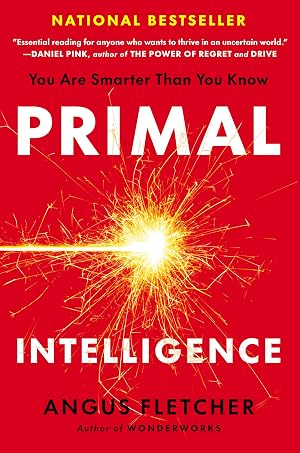
Primal Intelligence
Angus Fletcher
You Are Smarter Than You Know
4.4 (16) mins
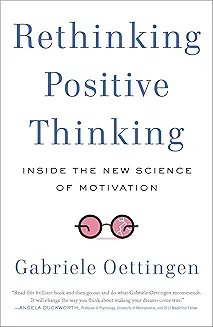
Rethinking Positive Thinking
Gabriele Oettingen
Inside the New Science of Motivation
4.3 (255)23 mins
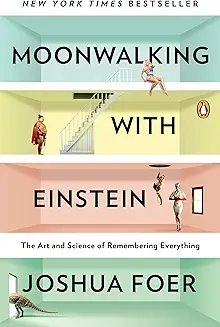
Moonwalking with Einstein
Joshua Foer
The Art and Science of Remembering Everything
4.3 (528)33 mins
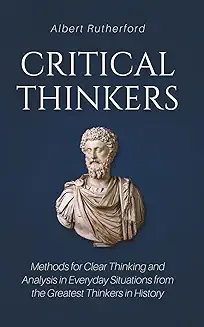
Critical Thinkers
Albert Rutherford
Methods for Clear Thinking and Analysis in Everyday Situations from the Greatest Thinkers in History
4.2 (392)30 mins

The Courage to Teach
Parker J. Palmer
Exploring the Inner Landscape of a Teacher's Life
4.2 (5)23 mins
The Creative Brain
Anna Abraham
Myths and Truths
4.1 (190)23 mins
The Suggestible Brain
Amir Raz
The Science and Magic of How We Make Up Our Minds
4.0 (324)23 mins