

The Age of AI Summary
By Henry Kissinger, Eric Schmidt & Daniel Huttenlocher
And Our Human Future
Summary preview
We are living through a turning point that feels both familiar and utterly strange. Humanity has always built tools that extend our reach. We made clocks to measure time, telescopes to widen sight, engines to multiply strength, and computers to accelerate calculation. Yet artificial intelligence is not simply another tool in that long procession. It is the first technology that can imitate aspects of human judgment, discover patterns we do not see, and produce answers even when it cannot fully explain how it arrived at them. That changes not only what we can do, but how we understand ourselves. That is the heart of The Age of AI by Henry Kissinger, Eric Schmidt & Daniel Huttenlocher. The book asks what happens when humans share the world with systems that can learn, infer, strategize, and create in ways that once seemed reserved for the mind alone. It does not treat AI as a gadget story or a simple business trend. It treats AI as a civilizational event. The argument is that AI will alter knowledge, politics, security, science, and even our sense of reality. The challenge before us is not merely to build these systems. It is to decide how to live with them without losing the human capacities that gave rise to them. The book begins from a simple but unsettling fact. AI can outperform people in narrow domains that require staggering amounts of data, speed, and pattern recognition. For instance, when computer systems defeated world champions in chess and then in Go, they did more than win games. They revealed forms of reasoning that were effective but not always intuitive to human masters. A machine could arrive at brilliant moves that looked alien at first, yet proved superior in practice. That moment carries a deep lesson. Intelligence is broader than we assumed, and our own style of thought may be only one among several possible paths to insight. From there, the story widens. If AI can assist scientific discovery, shape military planning, influence diplomacy, guide education, and mediate the information each person sees, then the arrival of AI is not just technical. It is philosophical and political. It pushes us to ask old questions under new pressure. What is knowledge if a system can generate useful answers without human style understanding. What is authority if decisions are increasingly based on processes no citizen can inspect. What becomes of freedom if persuasion grows personalized, invisible, and relentless. And what happens to international order if states race to deploy a technology they do not fully control. The book does not preach panic, nor does it offer easy comfort. Its mood is sober, curious, and urgent. It moves between history and prediction, using examples from computing, strategy, and science to show that every great technological era has rewritten assumptions about power and truth. AI, however, may go further. It may transform the very environment in which human thinking takes place. The essential task, then, is to shape this age before it shapes...
Sign up to continue reading
Get access to full book summaries, audio of the summaries, and many more.
Similar Books
Books with a similar vibe—explore more like this.
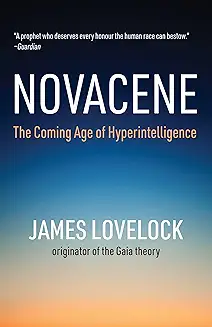
Novacene
James Lovelock
The Coming Age of Hyperintelligence
4.4 (554)25 mins
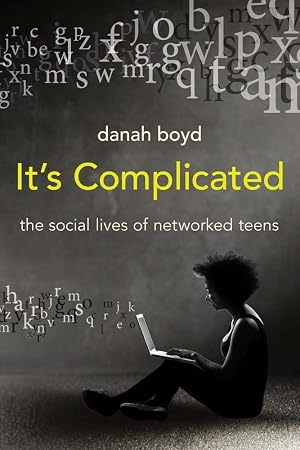
It's Complicated
danah boyd
The Social Lives of Networked Teens
4.2 (10)26 mins
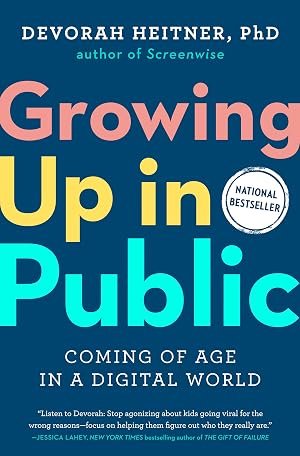
Growing Up in Public
Devorah Heitner
Coming of Age in a Digital World
4.0 (21)21 mins
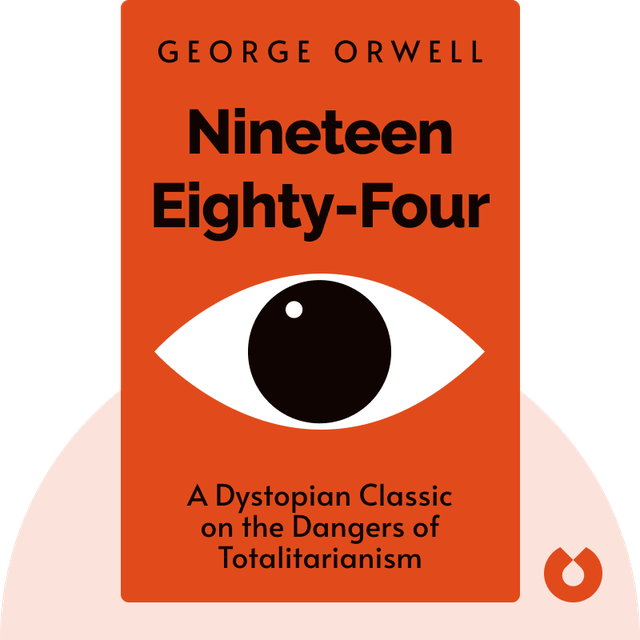
Nineteen Eighty-Four (1984)
George Orwell
A Dystopian Classic on the Dangers of Totalitarianism
4.9 (697)17 mins

The Song of Roland
Anonymous
Enter a World of Medieval Heroism, Where Honor Reigns Supreme
4.9 (3)20 mins
Utilitarianism
John Stuart Mill
Explore a Timeless Ethics Classic
4.8 (46)24 mins
1984
George Orwell
A Dystopian Classic on the Dangers of Totalitarianism
4.7 (1738)16 mins
The Chemistry Book
Derek B Lowe
From Gunpowder to Graphene, 250 Milestones in the History of Chemistry
4.7 (50)38 mins
Why Taiwan Matters
Kerry Brown
A Short History of a Small Island That Will Dictate Our Future
4.7 (13)27 mins
Frankenstein
Mary Shelley
The Modern Prometheus
4.6 (419)24 mins