

The Code Breaker Summary
By Walter Isaacson
Jennifer Doudna, Gene Editing, and the Future of the Human Race
Summary preview
Come along into a story where a shy girl who loved patterns ends up helping humanity learn how to rewrite life itself. The Code Breaker is, on one level, the biography of Jennifer Doudna, the biochemist whose work helped turn CRISPR from a curious feature of bacteria into one of the most powerful tools in modern science. But it is also much more than the life of one scientist. It is a sweeping story about how discovery happens, how teams form and split, how rivalries sharpen the mind, and how a basic question about nature can suddenly become a force that reshapes medicine, agriculture, ethics, and even the future of our species. The book moves with the energy of a thriller and the intimacy of a character portrait. You see experiments fail, ideas collide, friendships deepen, egos flare, and then, almost unbelievably, a set of molecules becomes a word that enters everyday speech. Walter Isaacson frames this story around a grand shift in science. The twentieth century was the age of physics, when people learned to split the atom, build computers, and send signals across the planet. The twenty first century, he argues, is becoming the age of biology, especially biology fused with digital thinking. Reading the genetic code is one revolution. Editing it is another. Doudna stands at the center of that transition, not because she worked alone, but because she had the right mix of curiosity, rigor, intuition, and openness to collaboration. She is the kind of scientist who sees beauty in structure, who asks basic questions without knowing where they will lead, and who understands that the most important breakthroughs often happen at the border between fields. The book begins with her childhood in Hawaii, where nature seemed to whisper that hidden systems lay beneath everything. It then traces the rise of molecular biology, the discovery of RNA’s surprising powers, and the long path toward understanding how bacteria defend themselves against viruses. Out of that obscure line of inquiry came CRISPR, a system that could be adapted into a programmable gene editing tool. Suddenly, diseases once thought untouchable looked vulnerable. Sickle cell disease, blindness, inherited disorders, cancer, and viral threats all came into view. So did darker possibilities, such as designer babies, military misuse, and the temptation to enhance rather than heal. What makes the book so compelling is that it never treats science as dry information. Science here is human drama. It is a story of women finding their place in institutions long shaped by men. It is a story of immigrants, mentors, graduate students, entrepreneurs, patent lawyers, ethicists, and patients. It is also haunted by a question that grows more urgent as the pages turn. Now that we can edit the code of life, what should we do, and what should we refuse to do? That tension gives the book its pulse. The science is dazzling, but the moral stakes are what make it unforgettable.
Sign up to continue reading
Get access to full book summaries, audio of the summaries, and many more.
Similar Books
Books with a similar vibe—explore more like this.
Nineteen Eighty-Four (1984)
George Orwell
A Dystopian Classic on the Dangers of Totalitarianism
4.9 (697)17 mins
1984
George Orwell
A Dystopian Classic on the Dangers of Totalitarianism
4.7 (1738)16 mins
The Chemistry Book
Derek B Lowe
From Gunpowder to Graphene, 250 Milestones in the History of Chemistry
4.7 (50)38 mins
Why Taiwan Matters
Kerry Brown
A Short History of a Small Island That Will Dictate Our Future
4.7 (13)27 mins
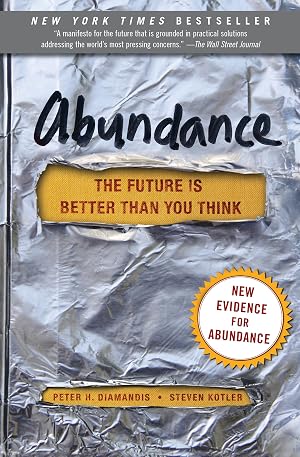
Abundance#
Peter H. Diamandis and Steven Kotler
The Future Is Better Than You Think
4.6 (10)38 mins
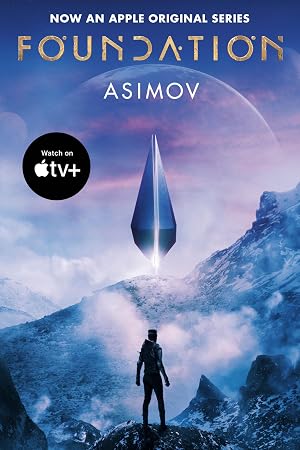
Foundation
Isaac Asimov
Dive into a Future Galactic Empire in This Science-Fiction Classic
4.6 (19)21 mins
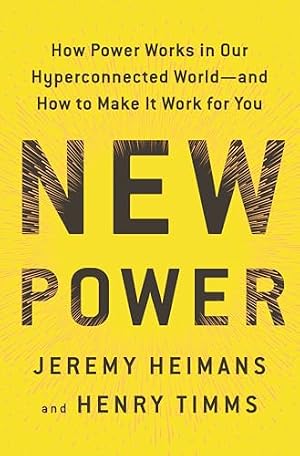
New Power
Jeremy Heimans and Henry Timms
How Power Works In Our Hyperconnected World – and How To Make It Work For You
4.6 (7)29 mins
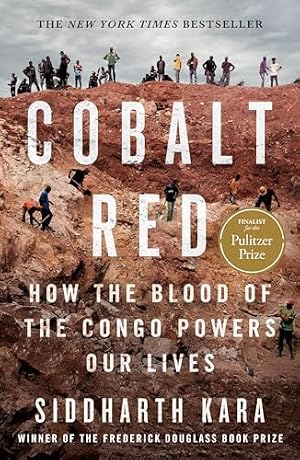
Cobalt Red
Siddharth Kara
How the Blood of the Congo Powers Our Lives
4.6 (4)22 mins
Tomorrow, and Tomorrow, and Tomorrow
Gabrielle Zevin
A Novel
4.5 (4281)24 mins
21 Lessons for the 21st Century
Yuval Noah Harari
Future proof yourself against the 21st Century
4.5 (502)24 mins