
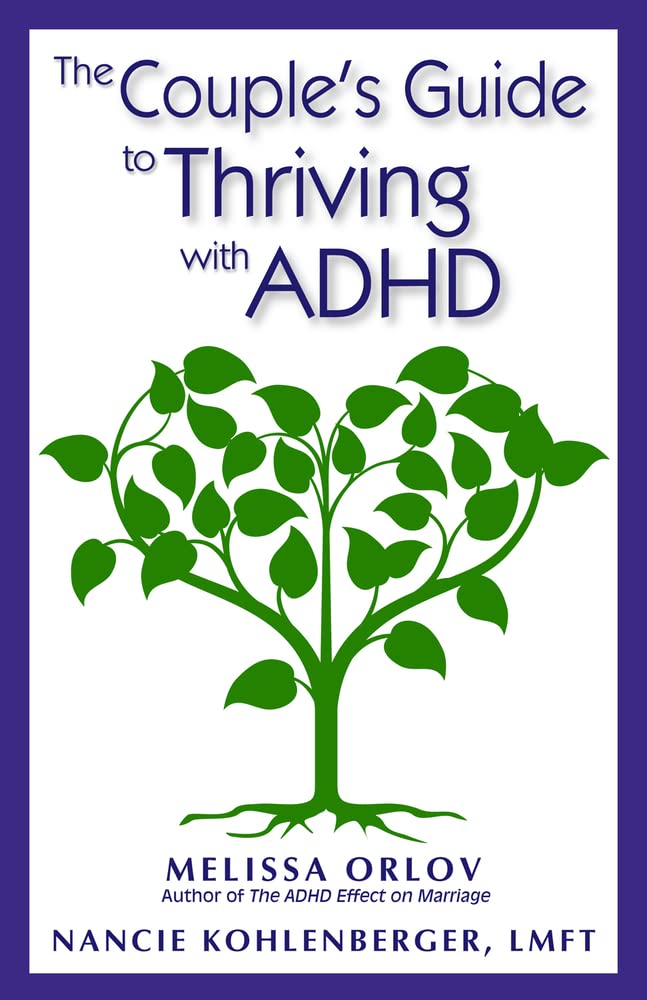
The Couple's Guide to Thriving with ADHD Summary
By Melissa Orlov & Nancie Kohlenberger
Improve Trust, Intimacy, and Reliability
Summary preview
Love can feel confusing when ADHD lives inside a relationship and no one has named it yet. One person feels overwhelmed, lonely, and angry because promises are forgotten, plans fall apart, money slips through cracks, and the daily load keeps landing on the same shoulders. The other person feels criticized, controlled, ashamed, and never quite good enough, even while trying hard and meaning well. Both may still care deeply for each other. Both may wonder how something that began with affection and excitement turned into tension, resentment, and distance. That is the hard place this book speaks to with unusual honesty and hope. Melissa Orlov & Nancie Kohlenberger start from a simple but life changing idea. Many couples are not dealing with a lack of love or a lack of effort. They are dealing with the effects of ADHD on two people at once and on the system they have built together. When ADHD is not understood, its symptoms can look like selfishness, laziness, unreliability, or indifference. A missed errand feels like not caring. A burst of anger feels cruel. Chronic lateness feels disrespectful. Withdrawal from conflict feels cold. Over time, the relationship can slide into a painful pattern where one partner becomes the responsible manager and the other becomes the dependent, defensive partner. The romance gets replaced by a parent child dynamic, and that shift hurts both people. The book is not interested in blame. It is interested in accurate seeing. Once you understand how distractibility, impulsivity, emotional reactivity, difficulty with follow through, and problems with organization affect daily life, the mystery starts to clear. You can begin to separate intentions from symptoms. That does not mean making excuses. It means seeing the real problem so you can solve the real problem. What follows is a practical guide to rebuilding trust, respect, and teamwork. It looks closely at diagnosis, treatment, communication, sex, money, parenting, chores, anger, and recovery from years of disappointment. It asks both partners to participate. The partner with ADHD is invited to take responsibility for treatment and for learning new habits. The non ADHD partner is invited to step out of overfunctioning, reduce unhelpful criticism, and stop carrying the whole relationship alone. The goal is not perfection. The goal is a partnership that works better and feels better. Again and again, the message is steady and compassionate. You are not crazy. You are not alone. The chaos has patterns. The pain has causes. And with understanding, structure, persistence, and mutual respect, a struggling couple can move from confusion and hurt toward connection and thriving.
Sign up to continue reading
Get access to full book summaries, audio of the summaries, and many more.
Similar Books
Books with a similar vibe—explore more like this.

Atlas of the Heart
Brené Brown
Mapping Meaningful Connection and the Language of Human Experience
4.5 (1028)31 mins
The Gift of Therapy
Irvin D. Yalom
An Open Letter to a New Generation of Therapists and Their Patients
4.3 (388)25 mins

Set Boundaries, Find Peace
Nedra Glover Tawwab
A Guide to Reclaiming Yourself
4.7 (819)27 mins
Sound Affects
Julian Treasure
How Sound Shapes Our Lives, Our Wellbeing and Our Planet
4.7 (10) mins
The Love Prescription
John Gottman & Julie Schwartz Gottman
Seven Days to More Intimacy, Connection, and Joy
4.7 (94) mins
Til Stress Do Us Part
Elizabeth Earnshaw
How to Heal the #1 Issue in Our Relationships
4.6 (139)20 mins

Real Love
Sharon Salzberg
The Art of Mindful Connection
4.6 (697)28 mins

How to be Love(d)
Humble the Poet
Simple Truths for Going Easier on Yourself, Embracing Imperfection & Loving Your Way to a Better Life
4.6 (45) mins

Closer to Love
Vex King
How to Attract the Right Relationships and Deepen Your Connections
4.6 (74) mins
Say What You Mean
Oren Jay Sofer
A Mindful Approach to Nonviolent Communication
4.5 (446)40 mins