
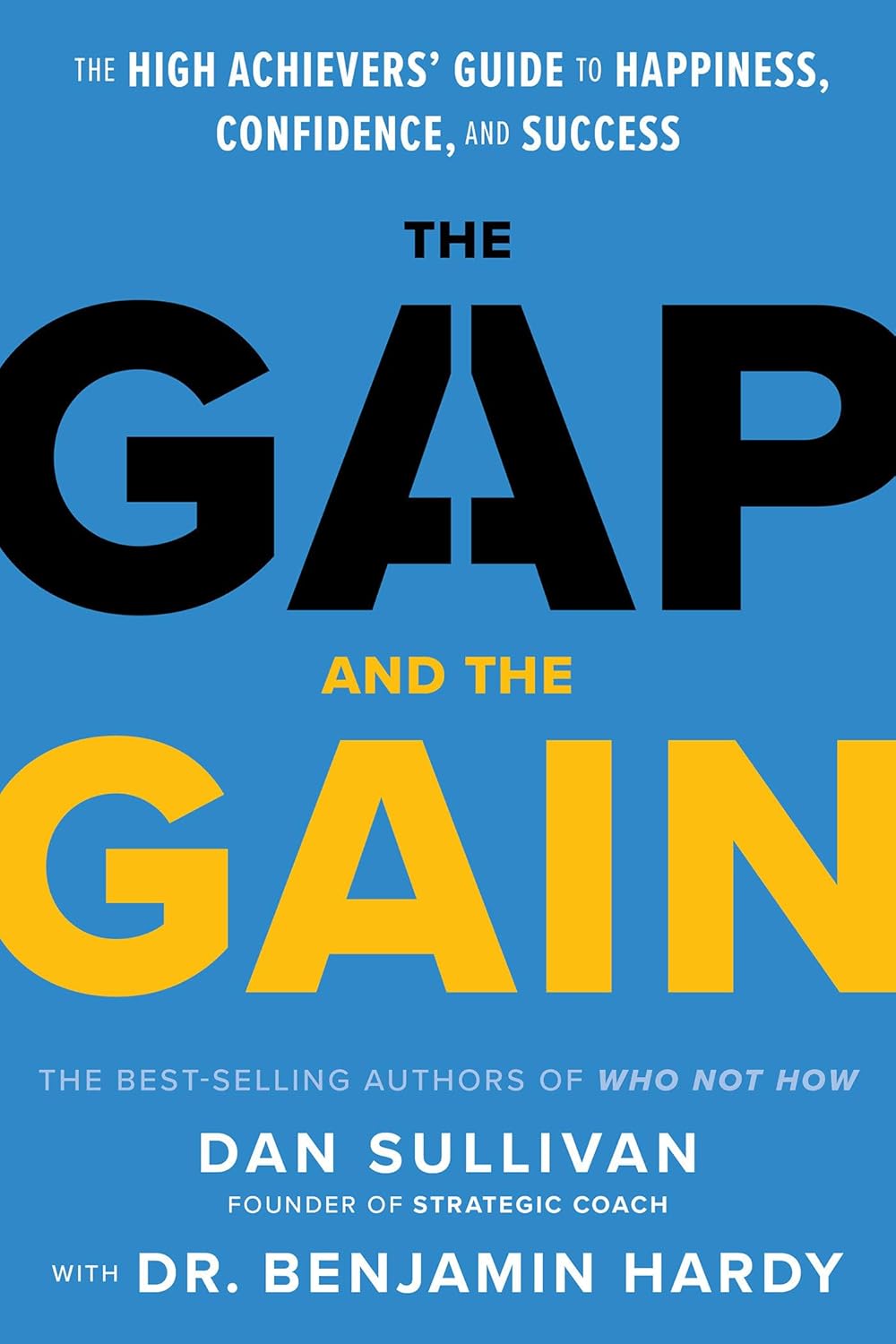
The Gap and the Gain Summary
By Dan Sullivan with Benjamin Hardy
The High Achievers' Guide to Happiness, Confidence, and Success
Summary preview
Most people think progress will make them happy. They believe that once they reach the next goal, earn the next amount, build the next level of success, or become the next version of themselves, then they will finally feel satisfied. But what if that very way of measuring your life is the reason you feel frustrated, anxious, and never quite enough, even when you are doing objectively well? That is the core shift at the heart of The Gap and the Gain by Dan Sullivan with Benjamin Hardy. The book is not really about productivity in the usual sense. It is about perception. It is about the mental measuring system you use to judge your life, your work, and yourself. One of those measuring systems keeps you trapped in comparison, scarcity, and disappointment. The other opens the door to confidence, momentum, gratitude, and genuine enjoyment. The book says there are two ways to measure progress. The first is by looking at the ideal, the horizon, the perfect standard you have not yet reached. That is the Gap. In the Gap, you measure yourself against what is missing. You focus on where you should be, who you should be, how far you still have to go. Because the ideal is always moving, you can never win there. Even if you achieve a lot, you still feel behind. The second way is by measuring backward from where you started. That is the Gain. In the Gain, you look at what you have done, what you have learned, what you have created, and how much you have grown. You measure yourself against your former self, not against a fantasy. This simple shift changes your emotions, your energy, and your future. What makes this idea powerful is that it applies everywhere. It shapes how you experience success, relationships, ambition, confidence, and even identity. It explains why high achievers often suffer despite visible accomplishments. It also explains why gratitude is not just a nice feeling but a practical tool for living and creating well. The book moves through stories, coaching insights, and psychology to show how people get stuck in the Gap and how they can return to the Gain. It explores perfectionism, comparison, trauma, the danger of idealized identities, and the freedom that comes from appreciating progress. It also ties this mindset to entrepreneurship and strategic living, showing that ambition does not need to disappear. You can still want more. You just stop using an imaginary standard as a weapon against yourself. What follows is a roadmap for escaping the trap of endless insufficiency and learning how to build a life where growth feels energizing instead of exhausting. The invitation is simple and profound. Stop measuring your life against what does not exist. Start measuring it against what is real.
Sign up to continue reading
Get access to full book summaries, audio of the summaries, and many more.
Similar Books
Books with a similar vibe—explore more like this.

Girl Code
Cara Alwill Leyba
Secrets to Sanity and Success for the Female Entrepreneur
4.9 (4)21 mins
The Brand Benefits Playbook
Allen Weiss, Debbie J. MacInnis
Why Customers Aren't Buying What You're Selling--And What to Do About It
4.8 (803)20 mins
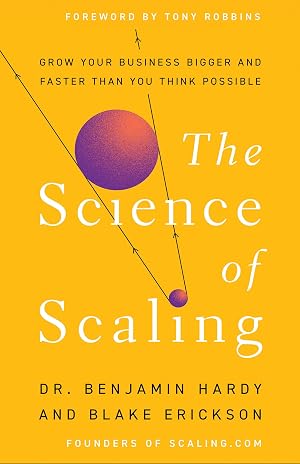
The Science of Scaling
Benjamin Hardy, Blake Erickson
Grow Your Business Bigger and Faster Than You Think Possible
4.8 (22)20 mins
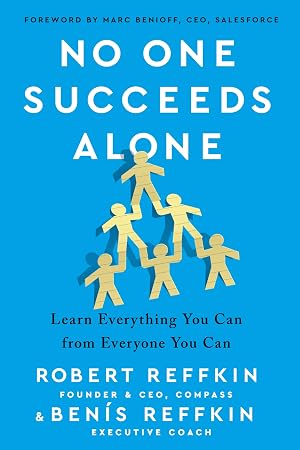
No One Succeeds Alone
Robert Reffkin
Learn Everything You Can from Everyone You Can
4.8 (9)23 mins
The Heart of Transformation
Michael J. Leckie
Build the Human Capabilities That Change Organizations for Good
4.7 (64)25 mins
The Lean Startup
Eric Ries
How Constant Innovation Creates Radically Successful Businesses
4.6 (1375)39 mins
Rework
Jason Fried & David Heinemeier Hansson
Unorthodox advice for growing companies
4.6 (692)28 mins
Process!
Mike Paton, Lisa González
How Discipline and Consistency Will Set You and Your Business Free
4.6 (5)23 mins
Good to Great
Jim Collins
Why Some Companies Make the Leap...and Others Don't
4.5 (835)30 mins
The Startup Lifecycle
Gregory Shepard
The Definitive Guide to Building a Startup from Idea to Exit
4.5 (346)21 mins