

The Origins of Totalitarianism
By Hannah Arendt
Hannah Arendt's landmark work about Europe's anti-Semitic and imperialist roots
Introduction
In a world where the shadows of political extremism continue to loom, this book offers a stirring exploration of the roots and mechanics behind the phenomenon of totalitarian rule. At its heart, the work navigates through the origins, development, and execution of systems that sought to shatter individuality, replace pluralism with homogeneous ideology, and reduce political life to a single, all-consuming narrative. The discussion unfolds like an intricate tapestry woven from threads of history, politics, and human psychology. It invites the reader to glimpse into a past that is as tumultuous as it is instructive, showing how seemingly distant events can come to affect the very essence of modern political life. The narrative begins by grounding its investigation in the foundations of political thinking, drawing on centuries of transformation in ideas about power and citizenship. It delves into how traditional political systems began to unravel, setting the stage for newer, more extreme forms of government. The text is both a historical inquiry and an urgent call to understand the complexities of human organization. It emphasizes that totalitarianism was not an inevitable aberration but rather the outcome of gradual processes that exploited social, economic, and political vulnerabilities. Through a warm yet probing tone, the book explains how forces like nationalism, antisemitism, and the decay of established institutions converged to create fertile ground for extremist ideologies. It underscores that the totalitarian drive was as much about seizing mass support as it was about cultivating an atmosphere of fear. The book challenges readers to think deeply about the factors that contribute to the formation of such systems and to consider whether the dynamics at play in the past may find echoes in the present. Rich with historical detail and equipped with a keen analytical perspective, the work invites us to observe not only what totalitarianism looks like in practice but also how it transforms the nature of human relations. The narrative is narrated in a manner that feels both conversational and thought-provoking, engaging the reader as if walking side by side with the author through tumultuous historical landscapes. It does not spare the reader challenging ideas or sober truths, but it balances them with poignant reflections on the human condition. By bridging the gap between historical fact and philosophical inquiry, the book opens up spaces for reflection on power, oppression, and the responsibilities that come with freedom. This introduction sets a stage that is exciting and serious, urging us to explore how the past continuously informs our present understanding of governance and individual agency. It is an invitation to confront uncomfortable truths while also offering a pathway for discernment and resilience against the dark allure of totalitarian dreams.
Sign up to continue reading
Get access to full book summaries, audio of the summaries, and many more.
Similar Books
Books with a similar vibe—explore more like this.

The Diary of a Young Girl
Anne Frank
The famous story of a Jewish girl who went into hiding during the Second World War
4.8 (192)31 mins

The Splendid and the Vile
Erik Larson
A Saga of Churchill, Family, and Defiance During the Blitz
4.7 (130)45 mins
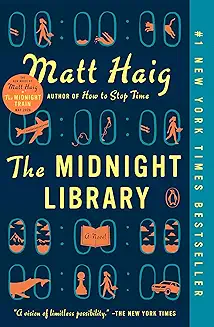
The Midnight Library
Matt Haig
A Fantasy Novel About the Choices That Lead to a Life Well-Lived
4.7 (4782)32 mins

She Said
Jodi Kantor & Megan Twohey
Breaking the Sexual Harassment Story that Helped Ignite a Movement
4.7 (1082)32 mins
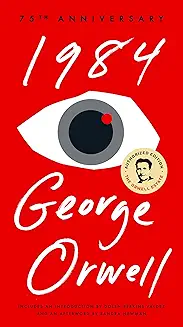
1984
George Orwell
A Dystopian Classic on the Dangers of Totalitarianism
4.7 (1738)16 mins
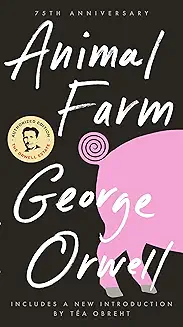
Animal Farm
George Orwell
A Political Satire on the Corrupting Influence of Power
4.7 (793)23 mins
King Leopold's Ghost
Adam Hochschild
A Story of Greed, Terror, and Heroism in Colonial Africa
4.6 (81)37 mins

The Creative Act
Rick Rubin
A Way of Being
4.6 (512)27 mins
My Grandmother's Hands
Resmaa Menakem
Racialized Trauma and the Pathway to Mending Our Hearts and Bodies
4.6 (167)30 mins
Losing Eden
Lucy Jones
Why Our Minds Need the Wild
4.6 (641)28 mins