

The Righteous Mind Summary
By Jonathan Haidt
Why Good People Are Divided by Politics and Religion
Summary preview
Why do good people who care about justice, kindness, and truth end up fighting like enemies over politics, religion, and morality? That is the puzzle at the heart of The Righteous Mind. Jonathan Haidt invites you to stop seeing moral conflict as a battle between good and evil and start seeing it as a clash between different kinds of moral intuition. He wants to explain why each side feels so certain, so hurt, and so baffled by the other. He is not trying to tell you which ideology wins. He is trying to show you why human beings are built to divide into moral teams and why each team sees only part of the full picture. The book begins with a simple but unsettling idea. Your mind is not a calm judge who studies facts and then reaches a wise conclusion. Most of the time, your mind works more like a fast, emotional creature that reacts first and explains later. We like to think we reason our way to our moral beliefs, but often we use reason more like a lawyer defending a client we already chose. That insight alone changes how you look at arguments. It explains why facts often fail to persuade, why people can be intelligent and still stubborn, and why moral disagreement feels personal deep down. From there, the story gets bigger. The book explores where morality comes from, how evolution shaped it, and why human beings are both selfish and deeply groupish. We are capable of compassion and cooperation on a huge scale, yet we are also quick to form tribes, protect our own, and condemn outsiders. Morality helps us live together, but it also helps us split apart. The same moral instincts that build communities can harden into culture wars, holy wars, and political contempt. A major pleasure of the book is that it does not stay in the abstract. It is full of vivid stories, playful thought experiments, and memorable images. You meet strange little moral tales, such as a family eating their dead dog after it is killed by a car, not because this is common, but because such examples reveal how quickly we judge and how slowly we justify. You also meet anthropologists, primatologists, political thinkers, and ordinary people whose lives show how rich and varied moral life really is. What makes this book powerful is its mix of honesty and humility. It asks you to notice your own blindness before you accuse others of theirs. It asks liberals to understand conservatives, conservatives to understand liberals, and everyone to see religion and community with fresh eyes. Haidt is offering not a sermon but a map. He wants to help you walk into the moral world of another person without losing your own footing. Once you see that morality is bigger, older, and less rational than you thought, disagreement stops looking like madness. It starts looking like human nature.
Sign up to continue reading
Get access to full book summaries, audio of the summaries, and many more.
Similar Books
Books with a similar vibe—explore more like this.
The Brothers Karamazov
Fyodor Dostoyevsky
A Tragic Murder Mystery on the Burden of Free Will and Morality
4.5 (729)21 mins
The Screwtape Letters
C.S. Lewis
Letters from a Senior to a Junior Devil
4.8 (47) mins
Othello
William Shakespeare
Love, Betrayal, and the Fall of a Hero
4.8 (14) mins
We Have Always Lived in the Castle
Shirley Jackson
Enter a Disturbing Labyrinth of Family Secrets and Dark Neurosis
4.8 (5) mins
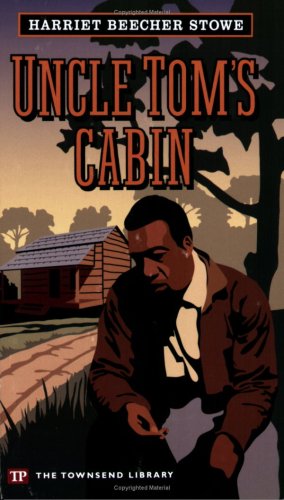
Uncle Tom's Cabin
Harriet Beecher Stowe
The Problem of Slavery and Its Treatment of Human Beings
4.7 (41)25 mins
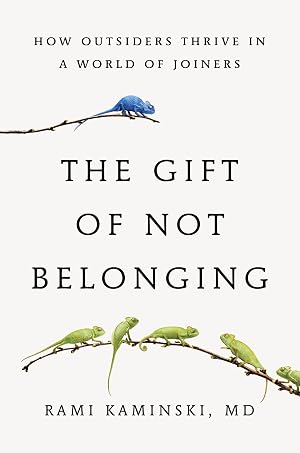
The Gift of Not Belonging
Rami Kaminski
How Outsiders Thrive in a World of Joiners
4.7 (89) mins
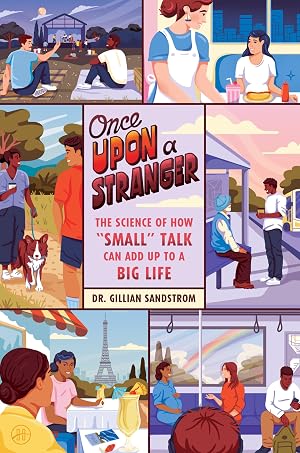
Once Upon a Stranger
Gillian Sandstrom
The Science of How Small Talk Can Add Up to a Big Life
4.7 (21) mins
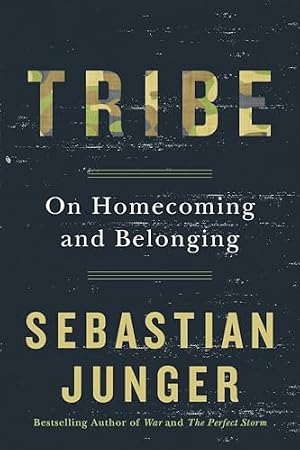
Tribe
Sebastian Junger
On Homecoming and Belonging
4.7 (17) mins

The Seven Circles
Chelsey Luger & Thosh Collins
Indigenous Teachings for Living Well
4.7 (13) mins
My Grandmother's Hands
Resmaa Menakem
Racialized Trauma and the Pathway to Mending Our Hearts and Bodies
4.6 (167)30 mins