

The Shallows Summary
By Nicholas Carr
What the Internet Is Doing to Our Brains
Summary preview
Come in and sit with me for a while, because I want to talk about what the Internet may be doing to our minds. That question lies at the heart of The Shallows, a book that begins not with a grand theory but with a feeling, a nagging sense that something intimate is changing inside us. Reading used to feel different. Thinking used to feel different. A long book could pull us into a state of deep attention, and there we could stay, following one idea into the next with patience and pleasure. Then the screen arrived, bringing speed, convenience, and a constant stream of stimulation. It gave us access to an astonishing amount of information, yet it also began to chip away at the habits of mind that serious reading and quiet reflection depend on. What I try to explore here is not just whether the Internet distracts us. That would be too simple. Every medium shapes us. Every tool we use to think becomes, in some measure, a tool that thinks for us. That is the deeper story. From the map to the clock, from the printed book to the computer, our technologies do more than extend our powers. They alter the way we see the world, the way we arrange our days, and the very paths along which our thoughts travel. Nicholas Carr sets out to understand whether the online world, with its links, alerts, feeds, and endless opportunities for interruption, is encouraging a mode of thought that is fast, restless, and scattered. He asks what happens when the brain is trained to skim rather than to ponder, to dart rather than to dwell. He also asks why this matters. The answer has to do with memory, concentration, creativity, and even our sense of self. If the deepest forms of thinking require sustained attention, then a culture of perpetual distraction may carry a hidden cost. The book moves across history, neuroscience, literature, and personal experience. It brings together the stories of inventors and philosophers, laboratory findings and old books, monks and programmers, all to make one central point. The brain is not fixed. It is plastic. It changes in response to how we use it. If we spend our lives inside systems designed for rapid input and instant response, those systems will leave their mark on us. So this is not a simple attack on technology, and it is not a nostalgic plea to turn back the clock. It is an inquiry into what kind of minds we are cultivating. It asks us to look past the glow of efficiency and ask a human question. As our machines become ever more powerful, are we becoming more thoughtful, or merely more busy?
Sign up to continue reading
Get access to full book summaries, audio of the summaries, and many more.
Similar Books
Books with a similar vibe—explore more like this.

The Emperor's New Mind
Roger Penrose
Concerning Computers, Minds, and the Laws of Physics
4.7 (64)29 mins
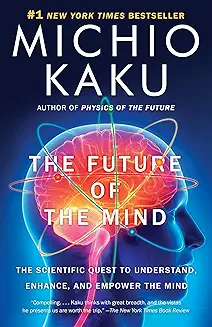
The Future of the Mind
Michio Kaku
The Scientific Quest to Understand, Enhance, and Empower the Mind
4.5 (602)34 mins
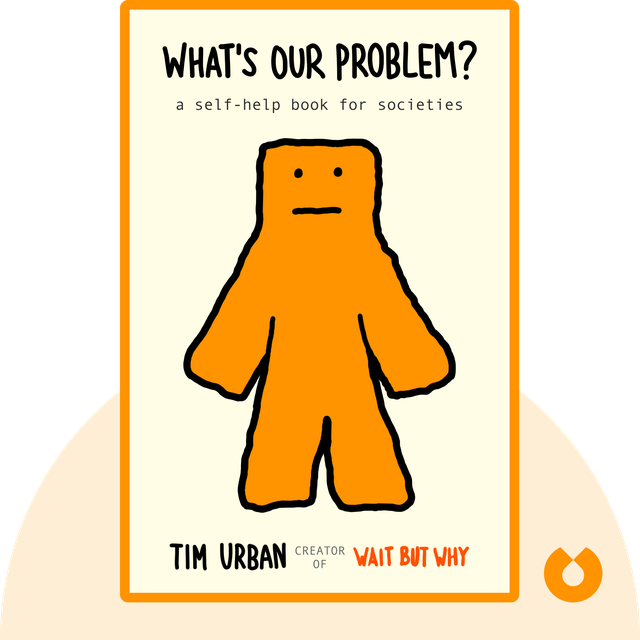
What's Our Problem?
Tim Urban
A Self-Help Book for Societies
4.5 (158)23 mins
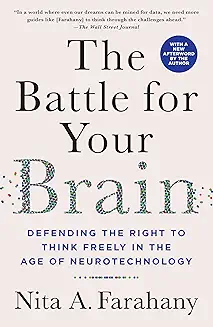
The Battle for Your Brain
Nita A. Farahany
Defending the Right to Think Freely in the Age of Neurotechnology
4.2 (449)18 mins
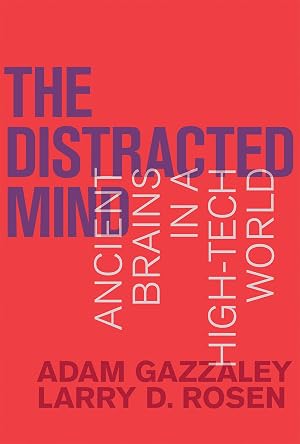
The Distracted Mind
Adam Gazzaley and Larry D. Rosen
Ancient Brains in a High-Tech World
4.2 (26)29 mins
Nineteen Eighty-Four (1984)
George Orwell
A Dystopian Classic on the Dangers of Totalitarianism
4.9 (697)17 mins
This Is How They Tell Me the World Ends
Nicole Perlroth
The Cyberweapons Arms Race
4.8 (64)33 mins

Widen the Window
Elizabeth A. Stanley
Training Your Brain and Body to Thrive During Stress and Recover from Trauma
4.8 (158)27 mins

The Screwtape Letters
C.S. Lewis
Letters from a Senior to a Junior Devil
4.8 (47)31 mins
Believe It to Achieve It
Brian Tracy, Christina Stein
Overcome Your Doubts, Let Go of the Past, and Unlock Your Full Potential
4.8 (32)22 mins