
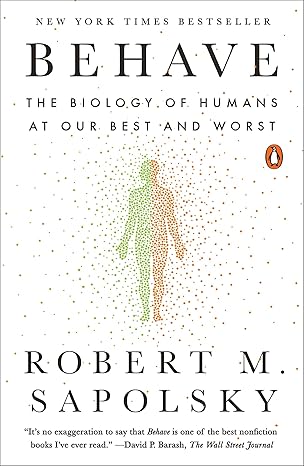
Behave Summary
By Robert Sapolsky
The Biology of Humans at Our Best and Worst
Summary preview
A person throws a punch, shelters a child, pulls a trigger, shares a meal, tortures a prisoner, donates a kidney, votes for a demagogue, forgives an enemy. What on earth is going on? That is the huge, unruly, fascinating question at the heart of Behave. Robert Sapolsky takes one tiny slice of time, the instant when a behavior happens, and then refuses to let us stop there. Instead, he keeps asking what happened one second before that, and one minute before, and one hour before, and one year before, and during childhood, and before birth, and even across evolutionary history. By the time he is done, a human act no longer looks like the product of a single cause, or a simple choice, or a tidy moral category. It looks like a knot of biology, experience, culture, history, and circumstance. The book is about the science of human behavior, but it never feels like a dry tour through brain parts and hormones. It is really a long argument against simple stories. We love simple stories. We want the violent person to be just evil, the saintly person to be just good, the political enemy to be just irrational, the stranger to be just other. But behavior is messier than that. The brain is always in conversation with the body. Hormones do not command us like puppeteers. Genes matter, but never by themselves. Childhood shapes us, but does not trap us in a cage. Culture rewires what we fear, love, and punish. Evolution built our capacities for both tribal hatred and breathtaking compassion. What makes the journey so gripping is the voice guiding it. It is witty, skeptical, impatient with nonsense, and deeply humane. The jokes arrive right next to the blood sugar charts. The baboons show up next to the courtroom cases. One moment you are hearing about the amygdala firing in response to threat, and the next you are being asked to think about whether anyone truly deserves blame in the way we usually imagine. The book keeps circling the hardest tension of all. If our actions are produced by causes stretching backward through neurons, hormones, accidents, and histories we did not choose, what becomes of praise, punishment, and moral judgment? So what follows is not just a set of scientific findings. It is a way of seeing people. It asks you to become allergic to easy explanations and to grow more curious about what lies behind every act. It asks you to see that the same species capable of genocide is also capable of radical empathy, and that both potentials live in the same nervous system. By the end, the real subject is not only why we behave, but how understanding that might make us wiser, less cruel, and perhaps a little better at building a world that brings out our best rather than our worst.
Sign up to continue reading
Get access to full book summaries, audio of the summaries, and many more.
Similar Books
Books with a similar vibe—explore more like this.
The Extended Mind
Annie Murphy Paul
The Power of Thinking Outside the Brain
4.7 (971)30 mins
The Neuroscience of You
Chantel Prat
How every brain is different and how to understand yours
4.7 (679)20 mins

What Your ADHD Child Wishes You Knew
Sharon Saline
Working Together to Empower Kids for Success in School and Life
4.7 (22)26 mins
The Tale of the Dueling Neurosurgeons
Sam Kean
The History of the Human Brain as Revealed by True Stories of Trauma, Madness, and Recovery
4.6 (471)35 mins
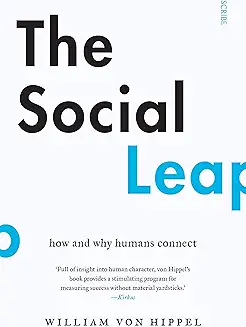
The Social Leap
William von Hippel
The New Evolutionary Science of Who We Are, Where We Come From, and What Makes Us Happy
4.6 (434)28 mins
ADHD 2.0
Edward M. Hallowell and John J. Ratey
New Science and Essential Strategies for Thriving with Distraction from Childhood Through Adulthood
4.6 (467)23 mins
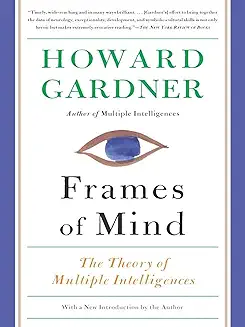
Frames of Mind
Howard Gardner
The Theory of Multiple Intelligences
4.6 (329)30 mins
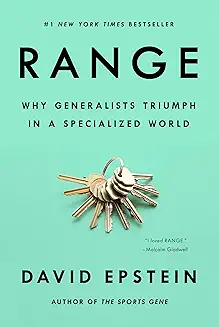
Range
David Epstein
Why Generalists Triumph in a Specialized World
4.6 (3497)28 mins
Productive Failure
Manu Kapur
Unlocking Deeper Learning Through the Science of Failing
4.5 (211)22 mins
Mindset
Carol Dweck
The New Psychology of Success
4.4 (2959)33 mins