

The Extended Mind Summary
By Annie Murphy Paul
The Power of Thinking Outside the Brain
Summary preview
Imagine stepping into a world where your mind stretches far beyond the confines of your skull, where every tool, every conversation, and every physical space plays a role in shaping how you think, learn, and remember. In this book, the idea of an extended mind is introduced as not just a philosophical abstraction but as a practical reality that influences our daily lives. The author invites you to reconsider the traditional view of the brain as the sole seat of thought and to embrace a broader perspective where cognition is distributed across our bodies, our environment, and even the technologies we use. This approach reshapes our understanding of intelligence and creativity, suggesting that the mind is a dynamic, malleable network intricately connected to the world around us. As you journey through these pages, you will find that the arguments put forward are not merely academic musings. Instead, they come to life through engaging anecdotes, relatable examples, and research that spans cognitive science, psychology, and neuroscience. The narrative is crafted with warmth and clarity, aiming to bridge the gap between complex scientific theory and everyday experience. It acknowledges that our cognitive abilities can be greatly enhanced if we learn to harness the power of tools, environments, and relationships to augment the mental work done inside our brains. The book challenges you to think about how modern technology—the smartphones, computers, and digital networks—acts as an extension of your mind. It emphasizes that these external elements are not just accessories but integral parts of our problem-solving process. You begin to see that memory can be off-loaded into notebooks, ideas can be nurtured through collaborative platforms, and even the layout of a room can affect creativity. Rather than isolating thought within the brain, thinking is portrayed as an expansive process that interacts continuously with the external world. Throughout this exploration, the narrative remains inviting and accessible, never losing sight of the personal impact these ideas can have on your life. By integrating concepts from diverse fields, the book paints a picture of a future where understanding and designing our cognitive ecosystems might lead to better learning, improved work habits, and a deeper connection with the world. Whether you are a curious reader, a student of the mind, or someone eager to optimize your own thinking, this work encourages you to see intelligence as an emergent property of interaction—one that blossoms from the convergence of mind, body, and environment. The stage is set for an in-depth journey into how our minds extend into the spaces we inhabit, the objects we interact with, and the networks we maintain. With a narrative that feels like a conversation with a trusted friend, the book gently guides you into reimagining what it means to be intelligent and how your own mind can flourish when you recognize that it is not confined within the head but stretches out into an ever-changing, rich, and interconnected world.
Sign up to continue reading
Get access to full book summaries, audio of the summaries, and many more.
Similar Books
Books with a similar vibe—explore more like this.
The Neuroscience of You
Chantel Prat
How every brain is different and how to understand yours
4.7 (679)20 mins

What Your ADHD Child Wishes You Knew
Sharon Saline
Working Together to Empower Kids for Success in School and Life
4.7 (22) mins
The Tale of the Dueling Neurosurgeons
Sam Kean
The History of the Human Brain as Revealed by True Stories of Trauma, Madness, and Recovery
4.6 (471)35 mins
The Social Leap
William von Hippel
The New Evolutionary Science of Who We Are, Where We Come From, and What Makes Us Happy
4.6 (434)28 mins

ADHD 2.0
Edward M. Hallowell and John J. Ratey
New Science and Essential Strategies for Thriving with Distraction from Childhood Through Adulthood
4.6 (467)23 mins
Frames of Mind
Howard Gardner
The Theory of Multiple Intelligences
4.6 (329)30 mins
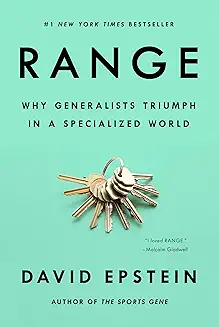
Range
David Epstein
Why Generalists Triumph in a Specialized World
4.6 (3497)28 mins
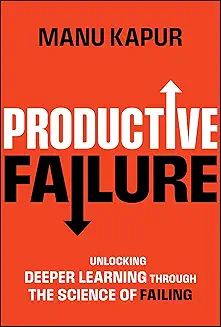
Productive Failure
Manu Kapur
Unlocking Deeper Learning Through the Science of Failing
4.5 (211)22 mins
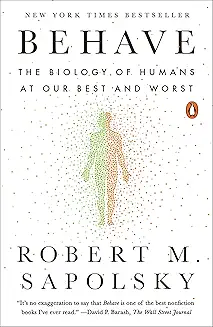
Behave
Robert Sapolsky
The Biology of Humans at Our Best and Worst
4.5 (1208)31 mins
Mindset
Carol Dweck
The New Psychology of Success
4.4 (2959)33 mins