
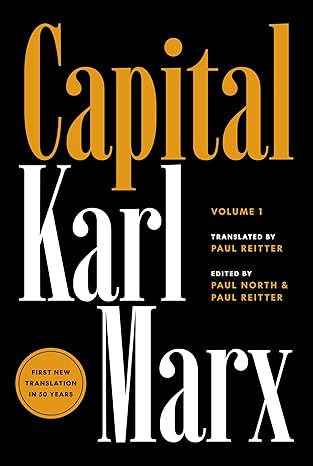
Capital Summary
By Karl Marx
A Critique of Political Economy
Summary preview
Open this book and you do not step into a quiet library. You step into a factory, a marketplace, a counting house, a field soaked with labor, a home where hunger waits for wages, and a world where wealth piles up at one pole while misery gathers at the other. The great subject is capital, not as a mere heap of money or machines, but as a social power, a moving relation between people that wears the mask of things. Karl Marx asks you to look past the glittering surface of buying and selling and see the hidden engine beneath it. He wants to show how the ordinary world of commodities, prices, wages, profit, rent, and interest rests on human labor, and how that labor is organized, measured, squeezed, and made to serve accumulation. The book begins with what seems simple enough, the commodity. A coat, a loaf of bread, a bolt of linen. Yet the more closely you inspect this everyday object, the more strange it becomes. It has a use for someone, certainly, but it also has exchange value, a social worth that lets it trade against other goods. That value, we are told, springs from socially necessary labor time. Here the ordinary world begins to wobble. Human relations appear in the form of relations between things. The market seems natural and self moving, while the labor that created it disappears from view. This is the spell of commodity fetishism, and once you see it, it is hard to look at the modern economy in the same innocent way again. From there the inquiry deepens. Money enters, then capital, and the key riddle arrives. If equivalents are exchanged in the market, how does profit arise? The answer lies in a peculiar commodity called labor power, which the worker must sell in order to live. Its value is set by the cost of maintaining the worker, yet in the workshop it can produce more value than it costs. That difference is surplus value, the secret source of profit. What follows is an unsparing journey through the struggle over the working day, the rise of machinery, the discipline of the factory, the extraction of relative and absolute surplus value, the reproduction of class relations, and the drive of capital to expand without limit. The story does not stop at the workshop door. It extends into circulation, accumulation, crisis, and the violent historical birth of capitalism itself. For instance, the enclosures of common land, colonial plunder, slavery, and state force all appear not as side notes but as conditions of possibility. The whole work moves with a fierce moral energy, yet it is never content with outrage alone. It wants explanation. It wants you to see why exploitation is not an accident, why competition compels the capitalist as much as need compels the worker, and why a system built on endless accumulation must constantly revolutionize production while also generating instability and human ruin. This is not merely a critique of greed....
Sign up to continue reading
Get access to full book summaries, audio of the summaries, and many more.
Similar Books
Books with a similar vibe—explore more like this.
Atlas Shrugged
Ayn Rand
A Philosophical Tale About the Failures of Government Coercion
3.5 (168)14 mins
Utilitarianism
John Stuart Mill
Explore a Timeless Ethics Classic
4.8 (46)24 mins

Hamlet
William Shakespeare
A Young Prince's Tragic Descend Into Madness and Revenge
4.8 (43)28 mins
The Epic of Gilgamesh
Anonymous
A timeless tale of friendship, mortality, and the search for meaning
4.8 (34)23 mins

How Music Got Free
Stephen Witt
What happens when an entire generation commits the same crime?
4.8 (8)36 mins
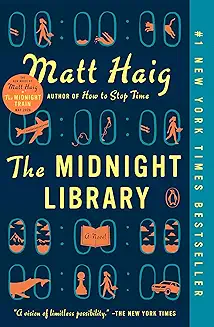
The Midnight Library
Matt Haig
A Fantasy Novel About the Choices That Lead to a Life Well-Lived
4.7 (4782)32 mins

Uncle Tom's Cabin
Harriet Beecher Stowe
The Problem of Slavery and Its Treatment of Human Beings
4.7 (41)25 mins
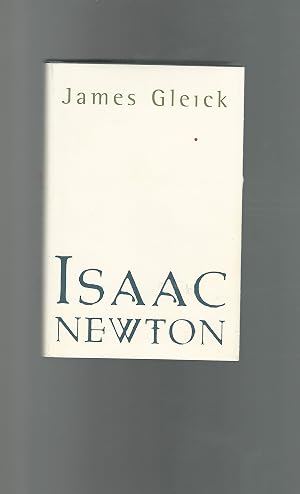
Bedtime Biography: Isaac Newton
James Gleick
Learn the truth behind the legend
4.7 (45)21 mins

The Odyssey
Homer
The Ancient Greek Epic Poem About A Hero's Journey Home
4.7 (60)24 mins
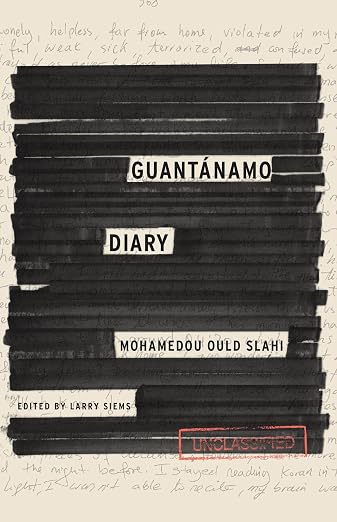
Guantánamo Diary
Mohamedou Ould Slahi, edited by Larry Siems
Guantanamo from the Inside
4.7 (3)27 mins