
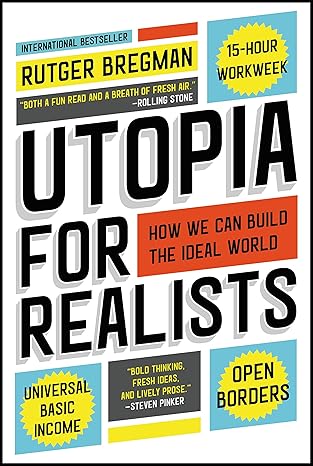
Utopia for Realists Summary
By Rutger Bregman
And How We Can Get There
Summary preview
What if the things we call unrealistic are only ideas whose time has not yet come? That is the question beating at the heart of this book. It asks you to look again at the world you live in, with all its poverty, pointless jobs, fear, exhaustion, and carefully managed scarcity, and to wonder whether much of it is not inevitable at all. We are often told that politics must be practical, that human nature is selfish, that there is never enough to go around, and that big dreams belong to children. But history tells a different story. Again and again, what once looked absurd became ordinary. The end of slavery, democracy for all, the welfare state, weekends, universal education. Every one of these began as a fantasy in the eyes of sensible people. The great provocation of Utopia for Realists is simple. Stop accepting a small imagination. Stop confusing what exists now with what is possible. The real scandal is not that bold ideas are too daring. The real scandal is that we have become so used to tinkering around the edges that we barely dare to ask bigger questions anymore. Why should anyone be poor in a rich society? Why should we tie survival to paid work, even when much work is meaningless and much useful activity goes unpaid? Why should borders decide the fate of billions, when the place of your birth is still one of the strongest predictors of your future? Rutger Bregman writes with the energy of someone who wants to shake you awake. He rummages through forgotten experiments, old manifestos, surprising data, and stories from both triumph and failure to show that radical ideas can be deeply practical. He does not offer utopia as a perfect blueprint. He offers it as a direction, a way of recovering the lost habit of hope. His argument rests on three huge proposals that run through the book like bright threads. A universal basic income. A much shorter working week. And a world with open borders. These are not presented as polished slogans. They are tested against history, economics, psychology, and everyday life. The book moves from the old dream of a land of plenty to modern policy debates. It shows how poverty is not a character flaw but a shortage of cash. It shows how the cult of work can hollow out life instead of enriching it. It shows how migration restrictions preserve global injustice on an enormous scale. And all along, it insists on something both modest and explosive. Progress begins when people are willing to sound naive. Utopia is not the opposite of realism. Sometimes utopia is the only realistic response to a broken world.
Sign up to continue reading
Get access to full book summaries, audio of the summaries, and many more.
Similar Books
Books with a similar vibe—explore more like this.
How Music Got Free
Stephen Witt
What happens when an entire generation commits the same crime?
4.8 (8)36 mins
From Third World to First
Lee Kuan Yew
The Singapore Story: 1965-2000
4.7 (16)22 mins
Cobalt Red
Siddharth Kara
How the Blood of the Congo Powers Our Lives
4.6 (4) mins
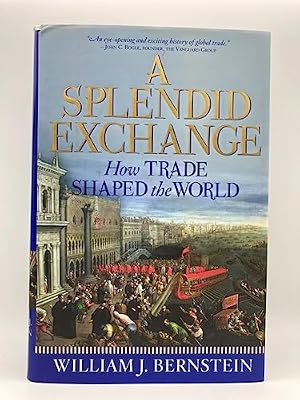
A Splendid Exchange
William J. Bernstein
How Trade Shaped the World
4.6 (7) mins
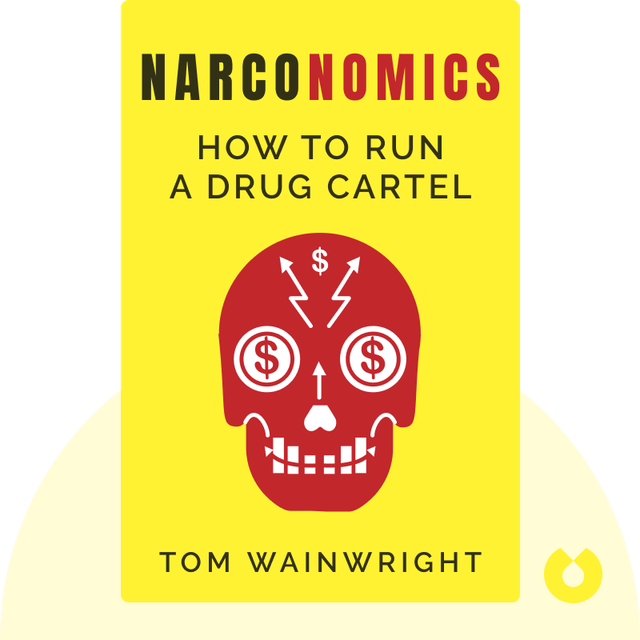
Narconomics
Tom Wainwright
How to Run a Drug Cartel
4.6 (19)29 mins
The Big Short
Michael Lewis
Inside the Doomsday Machine
4.5 (1357)36 mins
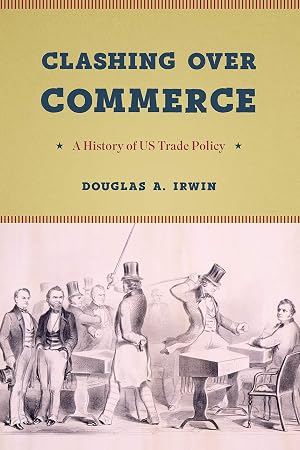
Clashing over Commerce
Douglas A. Irwin
A History of US Trade Policy
4.5 (7) mins

A Long Way Gone
Ishmael Beah
Memoirs of a Boy Soldier
4.5 (9) mins
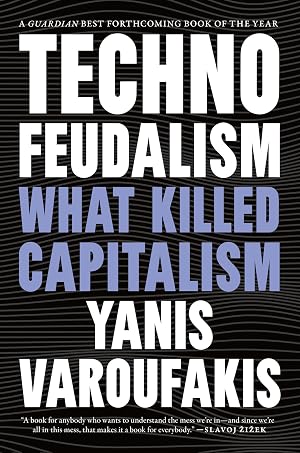
Technofeudalism
Yanis Varoufakis
What Killed Capitalism
4.5 (39) mins
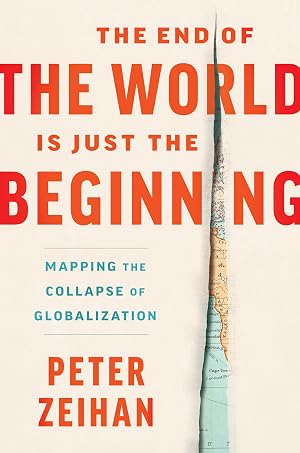
The End of the World Is Just the Beginning
Peter Zeihan
Mapping the Collapse of Globalization
4.5 (105) mins