

Deadliest Enemy
By Michael T. Osterholm and Mark Olshaker
Our War Against Killer Germs
Introduction
The book unfolds like a riveting journey into the heart of global health and the unseen enemies that have threatened human existence over the centuries. It invites you into a narrative that melds science, history, and policy into a wake-up call for humanity. Here, the authors draw back the curtain on how infectious diseases, whether through natural mutation or human interference, have repeatedly reshaped the destiny of nations. You are taken on a path that begins with understanding the origins of these deadly threats and moves into the urgent need for humanity to recognize the breadth and depth of our vulnerabilities. The text is as much a story of scientific discovery as it is a call for collective action. It is written in a tone that is both conversational and unwaveringly clear, a narrative that speaks directly to your sense of responsibility while simultaneously instilling hope through the power of knowledge. At its core, the book is about the interconnection between human behavior, global travel, technological advancements, and the natural evolution of pathogens. It demonstrates that while medical breakthroughs have dramatically increased our capacity to fend off infections, our interconnected world remains a stage where an outbreak in one region can cascade rapidly into a global crisis. The book emphasizes that preparedness is not solely the realm of hospitals and laboratories. Instead, it involves every level of society, from governmental agencies to community leaders, and yes, you as a citizen. The authors weave together multiple threads of thought, presenting an accessible account of complex scientific principles without losing the narrative’s pulse. They show how microbial evolution and adaptive behaviors in viruses, bacteria, and other pathogens are influenced by diverse factors, including environmental changes, social behaviors, and even global economic policies. The text challenges you to think beyond conventional methods of risk assessment, inviting you to explore an interdisciplinary approach that spans epidemiology, sociology, politics, and technology. Throughout the pages, you are encouraged to reflect on the fragility of modern infrastructures that depend on continuous connectivity and how easily these networks can be exploited by nature’s most tenacious survivors. The urgency in the text resonates as a reminder that our greatest enemy may not come from any single source but from the culmination of neglecting the fundamental lessons of past outbreaks. In essence, this book serves as both an eye-opener and a guide, steering the conversation clearly away from complacency towards proactive and sustained action in global preparedness.
Sign up to continue reading
Get access to full book summaries, audio of the summaries, and many more.
Similar Books
Books with a similar vibe—explore more like this.
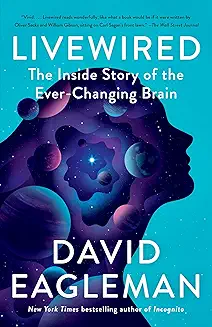
Livewired
David Eagleman
The inside story of the Ever-changing brain
4.8 (544)28 mins
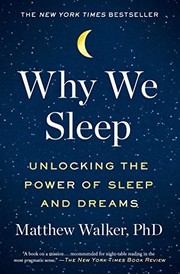
Why We Sleep
Matthew Walker
Unlocking the Power of Sleep and Dreams
4.8 (1560)17 mins

The God Equation
Michio Kaku
The Quest for a Theory of Everything
4.7 (409)28 mins
The Extended Mind
Annie Murphy Paul
The Power of Thinking Outside the Brain
4.7 (971)30 mins
The Neuroscience of You
Chantel Prat
How every brain is different and how to understand yours
4.7 (679)20 mins
The Tale of the Dueling Neurosurgeons
Sam Kean
The History of the Human Brain as Revealed by True Stories of Trauma, Madness, and Recovery
4.6 (471)35 mins
The Social Leap
William von Hippel
The New Evolutionary Science of Who We Are, Where We Come From, and What Makes Us Happy
4.6 (434)28 mins
Proust and the Squid
Maryanne Wolf
The Story and Science of the Reading Brain
4.6 (213)29 mins
The Talent Code
Daniel Coyle
Greatness Isn't Born. It's Grown. Here's How.
4.6 (667)36 mins
ADHD 2.0
Edward M. Hallowell and John J. Ratey
New Science and Essential Strategies for Thriving with Distraction from Childhood Through Adulthood
4.6 (467)23 mins