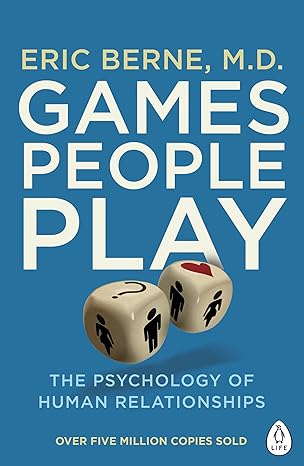
Full Book Summary of Games People Play by Eric Berne
By Eric Berne
The Psychology of Human Relationships
Preview
Most people think their troubles come from bad luck, difficult personalities, or plain misunderstanding. Yet if you watch closely, you begin to see that many painful scenes in daily life are not accidents at all. They have a pattern. The same quarrel returns with a new face. The same disappointment appears in a new office, a new friendship, a new marriage. The same feelings rise on cue, as if everyone has been handed a script and told to perform without admitting it. That is the world this book opens for you. The central idea is simple and unsettling. Much of social life is made of transactions, little units of exchange between people. A word, a glance, a joke, a criticism, a silence, all of these are moves in an ongoing game. Some exchanges are straightforward and honest. Others are loaded with hidden motives. On the surface one thing is being said, but underneath something quite different is happening. When this hidden level takes over and leads to a familiar payoff, a bitter triumph, a humiliation, a rescue, a fight, a reason to suffer, you are no longer just talking. You are playing a game. The book gives you a practical language for seeing this. It starts with the three ego states that live in each of us. Parent is the part that copies rules, judgments, protections, and warnings. Adult is the part that observes, calculates, and deals with reality as it is. Child is the part that feels, wants, fears, rebels, adapts, and delights. These are not poetic labels. They are working tools. Once you notice which ego state is speaking and which one is answering, ordinary conversation becomes much easier to read. From there, the discussion moves into the hidden choreography of daily life. Why does one person keep...