
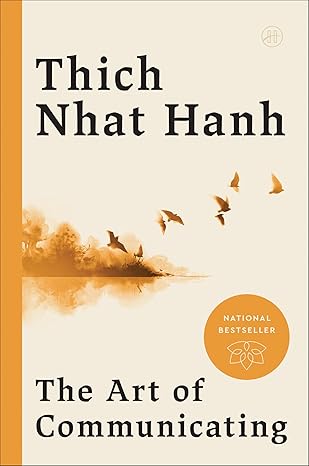
The Art of Communicating Summary
By Thich Nhat Hanh
The fascination of mindfulness in our daily lives
Summary preview
Communication can bring healing, understanding, and love, or it can create distance, loneliness, and suffering. The heart of this book is very simple. The way we speak, listen, think, and even consume information shapes the world inside us and around us. If there is noise, anger, fear, and confusion in us, our words will carry that energy. If there is peace, clarity, and compassion in us, our communication can become a true gift. Thich Nhat Hanh invites you to look at communication not as a technique for winning arguments or getting what you want, but as a spiritual practice, a daily path of awakening. The book begins with a gentle but radical insight. Before you can communicate well with another person, you must come home to yourself. Many people speak all day long, send messages constantly, and absorb endless streams of news, entertainment, and conversation, yet still feel deeply unheard and unseen. That is because real communication is not just about exchanging words. It is about presence. It is about being there fully enough to recognize what is alive in you and what is alive in the other person. Without that presence, even loving words can miss their mark. From this foundation, the book explores how mindful awareness transforms every layer of communication. It shows how thoughts are already a form of speech, how the body also speaks, and how what you take in through your eyes, ears, and mind becomes part of your consciousness. A harsh television program, a cruel joke, a toxic online debate, or a conversation filled with blame can plant seeds of agitation and despair. In the same way, a quiet breath, a compassionate phrase, or a moment of deep listening can water seeds of peace and joy. Again and again, you are reminded that suffering does not have to be hidden, denied, or thrown onto others. It can be held with tenderness. When you know how to breathe with painful feelings and listen without judgment, you can begin to understand the roots of conflict. Then communication is no longer a battlefield. It becomes a bridge. The book offers concrete ways to speak lovingly, to listen so deeply that another person suffers less, to repair relationships, and to nourish connection in families, friendships, workplaces, and communities. What makes this teaching so powerful is its warmth and practicality. It does not ask you to become perfect. It asks you to pause, breathe, and begin where you are. Every phone call, every meal, every disagreement, every silent moment becomes a chance to practice. By the end, you see that communication is not separate from meditation, love, or ethical living. It is one of the clearest ways to bring mindfulness into the living fabric of everyday life.
Sign up to continue reading
Get access to full book summaries, audio of the summaries, and many more.
Similar Books
Books with a similar vibe—explore more like this.
Sound Affects
Julian Treasure
How Sound Shapes Our Lives, Our Wellbeing and Our Planet
4.7 (10) mins
Say What You Mean
Oren Jay Sofer
A Mindful Approach to Nonviolent Communication
4.5 (446)40 mins

The Power of Nunchi
Euny Hong
The Korean Secret to Happiness and Success
4.5 (636)27 mins

Atlas of the Heart
Brené Brown
Mapping Meaningful Connection and the Language of Human Experience
4.5 (1028)31 mins

The Gift of Therapy
Irvin D. Yalom
An Open Letter to a New Generation of Therapists and Their Patients
4.3 (388)25 mins

The Couple's Guide to Thriving with ADHD
Melissa Orlov & Nancie Kohlenberger
Improve Trust, Intimacy, and Reliability
4.0 (21)21 mins

The Leader's Guide to Mindfulness
Audrey Tang
How To Use Soft Skills To Get Hard Results
3.8 (661)14 mins

Lovingkindness
Sharon Salzberg
The Revolutionary Art of Happiness
4.9 (88) mins

Livewired
David Eagleman
The inside story of the Ever-changing brain
4.8 (544)28 mins

Cold Calling Sucks (And That's Why It Works)
Nick Cegelski, Armand Farrokh
A Step-by-Step Guide to Calling Strangers in Sales
4.8 (459)20 mins