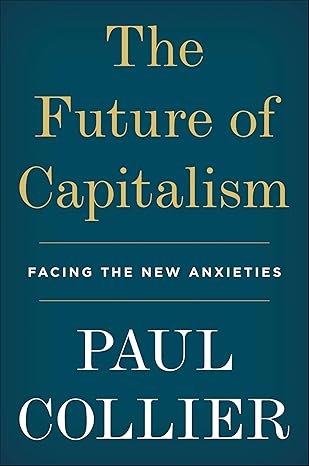
Full Book Summary of The Future of Capitalism by Paul Collier
By Paul Collier
Facing the New Anxieties
Preview
Capitalism has done something extraordinary. It has made whole societies richer, longer lived, better fed, and more capable than any people in history. Yet it has also left many people feeling cast aside, disrespected, and unmoored. That tension sits at the heart of this book. The problem is not simply that some people have less money than others. It is that the ties which help a society cohere have weakened. Families have frayed, places have been abandoned, nations have grown mistrustful, and the global economy has too often rewarded speed and scale while neglecting belonging and duty. Paul Collier begins from a simple but uncomfortable observation. The political shocks of recent years were not random outbursts. They were signs of a moral and social breakdown. Behind the anger of left behind towns, behind the distrust of experts, behind the rise of tribal politics, lies a deeper split between flourishing metropolitan elites and those whose communities and identities have been hollowed out. A society cannot thrive if it asks people to think only as isolated individuals chasing gain. Markets matter, states matter, but so do families, neighborhoods, workplaces, and nations. When those bonds weaken, prosperity itself becomes brittle. The argument unfolds as both diagnosis and repair manual. The old stories no longer work. The political left has too often reduced justice to redistribution and rights, while neglecting responsibility and attachment. The political right has too often trusted markets to solve what are really social problems, while dismissing the moral costs of inequality and neglect. The result has been an economy that is productive but increasingly unserious about the obligations people owe one another. What replaces that stale argument is a call for ethical capitalism. Not sentimental nostalgia, and not a fantasy of tearing the whole system down. The point is to...