
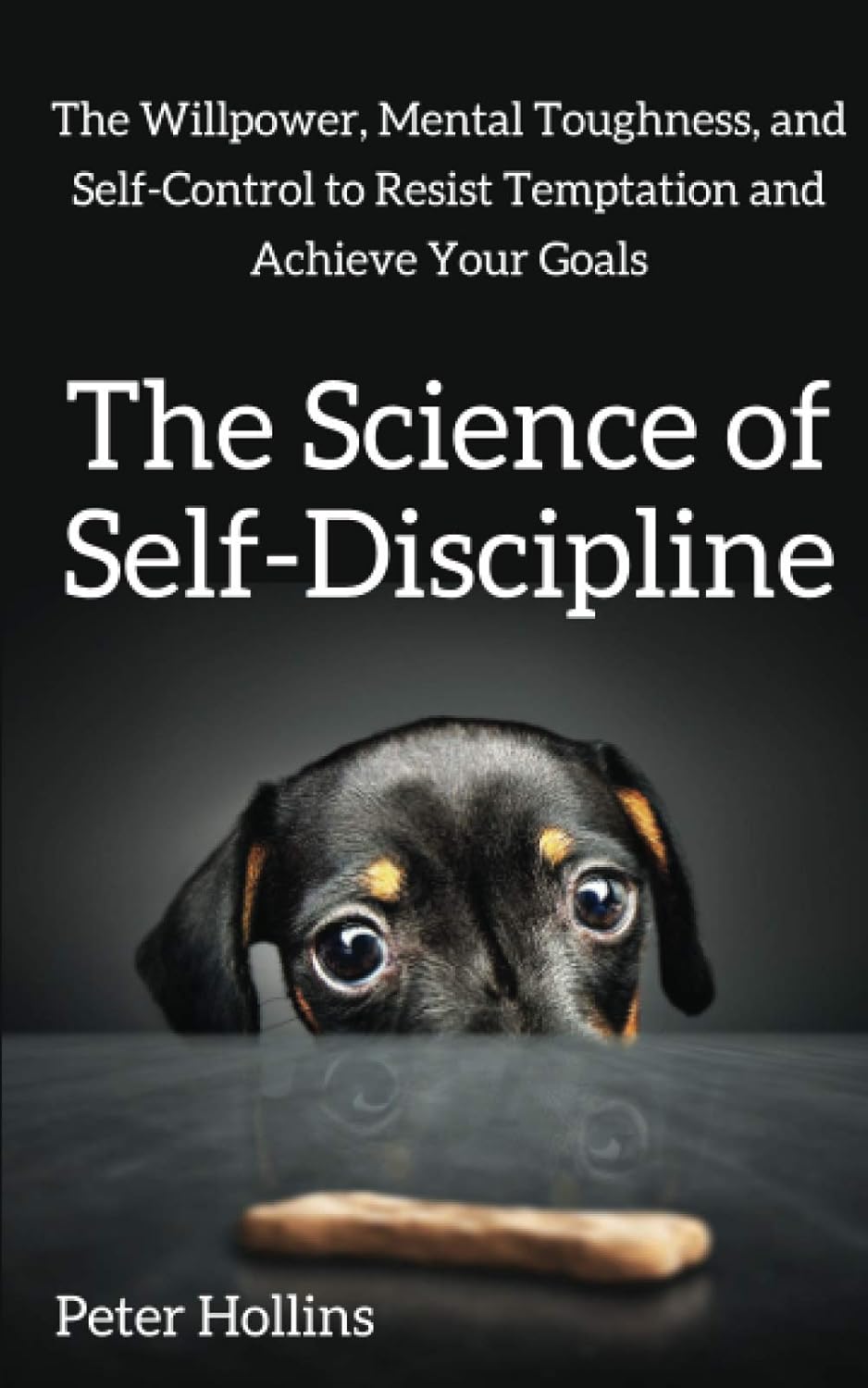
The Science of Self-Discipline Summary
By Peter Hollins
Resist Temptation and Achieve Your Goals
Summary preview
Self discipline sounds hard, cold, and joyless when most people first hear it. It brings up images of forcing yourself through misery, saying no to everything fun, and living like a machine. But that is not the heart of this book. The real message is much more human and much more hopeful. Self discipline is not punishment. It is freedom. It is the ability to act according to what matters to you instead of whatever feeling happens to be loudest in the moment. That is the promise at the center of The Science of Self Discipline by Peter Hollins. The book takes a subject many people treat like a personality trait and turns it into something practical, trainable, and deeply understandable. You are not asked to become a different person overnight. You are asked to see why you do what you do, why your good intentions keep losing to comfort, distraction, and impulse, and how to steadily reverse that pattern. The book starts from a simple truth. Most people know what they should do. They know they should save money, exercise, focus, sleep on time, stop procrastinating, and keep promises to themselves. The problem is not knowledge. The problem is execution. Somewhere between the plan and the action, the mind slips. It bargains. It delays. It reaches for what is easy now and ignores what is important later. That gap between intention and behavior is where self discipline lives. What makes this book useful is that it does not rely on empty motivation. Motivation comes and goes. It rises when you are excited and disappears when life gets boring, stressful, or inconvenient. The book argues that discipline matters more because it keeps working after the mood changes. It is built through structure, awareness, environment, repetition, and the ability to tolerate discomfort without running away from it. Along the way, you are shown that laziness is often not laziness, that procrastination is not just poor time management, and that weakness usually has a pattern behind it. The mind seeks pleasure and avoids pain. It protects energy. It follows habits. It responds to cues in your surroundings. If you understand those forces, you stop seeing your failures as personal defects and start treating them as problems you can solve. The pages that follow build that case step by step. They move from the psychology behind willpower to the hidden role of emotion, habit, and environment. They show how to shrink temptation, reduce friction, set up systems, and become more reliable to yourself. The overall feeling is direct and encouraging. You are not broken. You are untrained. And training, if done wisely and patiently, can change almost everything.
Sign up to continue reading
Get access to full book summaries, audio of the summaries, and many more.
Similar Books
Books with a similar vibe—explore more like this.
Breaking The Habit of Being Yourself
Joe Dispenza
How to Lose Your Mind and Create a New One
4.5 (415)23 mins
The Power of Habit
Charles Duhigg
Why We Do What We Do in Life and Business
4.3 (3181)30 mins
Good Habits, Bad Habits
Wendy Wood
The Science of Making Positive Changes That Stick
3.7 (653)26 mins
The Let Them Theory
Mel Robbins
A Life-Changing Tool That People Can't Stop Talking About
4.6 (2094)27 mins
Die Empty
Todd Henry
Unleash Your Best Work Every Day
4.6 (40)22 mins
Not Nice
Aziz Gazipura
Stop People Pleasing, Staying Silent, & Feeling Guilt and Start Speaking Up, Saying No, Asking Boldly, and Unapologetically Being Yourself
4.5 (414)29 mins
How to Think More Effectively
The School of Life
A guide to greater productivity, insight and creativity
4.5 (909)23 mins
Productive Failure
Manu Kapur
Unlocking Deeper Learning Through the Science of Failing
4.5 (211)22 mins
Feel-Good Productivity
Ali Abdaal
How to Do More of What Matters to You
4.5 (1198)15 mins
Grit
Angela Duckworth
The Power of Passion and Perseverance
4.5 (1938)32 mins