
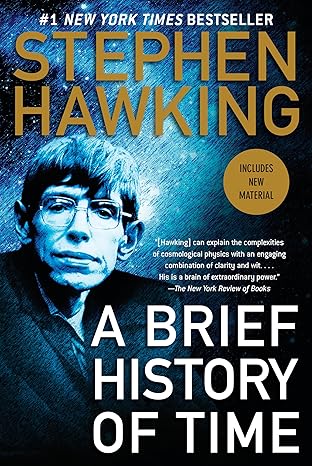
A Brief History of Time
By Stephen Hawking
From the Big Bang to Black Holes
Introduction
There are books that try to teach you facts, and there are books that invite you to stand at the edge of existence and ask the oldest, strangest questions we know. A Brief History of Time belongs to the second kind. It is not simply about stars, equations, or distant galaxies. It is about the deep wish to understand where the universe came from, what laws guide it, whether time had a beginning, and whether there might be an end. It takes ideas that once lived only in the minds of physicists and brings them close enough for any curious reader to hold. Stephen Hawking begins with a grand ambition that is almost childlike in its honesty. He wants to know why the universe is the way it is. Why is there something rather than nothing. Why do things happen in one order rather than another. Why do we seem so small in such a vast cosmos, yet able to think about the whole of it. The book turns these questions into a journey through the history of science, from early pictures of the heavens to modern theories about black holes, quantum uncertainty, and the possible shape of time itself. What makes this journey so compelling is the voice behind it. There is wit here, and patience, and a delight in the absurdity of human certainty. A famous example appears early, in the old story about a scientist explaining that the Earth goes around the Sun, only to be told by a little old lady that really the world rests on the back of a giant turtle. When asked what the turtle stands on, she answers, “It’s turtles all the way down.” That joke captures something important. Human beings are never satisfied with one answer. We immediately ask what lies beneath it. The book moves carefully but boldly. It explains how ideas of absolute space and absolute time gave way to relativity, how gravity can bend light and warp the very stage on which reality unfolds, and how the universe itself may have burst out of an unimaginably dense beginning. Along the way, it introduces black holes not as science fiction monsters but as natural consequences of the laws of physics. It also shows that the closer we come to the beginning of the universe, the more we must combine the large scale world of gravity with the tiny scale world of quantum theory. At heart, this is a book about the search for a complete account of nature, what Hawking famously calls a “theory of everything.” Yet it is also about limits. Our theories are powerful, but they are provisional. Our minds can reach astonishing heights, but mystery remains. That tension gives the book its energy. It asks you to imagine that the universe is intelligible, that with enough imagination and discipline we can read its hidden order, and that in doing so we learn not only about the cosmos, but about ourselves.
Sign up to continue reading
Get access to full book summaries, audio of the summaries, and many more.
Similar Books
Books with a similar vibe—explore more like this.
Livewired
David Eagleman
The inside story of the Ever-changing brain
4.8 (544)28 mins
Why We Sleep
Matthew Walker
Unlocking the Power of Sleep and Dreams
4.8 (1560)17 mins
The God Equation
Michio Kaku
The Quest for a Theory of Everything
4.7 (409)28 mins
The Extended Mind
Annie Murphy Paul
The Power of Thinking Outside the Brain
4.7 (971)30 mins
The Neuroscience of You
Chantel Prat
How every brain is different and how to understand yours
4.7 (679)20 mins
The Tale of the Dueling Neurosurgeons
Sam Kean
The History of the Human Brain as Revealed by True Stories of Trauma, Madness, and Recovery
4.6 (471)35 mins
The Social Leap
William von Hippel
The New Evolutionary Science of Who We Are, Where We Come From, and What Makes Us Happy
4.6 (434)28 mins
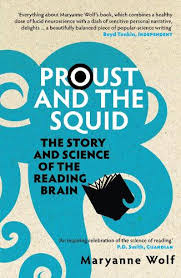
Proust and the Squid
Maryanne Wolf
The Story and Science of the Reading Brain
4.6 (213)29 mins
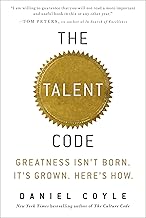
The Talent Code
Daniel Coyle
Greatness Isn't Born. It's Grown. Here's How.
4.6 (667)36 mins

Deadliest Enemy
Michael T. Osterholm and Mark Olshaker
Our War Against Killer Germs
4.6 (572)37 mins