

Alice in Wonderland Summary
By Lewis Carroll
Follow Alice down a rabbit hole of whimsical, witty absurdity.
Summary preview
Alice’s Adventures in Wonderland begins with a child who is tired of sitting still and listening to a world that seems too sensible to be interesting. She is on a riverbank with her sister when she sees a White Rabbit in a waistcoat, glancing at a watch and muttering that he shall be late. At once, the ordinary day cracks open. Alice follows him down a rabbit hole and tumbles into a realm where scale shifts, language slips, manners fail, and every rule can be turned upside down with a smile. What looks at first like nonsense soon shows itself to be a strange kind of mirror. It reflects the habits of grown people, the oddity of school lessons, the stiffness of good behavior, and the way words can both explain and confuse. This tale by Lewis Carroll is full of talking creatures, riddles with no answer, songs bent out of shape, and quarrels that swell out of nothing at all. Yet beneath the playfulness, it is deeply concerned with one large question. Who is Alice, now that everything around her keeps changing and she cannot even trust her own size from one moment to the next. Again and again she asks herself whether she is still the same girl who sat on the bank, or whether she has somehow become someone else. Wonderland keeps pressing that question on her. It asks it through doors too small to pass, bottles marked “DRINK ME,” cakes that alter the body, and conversations that twist the mind. The story does not move in a straight line toward wisdom in the usual way. It wanders, argues, jokes, startles, and doubles back. That wandering is the point. Childhood itself can feel like that. One is told to recite lessons, to remember manners, to obey rules, yet the rules often seem inconsistent and the adults who enforce them seem no more sensible than the creatures Alice meets. For example, a Duchess may preach morals while shaking a baby, and a Queen may cry for executions before anyone has even done wrong. Wonderland takes these everyday contradictions and makes them wonderfully visible. What gives the book its lasting charm is the way innocence and intelligence walk hand in hand. Alice is polite, curious, and brave, but she is not meek. She questions nonsense, grows impatient with foolishness, and tries hard to keep hold of reason even when reason itself seems to have gone dancing away. As the adventure unfolds, each encounter tests her. Some make her laugh, some puzzle her, some annoy her, and some quietly help her grow. By the end, the dream world has shown not only how absurd the world can be, but also how a child’s clear eye can see through its pretenses.
Sign up to continue reading
Get access to full book summaries, audio of the summaries, and many more.
Similar Books
Books with a similar vibe—explore more like this.
Why We Sleep
Matthew Walker
Unlocking the Power of Sleep and Dreams
4.8 (1560)17 mins
The Talent Code
Daniel Coyle
Greatness Isn't Born. It's Grown. Here's How.
4.6 (667)36 mins
Ultralearning
Scott H. Young
Accelerate Your Career, Master Hard Tasks and Outsmart the Competition
4.6 (328)35 mins
The Two Fundamental Problems of Ethics
Arthur Schopenhauer
A rigorous investigation of moral philosophy's deepest questions
4.6 (19)24 mins
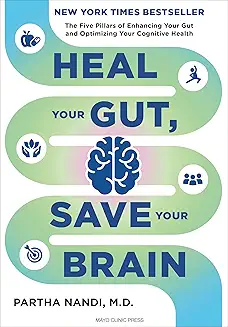
Heal Your Gut, Save Your Brain
Partha Nandi
The Five Pillars of Enhancing Your Gut and Optimizing Your Cognitive Health
4.5 (335)21 mins
Lessons in Stoicism
John Sellars
What Ancient Philosophers Teach Us About How to Live
4.5 (704)23 mins
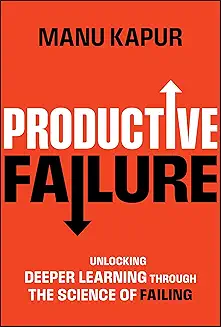
Productive Failure
Manu Kapur
Unlocking Deeper Learning Through the Science of Failing
4.5 (211)22 mins
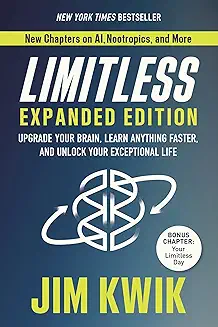
Limitless
Jim Kwik
Upgrade Your Brain, Learn Anything Faster, and Unlock Your Exceptional Life
4.5 (557)35 mins
Calling Bullshit
Carl T. Bergstrom & Jevin D. West
The Art of Skepticism in a Data-Driven World
4.5 (720)28 mins
Bounce
Matthew Syed
The Myth of Talent and the Power of Practice
4.5 (983)30 mins