

Lessons in Stoicism Summary
By John Sellars
What Ancient Philosophers Teach Us About How to Live
Summary preview
Lessons in Stoicism invites you on a reflective journey into the enduring wisdom of ancient philosophy, reimagined for our modern world. The book provides a warm embrace to anyone curious about how to live with more resilience, clarity, and inner calm. At its heart, the text is a conversation between the reader and centuries of thinkers who have learned to thrive in the face of uncertainty. This work demonstrates that even though the Stoics lived in a time of emperors, battles, and vast empires, the challenges they faced are not so different from our own. It shows you that the wisdom they cultivated is alive and valuable today, offering guidance on how to accept what cannot be changed and shape your internal landscape with reason and compassion. The narrative unfolds with a focus on self-examination and the cultivation of virtue. It reminds you that life is full of unpredictable turns and that your emotional response need not be hostile or frantic. Instead, by engaging with Stoic ideas, you are invited to see obstacles as opportunities to practice integrity and self-discipline. In this light, every setback is transformed into a lesson in how to be more resilient and centered. The book gently dismantles misconceptions about Stoicism, dispelling the idea that it is merely about suppressing emotions. Instead, it reveals a philosophy of balanced living, one which encourages you to acknowledge your feelings while using reason to guide your actions. Throughout the pages, you are treated to historical anecdotes that illuminate the origins of Stoic thought. These stories provide colorful context and make the abstract ideas tangible. The narrative is rich with gentle repetition, emphasizing that the practice of Stoic principles is a gradual process—a series of small, deliberate steps that accumulate into a profound shift in perspective. Whether you are seeking to cope with stress, foster patience, or simply gain wisdom in navigating life’s complexities, the guidance provided here is both accessible and deeply transformative. Moreover, the book encourages a subtle yet inspiring form of self-discipline—one that is rooted in understanding the limits of human control. It shows you that by confronting your own judgments and expectations, you can develop a healthier relationship with the unpredictable nature of life. This approach enables you to see change not as a threat but as an inevitable flow that invites you to grow stronger with every twist. As you delve into these pages, you will find that the philosophy of Stoicism is less a set of rigid rules and more an invitation to explore a balanced, thoughtful way of living—a way that honors both your heart and your mind.
Sign up to continue reading
Get access to full book summaries, audio of the summaries, and many more.
Similar Books
Books with a similar vibe—explore more like this.
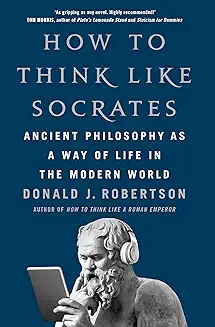
How to Think Like Socrates
Donald J. Robertson
Ancient Philosophy as a Way of Life in the Modern World
4.4 (258)20 mins
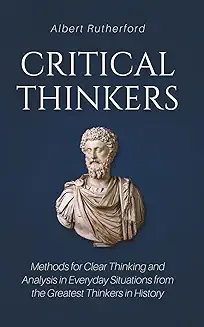
Critical Thinkers
Albert Rutherford
Methods for Clear Thinking and Analysis in Everyday Situations from the Greatest Thinkers in History
4.2 (392)30 mins
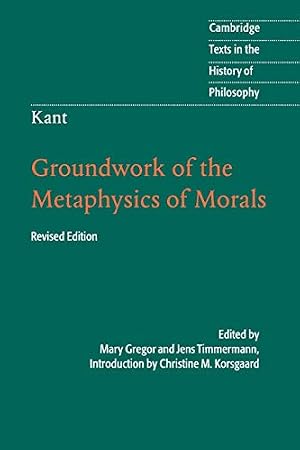
Groundwork of the Metaphysics of Morals
Immanuel Kant
Identifying and corroborating the supreme principle of morality
4.2 (15)21 mins
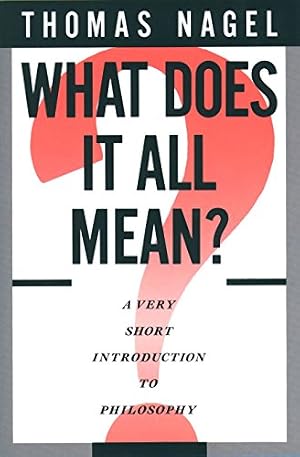
What Does It All Mean?
Thomas Nagel
A Very Short Introduction to Philosophy
4.2 (30) mins
Lost in Thought
Zena Hitz
The Hidden Pleasures of an Intellectual Life
4.0 (824)26 mins

The Sovereign Child
Aaron Stupple
How a Forgotten Philosophy Can Liberate Kids and Their Parents
3.8 (6)23 mins
Why We Sleep
Matthew Walker
Unlocking the Power of Sleep and Dreams
4.8 (1560)17 mins

Utilitarianism
John Stuart Mill
Explore a Timeless Ethics Classic
4.8 (46)24 mins

Alice in Wonderland
Lewis Carroll
Follow Alice down a rabbit hole of whimsical, witty absurdity.
4.8 (5) mins

Psychological Types
Carl Jung
Collected works from the supreme theorist of the conscious
4.7 (89) mins