
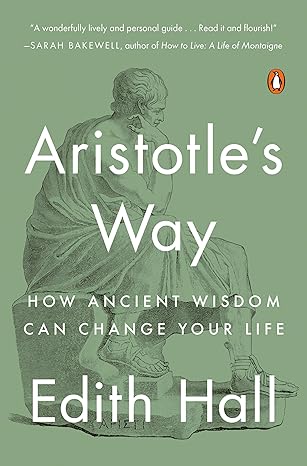
Aristotle's Way Summary
By Edith Hall
How Ancient Wisdom Can Change Your Life
Summary preview
What if the best guide to a good life is not a modern guru, not a self help slogan, not a quick fix, but a man who lived more than two thousand years ago and still speaks with startling freshness? That is the invitation at the heart of Aristotle's Way by Edith Hall. This is not a dusty tour through ancient philosophy. It is a lively, human, practical encounter with Aristotle as a thinker who wanted above all to understand how people can live well, flourish, and become fully themselves. The book begins from a simple but powerful claim. Aristotle matters because he took human happiness seriously, but he did not confuse happiness with pleasure, wealth, fame, or comfort. He believed that every person wants to flourish, and that flourishing comes from learning how to use our capacities well in the real world, among other people, through habits, choices, friendships, work, thought, and purposeful action. He asks not what abstract perfection looks like in theory, but how an ordinary human being can shape a life that is meaningful, balanced, and deeply satisfying. What makes this book so appealing is the way it brings Aristotle down from the pedestal and back into daily life. We meet him not just as a philosopher but as a vivid personality. He was curious about everything. Animals, drama, politics, rhetoric, weather, dreams, ethics, memory, friendship, pleasure, education. He was a collector of facts and a lover of patterns. He cared about what people actually do, not only what they say they believe. That practical streak is what gives his thought its energy. He does not ask you to reject your body, your emotions, your community, or your ambitions. He asks you to train them wisely. The book is organized around key principles that can still guide us now. You are encouraged to cultivate purpose, to build habits that strengthen character, to seek the mean between harmful extremes, to value friendship as one of life's greatest goods, to face mortality without panic, to think clearly, and to become an active participant in your community. Again and again, the message is that a good life is made, not found by accident. It requires effort, reflection, and practice, but it is open to human beings because it grows from our nature. There is also a special warmth in the way this story is told. Aristotle appears not as an unreachable genius but as a companion, someone who knows that life is messy and that wisdom is learned gradually. His philosophy is not a system built to impress. It is a way of living built to help. By the end, you can feel why this ancient Greek has remained, for so many readers, not merely important but sustaining.
Sign up to continue reading
Get access to full book summaries, audio of the summaries, and many more.
Similar Books
Books with a similar vibe—explore more like this.

Psychological Types
Carl Jung
Collected works from the supreme theorist of the conscious
4.7 (89) mins
Every Time I Find the Meaning of Life, They Change It
Daniel Klein
Wisdom of the Great Philosophers on How to Live
4.7 (28)25 mins
How to Be a Stoic
Massimo Pigliucci
Ancient Wisdom For Modern Living
4.6 (567)31 mins

The Stranger
Albert Camus
A Philosophical Journey Into Alienation
4.6 (64)27 mins

The Rebel
Albert Camus
An Essay on Man in Revolt
4.6 (21)25 mins

How Proust Can Change Your Life
Alain de Botton
Valuable Insights Into Living Your Best Life
4.6 (74)24 mins
Lessons in Stoicism
John Sellars
What Ancient Philosophers Teach Us About How to Live
4.5 (704)23 mins

The Great Mental Models
Shane Parrish and Rhiannon Beaubien
General Thinking Concepts
4.5 (191)30 mins
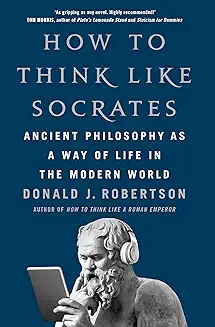
How to Think Like Socrates
Donald J. Robertson
Ancient Philosophy as a Way of Life in the Modern World
4.4 (258)20 mins
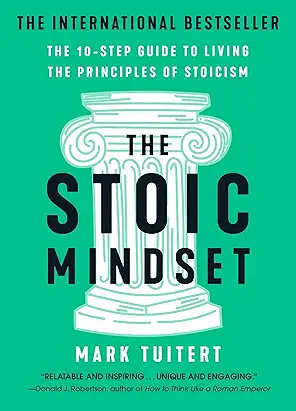
The Stoic Mindset
Mark Tuitert
Living the Ten Principles of Stoicism
4.4 (406)20 mins