
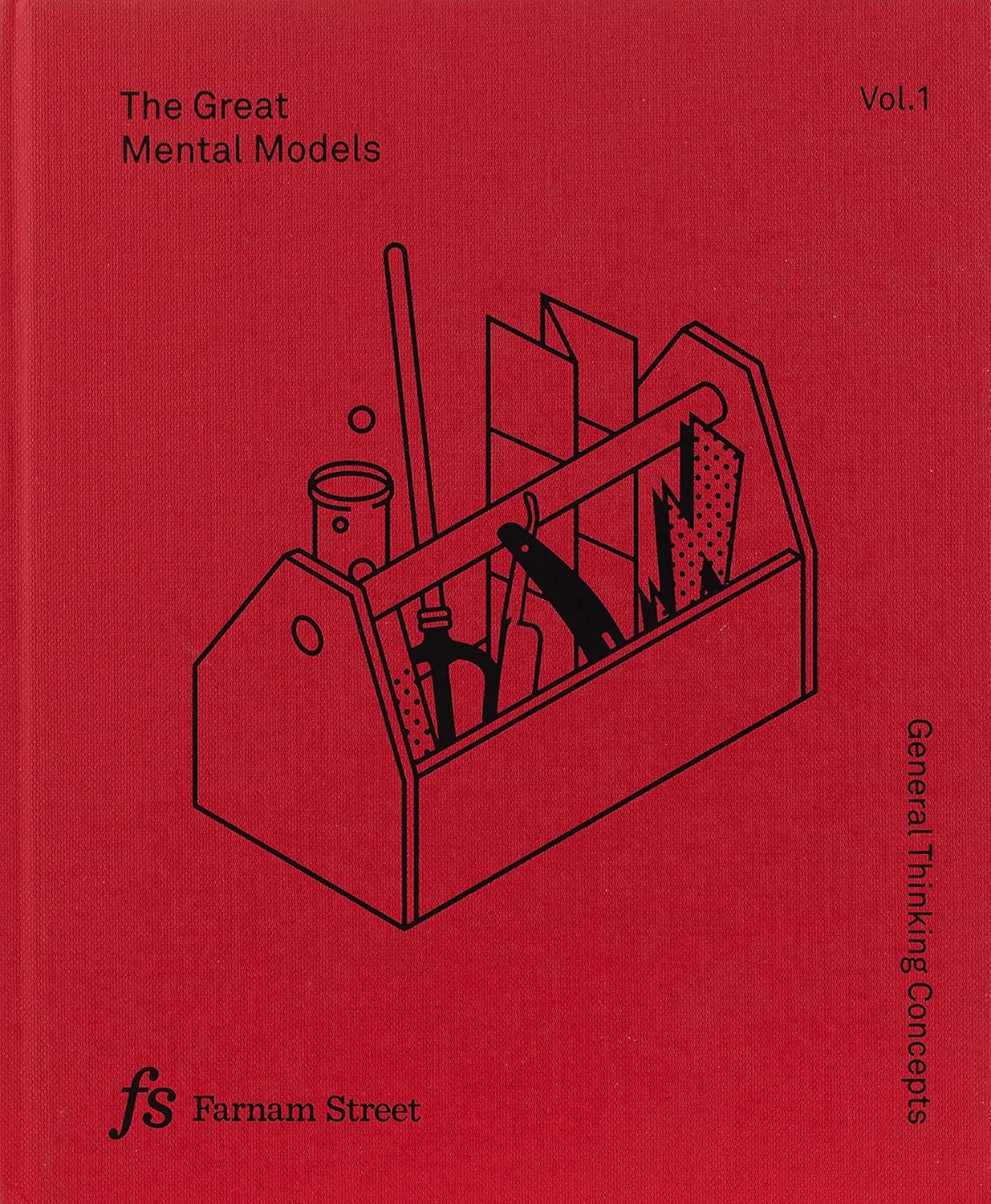
The Great Mental Models Summary
By Shane Parrish and Rhiannon Beaubien
General Thinking Concepts
Summary preview
Most of us move through life with a toolbox that is far too small for the problems we face. We lean on habit, instinct, and whatever bit of experience feels closest at hand. Sometimes that works. Often it does not. The core idea behind The Great Mental Models by Shane Parrish and Rhiannon Beaubien is wonderfully simple. Better thinking leads to better choices, and better choices lead to a better life. But better thinking rarely comes from knowing more facts alone. It comes from seeing the world through many lenses instead of just one. That is what mental models are. They are the big ideas that help you make sense of reality. They are the patterns that show up again and again across disciplines like physics, biology, economics, and mathematics. Once you learn them, they become practical tools. They help you notice what matters, filter out noise, and avoid being trapped by a narrow point of view. The book argues that when you depend too much on one way of seeing, you become like the person holding only a hammer who treats everything like a nail. A richer set of models gives you more ways to understand what is happening and more ways to respond intelligently. What makes the book especially useful is that it does not treat wisdom as something vague or mystical. It treats wisdom as trainable. You can build it. You can borrow the most reliable thinking tools from the world’s best disciplines and carry them into daily life. The aim is not to turn you into a scientist or economist. The aim is to help you think clearly when stakes are real, time is short, and outcomes matter. The journey begins with the idea of the map and the territory, a reminder that your view of reality is never reality itself. From there, the book moves through a compact set of foundational models. Circle of competence teaches humility about what you know and what you do not. First principles asks you to peel away assumptions and get to what is fundamental. Thought experiments let you test ideas in the safety of imagination. Second order thinking pushes you to look beyond the immediate result to the ripple effects that follow. Probabilistic thinking helps you live with uncertainty without fooling yourself into false certainty. Inversion turns problems around and asks what to avoid. Occam’s razor favors simpler explanations when they fit. Hanlon’s razor warns against reading malice into every mistake. Taken together, these models form a kind of operating system for the mind. They do not promise perfect answers. They do something better. They help you ask better questions, see hidden forces, and make fewer avoidable errors. By the end, you come away with a humbling but empowering message. You do not need to know everything. You need a handful of timeless ideas, used well and used together.
Sign up to continue reading
Get access to full book summaries, audio of the summaries, and many more.
Similar Books
Books with a similar vibe—explore more like this.
Psychological Types
Carl Jung
Collected works from the supreme theorist of the conscious
4.7 (89)21 mins
Every Time I Find the Meaning of Life, They Change It
Daniel Klein
Wisdom of the Great Philosophers on How to Live
4.7 (28)25 mins
How to Be a Stoic
Massimo Pigliucci
Ancient Wisdom For Modern Living
4.6 (567)31 mins
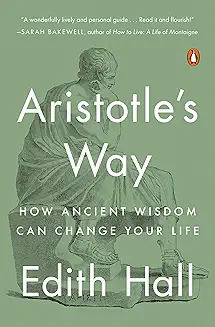
Aristotle's Way
Edith Hall
How Ancient Wisdom Can Change Your Life
4.6 (1073)28 mins

The Stranger
Albert Camus
A Philosophical Journey Into Alienation
4.6 (64)27 mins

The Rebel
Albert Camus
An Essay on Man in Revolt
4.6 (21)25 mins
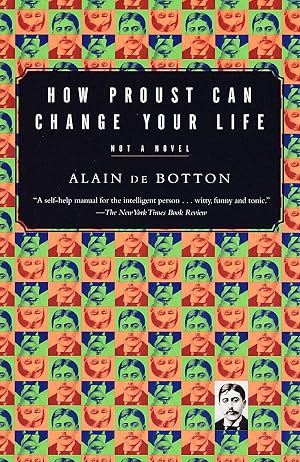
How Proust Can Change Your Life
Alain de Botton
Valuable Insights Into Living Your Best Life
4.6 (74)24 mins
Lessons in Stoicism
John Sellars
What Ancient Philosophers Teach Us About How to Live
4.5 (704)23 mins
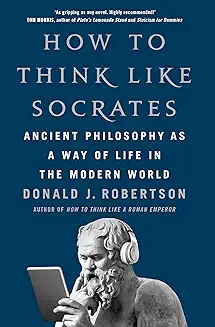
How to Think Like Socrates
Donald J. Robertson
Ancient Philosophy as a Way of Life in the Modern World
4.4 (258)20 mins
The Stoic Mindset
Mark Tuitert
Living the Ten Principles of Stoicism
4.4 (406)20 mins