
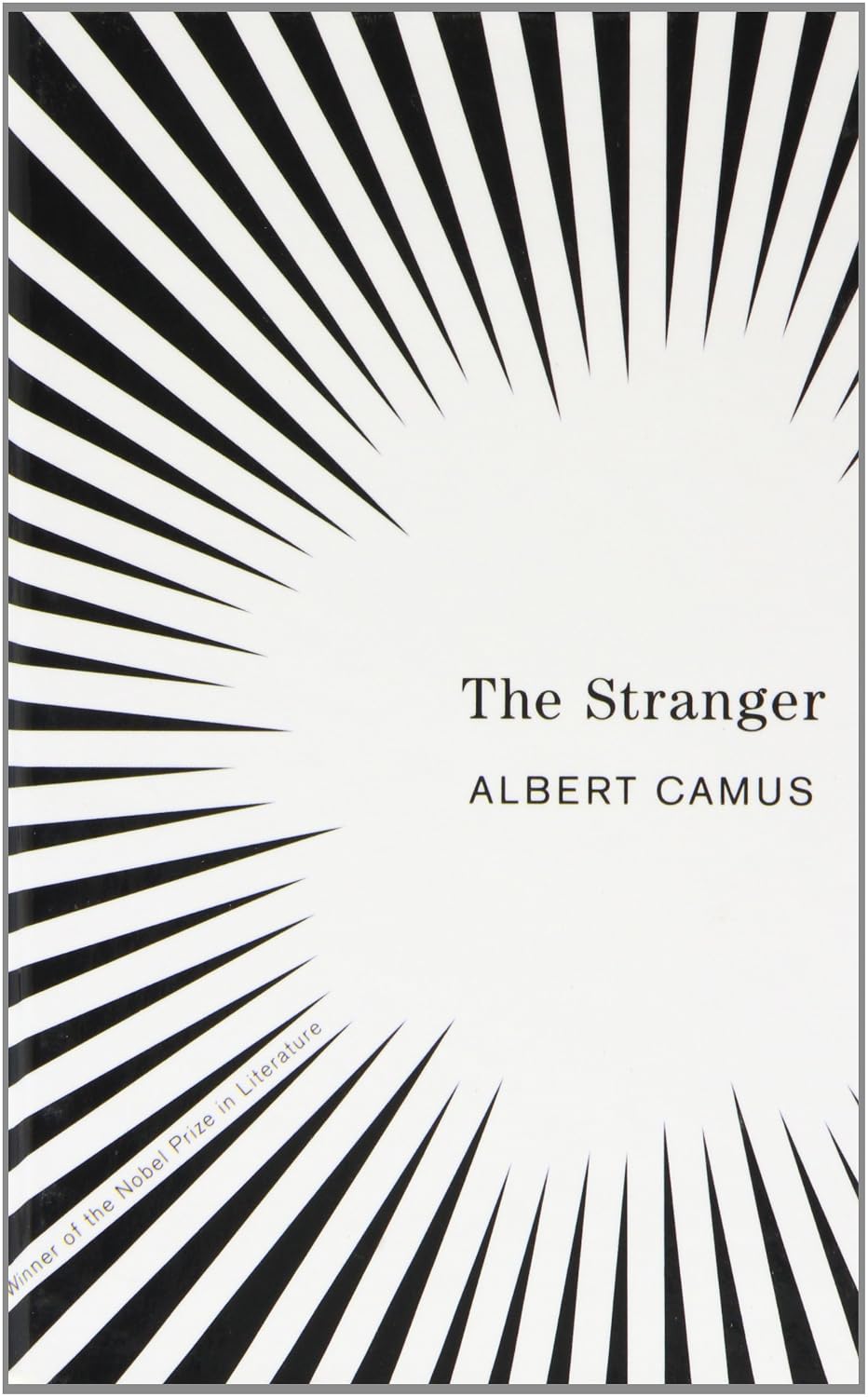
The Stranger Summary
By Albert Camus
A Philosophical Journey Into Alienation
Summary preview
Some books invite you to admire a hero, or solve a puzzle, or watch a soul slowly improve. This one does something stranger and sharper. It places you inside the life of a man who does not speak the language most people expect. He does not pretend to feel what he does not feel. He does not decorate his life with noble speeches. He notices the sun, the sea, the taste of coffee, the stiffness of a room, the weight of a body, the tiredness after a long day. And because of that, the whole story becomes unsettling. You begin by thinking the question is whether this man is cold, guilty, or broken. Little by little, you see that the deeper question is what the world wants from a human being, and what happens when someone refuses, or simply fails, to perform the right emotions on command. Albert Camus builds the novel with plain surfaces and hidden pressure. The voice is simple, almost bare. The events are ordinary at first. A telegram announces a mother’s death. A son travels to the home where she lived her last years. There is a vigil, a funeral, a bus ride back, a day at the beach, meals, cigarettes, sex, office talk, neighbors with small troubles and ugly habits. Yet every ordinary detail carries a hard, bright force. The story keeps asking whether meaning lives in events themselves or in the stories society wraps around them. A funeral is never just a funeral here. A love affair is never only pleasure. A courtroom is never only a place to judge a single act. Everything becomes a test, and the man at the center keeps failing tests he does not believe in. That man is Meursault. He is not presented as a monster, and not really as a saint of truth either. He is simply there, alive to the immediate world and strangely untouched by many social illusions. When his mother dies, he says, “Maman died today. Or yesterday maybe, I don’t know.” That line shocks because it strips away the expected music of grief. It is not that he celebrates death. It is that he will not fake certainty or sentiment. The result is that people around him, and many readers too, rush to judge him before understanding the shape of his mind. What follows is both a crime story and something larger. It is a portrait of alienation, of chance, of desire without depth, of violence that bursts from heat and glare as much as from intention. It is also a meditation on the absurd, that clash between the human hunger for reason and the world’s silence. By the time the book closes, the real drama will not be whether Meursault can escape punishment. It will be whether he can look at life, death, and the emptiness between them without lying to himself. That is what gives this short novel its lasting sting. It is simple to read, hard to forget, and impossible...
Sign up to continue reading
Get access to full book summaries, audio of the summaries, and many more.
Similar Books
Books with a similar vibe—explore more like this.
Hamlet
William Shakespeare
A Young Prince's Tragic Descend Into Madness and Revenge
4.8 (43)28 mins
The Midnight Library
Matt Haig
A Fantasy Novel About the Choices That Lead to a Life Well-Lived
4.7 (4782)32 mins
Uncle Tom's Cabin
Harriet Beecher Stowe
The Problem of Slavery and Its Treatment of Human Beings
4.7 (41)25 mins
The Odyssey
Homer
The Ancient Greek Epic Poem About A Hero's Journey Home
4.7 (60)24 mins
The Prophet
Kahlil Gibran
Prose Poetry Fables on the Beauty of Life and the Human Condition
4.6 (25)36 mins

Silas Marner
George Eliot
Uncover a Rich Tapestry of Love, Hope, and Redemption
4.6 (7)22 mins

The Rebel
Albert Camus
An Essay on Man in Revolt
4.6 (21)25 mins

Macbeth
William Shakespeare
Regicide and Revenge in one of the World's Most Famous Tragedies
4.5 (49)24 mins
David Copperfield
Charles Dickens
Venture Into a Classic Tale of Resilience and Growth
4.5 (19)25 mins

Madame Bovary
Gustave Flaubert
A Tale of Desire and Despair in the Search for Fulfillment
4.4 (20)21 mins