
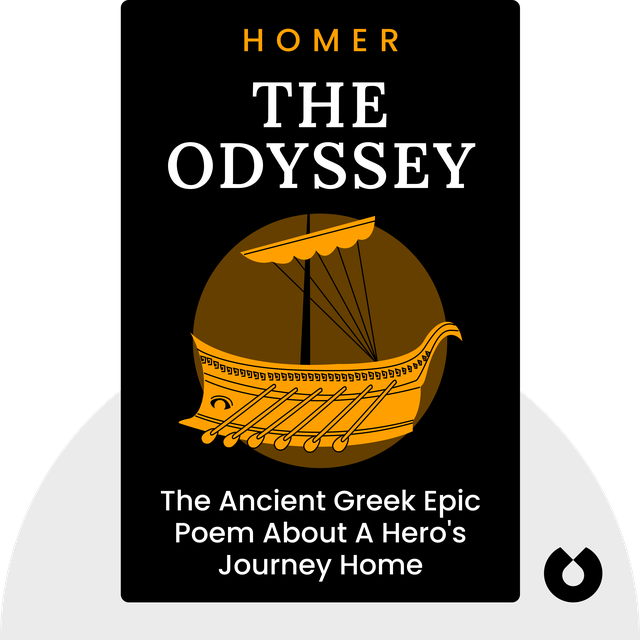
The Odyssey Summary
By Homer
The Ancient Greek Epic Poem About A Hero's Journey Home
Summary preview
Come close and listen, because this is a tale about longing, endurance, and the hard road back to what one loves. At its heart, The Odyssey is a story of homecoming. A man has survived a great war, yet his truest test begins only after the fighting ends. He wants not glory now, but return. He wants his island, his wife, his son, his own bed rooted deep in living wood. Between him and that simple hope stand storms, monsters, temptations, shipwrecks, forgetfulness, pride, grief, and the will of the gods. What makes this journey breathe even after so many centuries is that it is not only about the distance across the sea. It is about the distance between who a person was and who he must become. Odysseus is clever, restless, sharp tongued, resourceful, and brave. Those gifts save him again and again. Yet they also bring trouble. His hunger to prove himself, to speak his name, to outwit every danger, often turns survival into suffering. So the tale keeps asking a quiet question beneath all the noise of waves and battle. What kind of strength truly brings a person home. At the same time, the poem never leaves home behind. While the wanderer struggles abroad, his house in Ithaca is under siege. Proud young men crowd his halls, eat his food, court his faithful wife Penelope, and assume the king will never return. There, another journey unfolds. Telemachus, the son left behind as a baby, must grow into himself. He must learn how to speak, whom to trust, and how to stand upright in a world that has almost swallowed his inheritance. So this tale moves on two roads at once. One road crosses strange islands and supernatural dangers. The other runs through a threatened home where patience, loyalty, and courage are tested every day. The gods watch, interfere, protect, punish, and argue. Athena favors intelligence and perseverance. Poseidon broods in anger. Zeus keeps a broad balance over human folly and divine desire. Yet for all their power, mortal choices matter deeply here. Hospitality matters. Oaths matter. Restraint matters. Memory matters. Again and again, the story shows the difference between savagery and civilization through the way strangers are treated at a table, in a hall, or on a shore. Homer gives you marvels, yes, but also something more intimate. A wife who waits. A son who hopes. A man who weeps by the sea. A servant who remembers. A dog who knows its master at last. That is why the poem endures. Its wonders are large, but its deepest truth is close to the human heart. We all know, in one form or another, what it means to be far from home and to keep going toward it.
Sign up to continue reading
Get access to full book summaries, audio of the summaries, and many more.
Similar Books
Books with a similar vibe—explore more like this.

Hamlet
William Shakespeare
A Young Prince's Tragic Descend Into Madness and Revenge
4.8 (43)28 mins
The Midnight Library
Matt Haig
A Fantasy Novel About the Choices That Lead to a Life Well-Lived
4.7 (4782)32 mins
Uncle Tom's Cabin
Harriet Beecher Stowe
The Problem of Slavery and Its Treatment of Human Beings
4.7 (41)25 mins
The Prophet
Kahlil Gibran
Prose Poetry Fables on the Beauty of Life and the Human Condition
4.6 (25)36 mins

The Stranger
Albert Camus
A Philosophical Journey Into Alienation
4.6 (64)27 mins

Macbeth
William Shakespeare
Regicide and Revenge in one of the World's Most Famous Tragedies
4.5 (49)24 mins

Nausea
Jean-Paul Sartre
Explore and Question the Very Essence of Existence
4.4 (85)22 mins
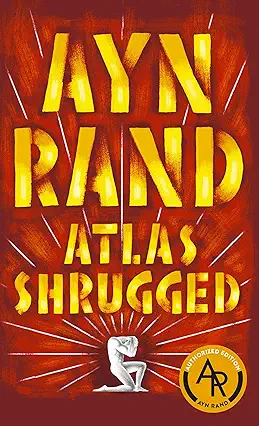
Atlas Shrugged
Ayn Rand
A Philosophical Tale About the Failures of Government Coercion
3.5 (168)14 mins
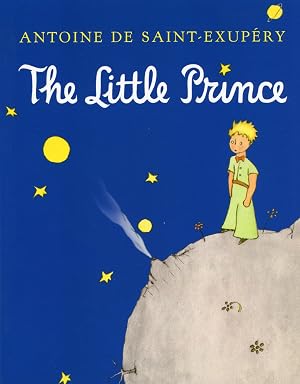
The Little Prince
Antoine de Saint-Exupéry
A Tale About the Human Condition and the Search for Happiness
4.9 (36)22 mins
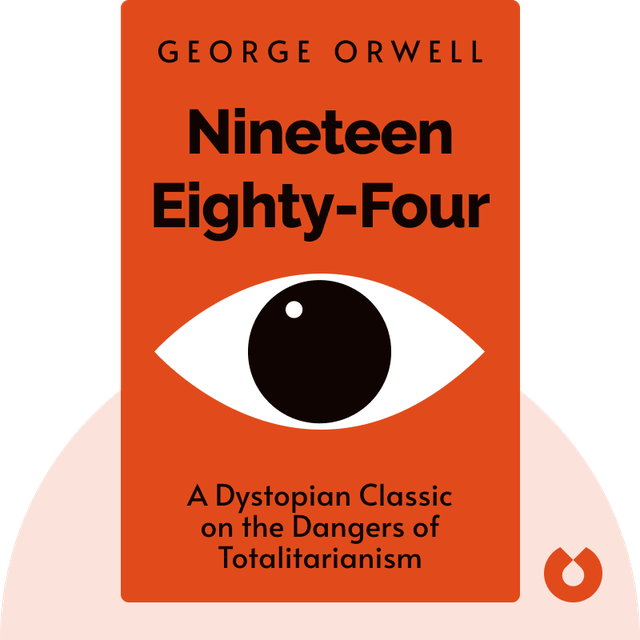
Nineteen Eighty-Four (1984)
George Orwell
A Dystopian Classic on the Dangers of Totalitarianism
4.9 (697)17 mins