
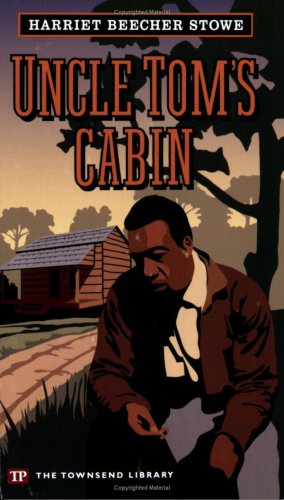
Uncle Tom's Cabin Summary
By Harriet Beecher Stowe
The Problem of Slavery and Its Treatment of Human Beings
Summary preview
Come close, dear reader, and let me tell you of a story that asks a plain question of the human heart. What becomes of a land that speaks of freedom while buying and selling men, women, and children? That is the great burden carried through Uncle Tom’s Cabin, and it is borne not by argument alone, but by tears, journeys, prayers, partings, and those quiet acts of love that shine most brightly in dark places. Harriet Beecher Stowe gives us a tale with many paths, yet all of them lead back to one truth. Slavery is not only a public wrong. It enters the home, breaks the family, hardens the conscience, corrupts the law, and tempts even kind people to excuse what should never be endured. The book does not move like a dry tract. It moves like life itself, now tender, now fearful, now full of innocent laughter, now pierced through with sorrow. One household is forced to sell a faithful man and a little boy to pay debts. A mother, hearing that her child may be taken from her, runs for his life and her own. A gentle child, almost too pure for earth, becomes a lamp to all around her. A man of deep Christian faith suffers blow after blow and still holds fast to mercy. Around them stand masters, mistresses, traders, ministers, mothers, children, and runaways, each showing some different face of a society built on bondage. The story unfolds in two chief streams. One follows Uncle Tom, a middle aged enslaved man whose steady piety, patience, and moral courage make him the spiritual center of the book. The other follows Eliza Harris, driven by a mother’s fierce love into a desperate escape. Their roads part, yet their stories answer one another. Through Tom we see what slavery does when it claims legal power over a good man’s body while failing to master his soul. Through Eliza we see what slavery means to family life, since no affection, no marriage, no child’s cradle is safe where human beings are property. You will meet kindly people who are too weak, cruel people who take pleasure in command, and wounded people who have almost forgotten how to hope. You will also meet those who resist, those who shelter the hunted, and those whose dying words awaken the living. The book asks for feeling, yes, but not feeling alone. It asks whether religion without justice is anything but empty sound. It asks whether law without mercy deserves obedience. And it asks whether ordinary people, by silence or by action, help keep evil alive. So let us walk through this sorrowful and loving history together. Its purpose is plain. It would have us see, and having seen, refuse to turn away.
Sign up to continue reading
Get access to full book summaries, audio of the summaries, and many more.
Similar Books
Books with a similar vibe—explore more like this.

Hamlet
William Shakespeare
A Young Prince's Tragic Descend Into Madness and Revenge
4.8 (43)28 mins
The Midnight Library
Matt Haig
A Fantasy Novel About the Choices That Lead to a Life Well-Lived
4.7 (4782)32 mins
The Odyssey
Homer
The Ancient Greek Epic Poem About A Hero's Journey Home
4.7 (60)24 mins
The Divine Comedy
Dante Alighieri
The Inferno, The Purgatorio, and The Paradiso
4.6 (457)27 mins
The Prophet
Kahlil Gibran
Prose Poetry Fables on the Beauty of Life and the Human Condition
4.6 (25)36 mins

The Stranger
Albert Camus
A Philosophical Journey Into Alienation
4.6 (64)27 mins
Siddhartha
Hermann Hesse
Rediscover the Meaning of Life With This Classic
4.5 (592)24 mins

Macbeth
William Shakespeare
Regicide and Revenge in one of the World's Most Famous Tragedies
4.5 (49)24 mins

Nausea
Jean-Paul Sartre
Explore and Question the Very Essence of Existence
4.4 (85)22 mins
The Four Agreements
Don Miguel Ruiz & Janet Mills
A Practical Guide to Personal Freedom
4.3 (913)21 mins