
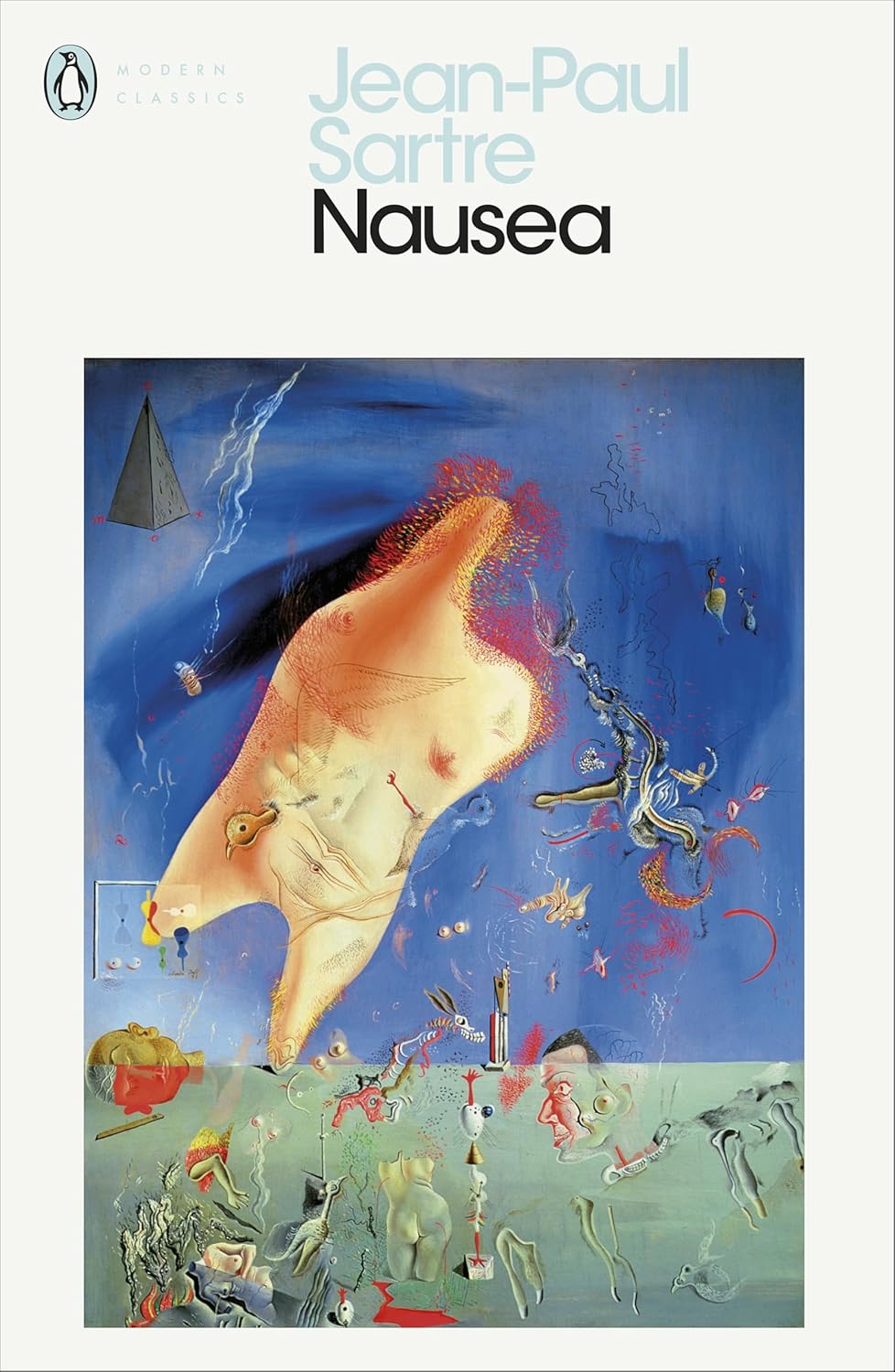
Nausea Summary
By Jean-Paul Sartre
Explore and Question the Very Essence of Existence
Summary preview
Open this diary and you do not step into an adventure with neat lessons and noble deeds. You step into a room where a man sits alone with his thoughts and finds that even the simplest things have begun to slip out of place. A pebble, a glass of beer, a hand on a table, the root of a chestnut tree. All at once they lose their familiar names and useful roles, and they stand there in their raw presence, heavy and strange. That is the great shock at the heart of Nausea. It is not merely sickness of the stomach. It is the dizziness of seeing existence without its comforting masks. The man who writes these pages is Antoine Roquentin, living in the town of Bouville. He is cut off from lasting ties, from work that truly binds him to the world, from love that can steady him. He spends his days researching the life of an eighteenth century figure, the Marquis de Rollebon, and moving through cafés, libraries, streets, and public gardens with the detached habit of someone who has survived by keeping things at a distance. Yet that distance begins to fail him. Little by little he realizes that objects, places, even people are not held together by any necessary meaning. They simply are. Their existence presses on him with a kind of obscene fullness, and this pressure becomes what he calls nausea. Jean-Paul Sartre makes this discovery unfold not as a lecture but as lived experience. The book is made of entries, moods, encounters, repetitions, idle walks, and sudden revelations. Roquentin watches himself as though he were both witness and victim. He tries to explain what is happening, then loses hold of language, then reaches for it again. Around him move a few memorable figures, such as the Self Taught Man in the library, full of cheerful humanist slogans, and Anny, the woman from his past who once seemed to promise a special kind of order and intensity. Each meeting tests a possible escape from solitude and contingency, and each escape proves fragile. What gives this book its peculiar force is that it does not ask whether life has meaning in some easy, decorative sense. It asks what remains when ready made meanings dissolve. History, love, social roles, moral formulas, culture, memory. Roquentin tries them all, and one by one they fail to rescue him from the brute fact that things exist for no reason he can grasp. Yet out of this collapse there comes, near the end, a faint but real opening. Art, perhaps especially music and the idea of writing, offers not a final answer but a form that can redeem experience for a moment. So the novel begins in unease and ends with a difficult, modest hope. It says that if existence is contingent and bare, one must still find a way to shape a life within it.
Sign up to continue reading
Get access to full book summaries, audio of the summaries, and many more.
Similar Books
Books with a similar vibe—explore more like this.
Hamlet
William Shakespeare
A Young Prince's Tragic Descend Into Madness and Revenge
4.8 (43) mins
The Midnight Library
Matt Haig
A Fantasy Novel About the Choices That Lead to a Life Well-Lived
4.7 (4782)32 mins
Uncle Tom's Cabin
Harriet Beecher Stowe
The Problem of Slavery and Its Treatment of Human Beings
4.7 (41)25 mins
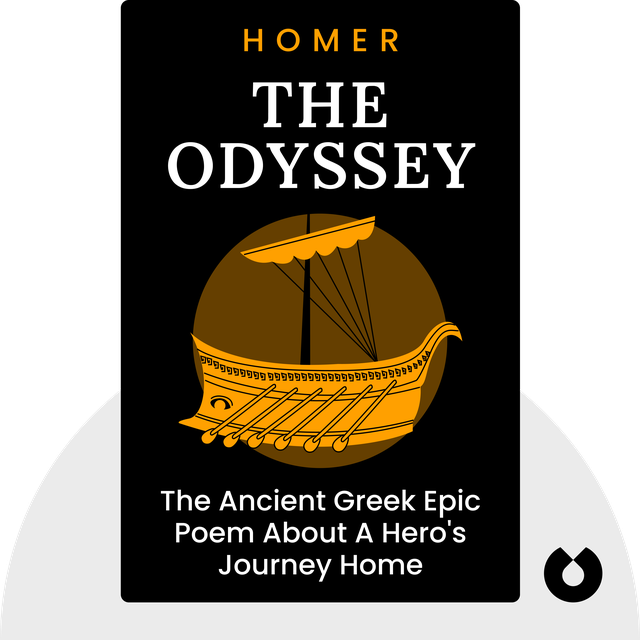
The Odyssey
Homer
The Ancient Greek Epic Poem About A Hero's Journey Home
4.7 (60) mins
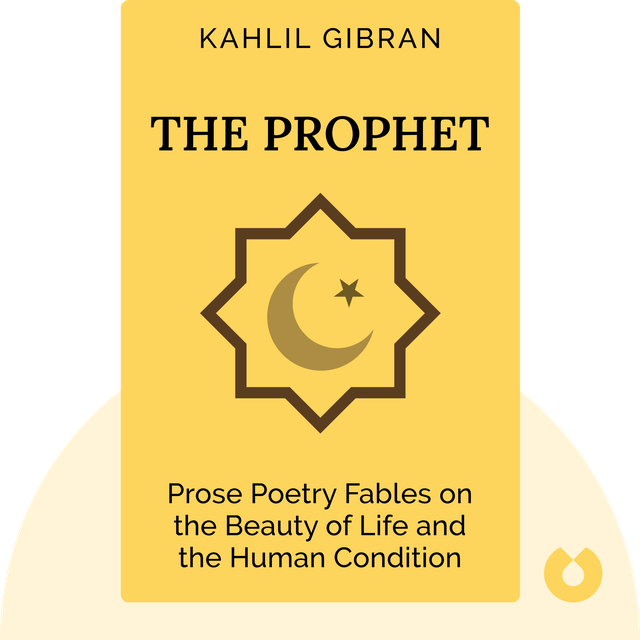
The Prophet
Kahlil Gibran
Prose Poetry Fables on the Beauty of Life and the Human Condition
4.6 (25) mins

The Stranger
Albert Camus
A Philosophical Journey Into Alienation
4.6 (64) mins

Macbeth
William Shakespeare
Regicide and Revenge in one of the World's Most Famous Tragedies
4.5 (49)24 mins
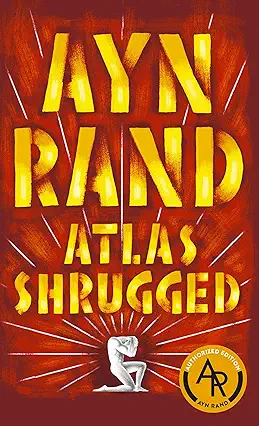
Atlas Shrugged
Ayn Rand
A Philosophical Tale About the Failures of Government Coercion
3.5 (168)14 mins
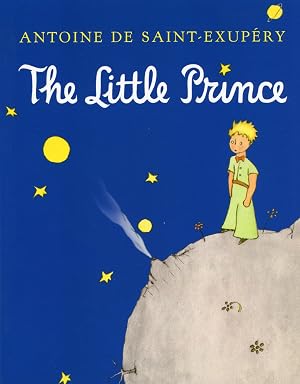
The Little Prince
Antoine de Saint-Exupéry
A Tale About the Human Condition and the Search for Happiness
4.9 (36) mins
Nineteen Eighty-Four (1984)
George Orwell
A Dystopian Classic on the Dangers of Totalitarianism
4.9 (697) mins