
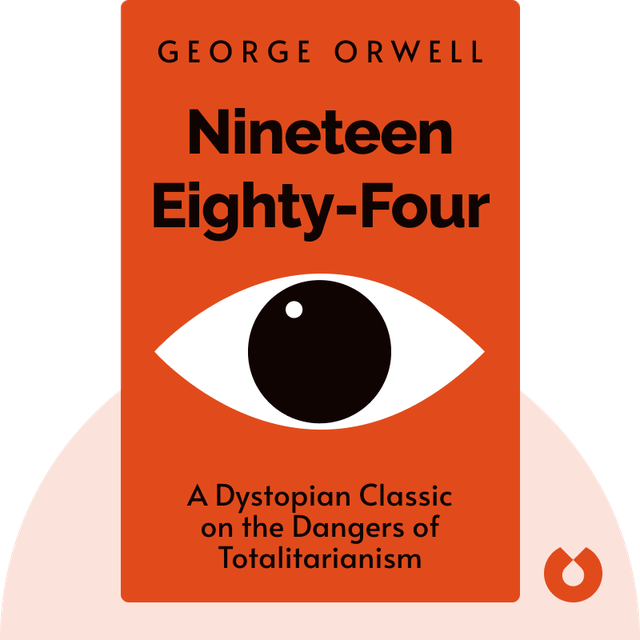
Nineteen Eighty-Four (1984) Summary
By George Orwell
A Dystopian Classic on the Dangers of Totalitarianism
Summary preview
Open this book and you step into a world where power does not merely rule the body. It reaches into the mind, rearranges memory, bends language, and tries to make the inner self disappear. George Orwell gives you no distant fantasy and no heroic adventure in shining colors. He gives you a grey room, a watchful screen, a city smelling of boiled cabbage, and a man who feels, almost by instinct, that something essential in human life is being crushed. That man is Winston Smith, and through his small acts of doubt and longing, the whole terrible shape of Oceania comes into view. The story is set in Airstrip One, once called Britain, now a province of the superstate Oceania. Everywhere there are posters of Big Brother, everywhere there are telescreens, everywhere there is the Party with its endless slogans. “War is Peace. Freedom is Slavery. Ignorance is Strength.” Those words are absurd on their face, yet in this world absurdity is a method of rule. If people can be taught to accept contradictions, to forget what they knew yesterday, and to fear their own private thoughts, then they can be controlled more completely than by chains or guns alone. At the heart of the book lies a simple but frightening question. What happens when a government does not only demand obedience, but demands that you surrender truth itself. Winston works at the Ministry of Truth, where records are constantly rewritten so that the Party is always right. If a prediction fails, the old evidence vanishes. If a person falls from favor, he becomes an unperson, as though he never lived. The past becomes a moving fog, and without a stable past, people lose the ground under their feet. Yet this is not only a book about systems and ideas. It is also a book about hunger for tenderness, memory, beauty, and freedom. Winston wants to remember his mother. He wants to know whether life was once different. He wants to love a woman without the Party standing between them. He wants to say that two plus two make four, even if power insists otherwise. Those desires may seem small, but here they are revolutionary. As the story unfolds, fear, hope, love, betrayal, and pain tighten together. The book moves from secret resistance to a cruel revelation of how total power works when it is most confident of victory. What makes it endure is not only its warning, but its precision. It shows how lies become institutions, how language can be narrowed until thought itself is stunted, and how loneliness makes people easy to break. George Orwell is not asking you merely to look at tyranny from afar. He is asking you to feel how it enters ordinary life, sentence by sentence, habit by habit, until even the self begins to speak in its voice.
Sign up to continue reading
Get access to full book summaries, audio of the summaries, and many more.
Similar Books
Books with a similar vibe—explore more like this.
Tomorrow, and Tomorrow, and Tomorrow
Gabrielle Zevin
A Novel
4.5 (4281)24 mins
The Hitchhiker's Guide to the Galaxy
Douglas Adams
A Novel
4.4 (81)22 mins

Snow Crash
Neal Stephenson
Enter the Virtual World With This Cyberpunk Epic
4.2 (34)28 mins
Tomorrow and tomorrow and tomorrow
Gabrielle Zevin
A Novel
3.5 (11)22 mins
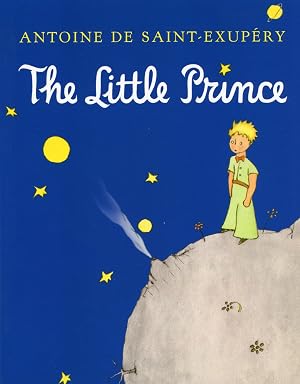
The Little Prince
Antoine de Saint-Exupéry
A Tale About the Human Condition and the Search for Happiness
4.9 (36)22 mins

The Song of Roland
Anonymous
Enter a World of Medieval Heroism, Where Honor Reigns Supreme
4.9 (3)20 mins
Hamlet
William Shakespeare
A Young Prince's Tragic Descend Into Madness and Revenge
4.8 (43)28 mins
Little Women
Louisa M. Alcott
A Coming-of-Age Novel about True Love and Finding One's Place in Life
4.8 (19)19 mins
We Have Always Lived in the Castle
Shirley Jackson
Enter a Disturbing Labyrinth of Family Secrets and Dark Neurosis
4.8 (5)14 mins
The Adventures of Huckleberry Finn
Mark Twain
Freedom, Civilization, and Prejudice in the Pre-Civil War South
4.8 (62)21 mins