
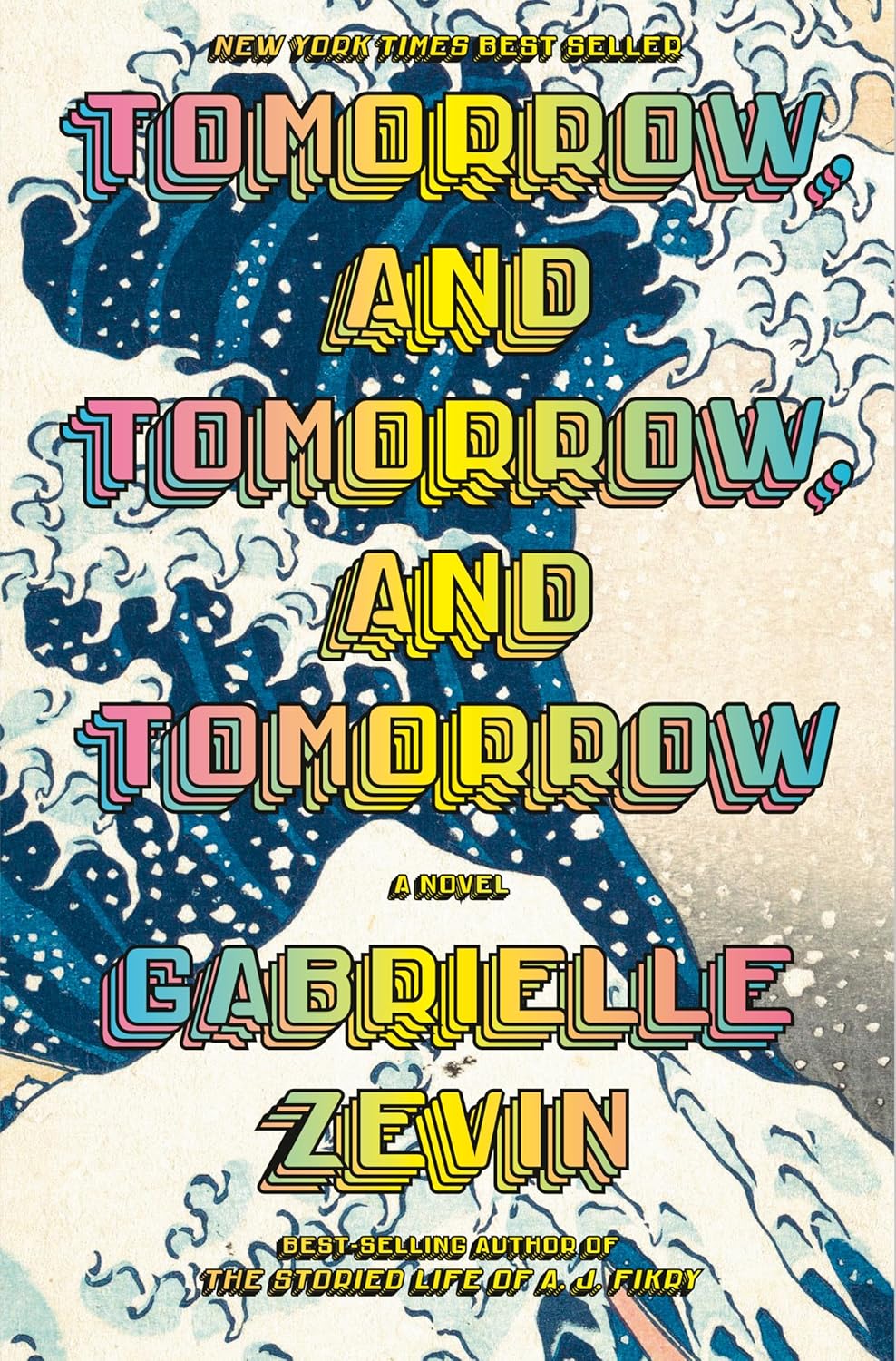
Tomorrow and tomorrow and tomorrow Summary
By Gabrielle Zevin
A Novel
Summary preview
Some novels ask what love is. Some ask what art costs. Some want to know whether friendship can be as consuming, as jealous, as life changing as any marriage. Tomorrow, and Tomorrow, and Tomorrow wants all of that at once, and it gets there by following three people who spend years making video games together, which is another way of saying they spend years building worlds because the real one keeps hurting them. Gabrielle Zevin gives you a story about play, but she never mistakes play for something small. Games are work. Games are identity. Games are power, escape, intimacy, money, illusion, and sometimes the only language a person has when ordinary speech fails. At the center are Sam Masur and Sadie Green, two brilliant, difficult, deeply lonely people who meet as children in a hospital. He is recovering from a terrible accident. She is there with her sister. Their first bond is formed in silence, in Super Mario, in the strange mercy of shared attention. Years later they meet again as young adults and discover that whatever happened between them in childhood never really ended. Around them moves Marx Watanabe, generous and magnetic, the kind of person who can walk into a room and make life feel briefly possible. Together they create games that become cultural events, and through those games they find joy, ambition, rivalry, tenderness, and all the forms of misunderstanding that come from loving someone you can never fully possess. What makes this story feel so alive is that it never turns creation into a neat triumph. Making something beautiful does not solve being human. Success does not cure insecurity. Collaboration is never pure. One person feels used while another feels abandoned. One person mistakes being needed for being loved. Another hides in work because work is safer than vulnerability. The book keeps returning to a hard truth that artists know well. To make a world is not the same as knowing how to live in one. And yet it is not bleak. It is full of wit, invention, and affection for the messy ways people try to reach each other. The games matter not because they are a clever backdrop, but because each one reveals the private logic of its maker. A game can become a confession. A level can hold grief. A mechanic can become an argument about freedom, fairness, and control. For instance, the worlds Sam and Sadie design are never just products. They are emotional records of who they are at the time they build them. So what unfolds is a long, intimate account of friendship and collaboration across decades. It is about disability, class, race, gender, fame, and the stories people tell about genius. It is about the gap between the self we perform and the self we protect. Most of all, it is about the fragile miracle of finding someone who can play with you seriously. That kind of partnership can save a life. It can also break a heart.
Sign up to continue reading
Get access to full book summaries, audio of the summaries, and many more.
Similar Books
Books with a similar vibe—explore more like this.
Tomorrow, and Tomorrow, and Tomorrow
Gabrielle Zevin
A Novel
4.5 (4281)24 mins
The Hitchhiker's Guide to the Galaxy
Douglas Adams
A Novel
4.4 (81)22 mins
Nineteen Eighty-Four (1984)
George Orwell
A Dystopian Classic on the Dangers of Totalitarianism
4.9 (697)17 mins

The Song of Roland
Anonymous
Enter a World of Medieval Heroism, Where Honor Reigns Supreme
4.9 (3)20 mins
We Have Always Lived in the Castle
Shirley Jackson
Enter a Disturbing Labyrinth of Family Secrets and Dark Neurosis
4.8 (5)14 mins

Frankenstein
Mary Shelley
The Modern Prometheus
4.6 (419)24 mins

Silas Marner
George Eliot
Uncover a Rich Tapestry of Love, Hope, and Redemption
4.6 (7)22 mins

Macbeth
William Shakespeare
Regicide and Revenge in one of the World's Most Famous Tragedies
4.5 (49)24 mins

The Prince and the Pauper
Mark Twain
A Tale of Two Mirrored Fates
4.5 (82)18 mins

Madame Bovary
Gustave Flaubert
A Tale of Desire and Despair in the Search for Fulfillment
4.4 (20)21 mins