
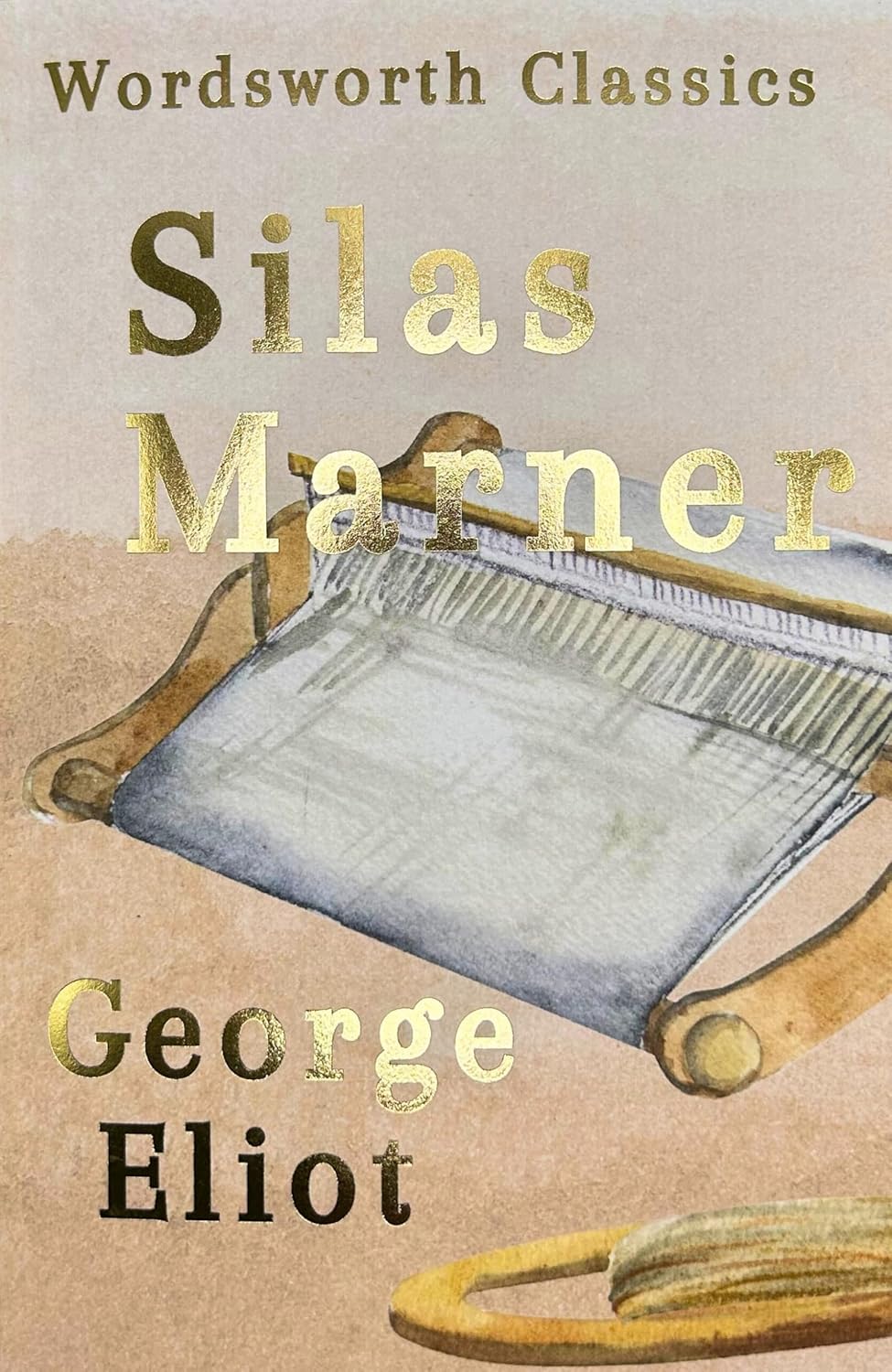
Silas Marner Summary
By George Eliot
Uncover a Rich Tapestry of Love, Hope, and Redemption
Summary preview
There are some stories that do not hurry to amaze you with grand adventure, but sit beside you like an old friend and begin to speak of the small things by which a life is broken or mended. Silas Marner is such a tale. It takes up a lonely man, a little heap of gold, a child with bright hair, and a village that thinks it knows the meaning of things, and from these plain materials it draws out a deep truth about human life. The heart of the book is not merely what happens to Silas, but what happens within him. We are shown how trust may be torn out by treachery, how a soul may shrink into narrow habits when it has lost faith in other people, and how love, entering quietly where gold once ruled, can make even a hardened life begin again. George Eliot opens the story by setting before us a weaver who lives apart. Silas is not at first a native of Raveloe, the country village where most of the tale unfolds. He comes there as a stranger from another world, carrying with him the wound of a cruel false accusation. In his earlier home he had belonged to a strict religious community, and had trusted both his friend and his God with a simple, trembling devotion. When that trust is betrayed, he does not merely lose his place among men. He loses the meaning by which he had lived. So he settles in Raveloe, works endlessly at his loom, and gathers his wages into a secret hoard. The villagers look on him with a mixture of curiosity, suspicion, and superstition. He becomes to them half man, half oddity, one of those solitary creatures whom common life fails to understand. Yet the book never lets us remain satisfied with appearances. Around Silas moves a whole web of village life, cheerful, foolish, comfortable, and blind by turns. There is the wealthy Cass family, full of rank and vanity, with its weak elder son Godfrey and its reckless younger son Dunstan. There is the pleasant warmth of the Rainbow inn, where local opinion is made over ale and argument. There are old customs, churchgoing habits, family pride, and all the little assumptions by which society wraps itself about men and women. Against this larger scene, the weaver's inward desolation stands out all the more sharply. What gives the story its enduring tenderness is the way loss and recovery mirror one another. Silas first gives his heart to gold because gold cannot deceive him, and then loses even that. But out of that second emptiness comes something far better than treasure. A child enters his life almost like a visitation, and through the daily acts of care, patience, and affection, he is led back into fellowship with others. The book asks what truly makes a man rich, what binds us to one another, and whether suffering may prepare the ground for grace. It is a quiet book,...
Sign up to continue reading
Get access to full book summaries, audio of the summaries, and many more.
Similar Books
Books with a similar vibe—explore more like this.

Madame Bovary
Gustave Flaubert
A Tale of Desire and Despair in the Search for Fulfillment
4.4 (20)21 mins

The Cherry Orchard
Anton Chekhov
Uncover a Rich Tapestry of Family, Love, and Change
4.4 (4)21 mins

The Song of Roland
Anonymous
Enter a World of Medieval Heroism, Where Honor Reigns Supreme
4.9 (3)20 mins
Othello
William Shakespeare
Love, Betrayal, and the Fall of a Hero
4.8 (14)22 mins

We Have Always Lived in the Castle
Shirley Jackson
Enter a Disturbing Labyrinth of Family Secrets and Dark Neurosis
4.8 (5)14 mins

Frankenstein
Mary Shelley
The Modern Prometheus
4.6 (419)24 mins

The Stranger
Albert Camus
A Philosophical Journey Into Alienation
4.6 (64)27 mins

Tomorrow, and Tomorrow, and Tomorrow
Gabrielle Zevin
A Novel
4.5 (4281)24 mins

Macbeth
William Shakespeare
Regicide and Revenge in one of the World's Most Famous Tragedies
4.5 (49)24 mins

The Prince and the Pauper
Mark Twain
A Tale of Two Mirrored Fates
4.5 (82)18 mins