
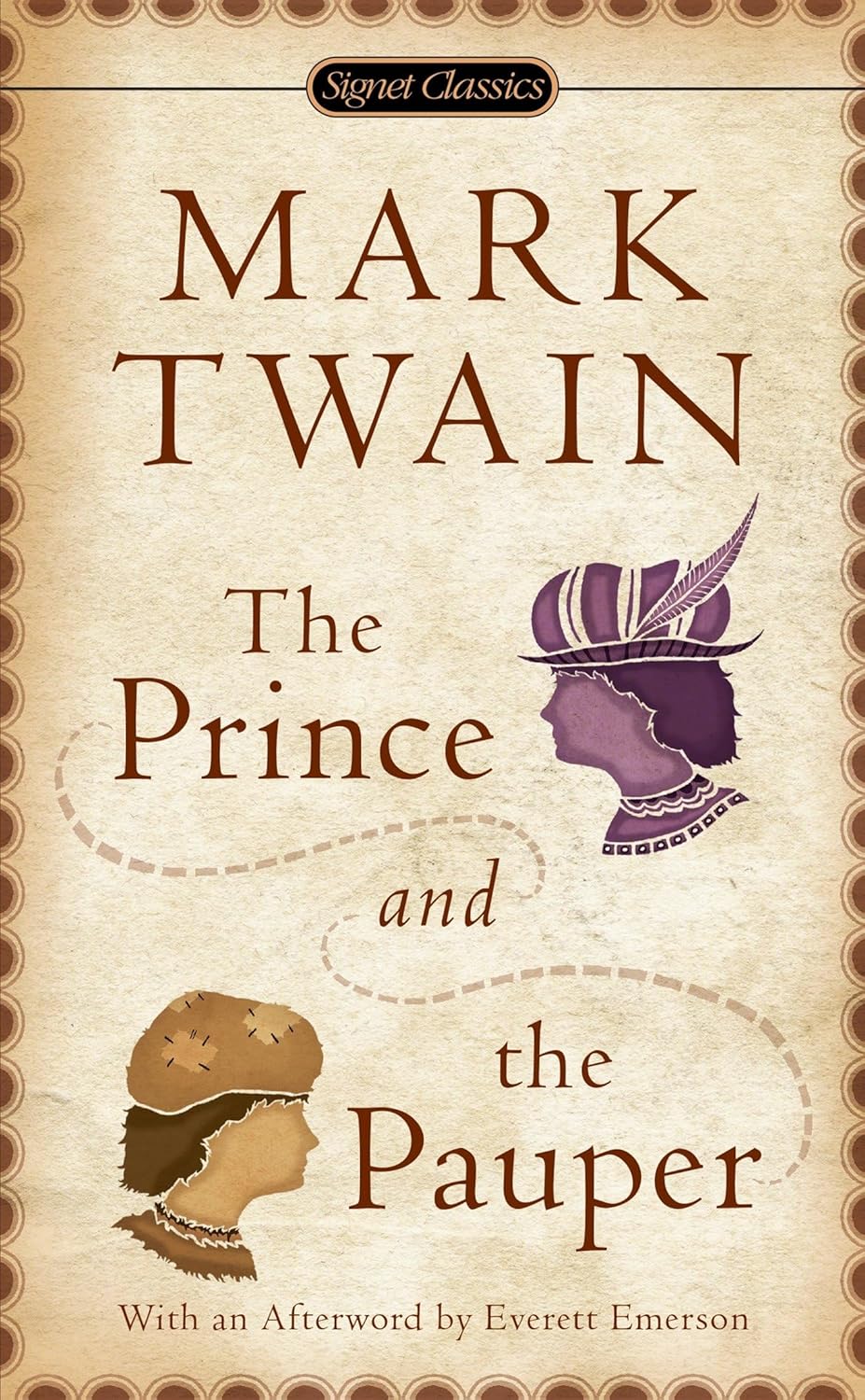
The Prince and the Pauper Summary
By Mark Twain
A Tale of Two Mirrored Fates
Summary preview
Come with me to old London, where the bells are loud, the streets are mean, and fortune plays her tricks with a grin. Here are born, on the selfsame day, two boys who look so much alike that Nature herself seems to be laughing. One is Edward Tudor, Prince of Wales, wrapped in silk, guarded by ceremony, and taught that the world is made to bend before him. The other is Tom Canty, born in Offal Court among hunger, blows, and ragged dreams, where a crust is treasure and kindness is rarer than gold. From that neat little miracle of two faces begins a tale that asks a very plain question with very sharp edges. What, after all, makes a prince a prince and a pauper a pauper? The story moves by a simple exchange, but the simplicity is only on the surface. Tom has long fed his mind on stories of kings and courts. He plays at royalty in the dirt, imagines rich chambers while dodging his father's fists, and carries within him a strange mixture of innocence and longing. Edward, meanwhile, lives caged by privilege. He has every comfort, yet scarcely a moment that belongs to himself. When the two boys meet by chance at the palace gate, curiosity leaps up in both. They compare their lives, try on each other's clothes for sport, and in a blink the world snaps shut behind them. The prince is cast into the streets and taken for a beggar. The pauper is trapped in the palace and mistaken for the heir to England. From there the tale spreads wide. It becomes an adventure through alleys, prisons, barns, and banqueting halls. It is comic often, because solemn people can be very foolish when they trust clothes more than truth. Yet it is also tender and angry by turns. The boy who has known luxury learns what law and cruelty feel like when they fall on bare backs. The boy who has known want learns how heavy grandeur can be when every eye watches and every word matters. Between them, they make visible the nonsense of rank and the real weight of power. That is the heart of the book. It is not merely a trick of mistaken identity meant to amuse, though it does amuse mightily. It is a study of mercy, justice, and the accidents of birth. Mark Twain delights in pageantry, in odd characters, in danger escaped by wit or luck, but beneath the bright surface he keeps asking us to look at the poor, the punished, the forgotten. He asks us to see how easy it is to honor a robe and despise the same soul in rags. By the end, the question is no longer whether the boys can regain their proper places. It is whether either can remain unchanged after wearing the other's life.
Sign up to continue reading
Get access to full book summaries, audio of the summaries, and many more.
Similar Books
Books with a similar vibe—explore more like this.
The Song of Roland
Anonymous
Enter a World of Medieval Heroism, Where Honor Reigns Supreme
4.9 (3) mins

We Have Always Lived in the Castle
Shirley Jackson
Enter a Disturbing Labyrinth of Family Secrets and Dark Neurosis
4.8 (5) mins

Frankenstein
Mary Shelley
The Modern Prometheus
4.6 (419)24 mins
Silas Marner
George Eliot
Uncover a Rich Tapestry of Love, Hope, and Redemption
4.6 (7) mins

Tomorrow, and Tomorrow, and Tomorrow
Gabrielle Zevin
A Novel
4.5 (4281)24 mins
Macbeth
William Shakespeare
Regicide and Revenge in one of the World's Most Famous Tragedies
4.5 (49)24 mins
Madame Bovary
Gustave Flaubert
A Tale of Desire and Despair in the Search for Fulfillment
4.4 (20)21 mins

The Hitchhiker's Guide to the Galaxy
Douglas Adams
A Novel
4.4 (81) mins
The Cherry Orchard
Anton Chekhov
Uncover a Rich Tapestry of Family, Love, and Change
4.4 (4) mins
Sense and Sensibility
Jane Austen
Two Sisters, Two Paths to Love
4.0 (13)17 mins