
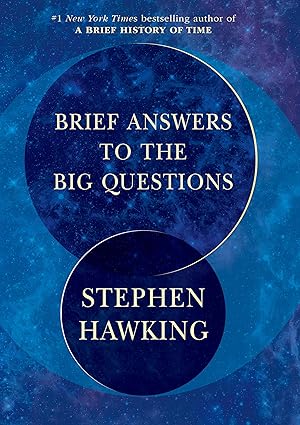
Brief Answers to the Big Questions
By Stephen Hawking
Hawking's final thoughts on the biggest questions facing humankind
Introduction
Some books try to give you answers. This one does something more daring. It takes the biggest questions human beings can ask and meets them with curiosity, wit, humility, and stubborn hope. Brief Answers to the Big Questions is not really a neat list of final truths. It is a guided tour through what we know, what we do not know, and what we may still discover if we are brave enough to keep asking. It moves from God to the origin of the universe, from time travel to artificial intelligence, from life beyond Earth to the future of our species. The scale is enormous, yet the voice stays intimate, as if a restless mind is leaning toward you and saying, let us think this through together. Stephen Hawking writes from a rare position. He is one of the best known scientists in the world, but he also speaks as someone whose own life became a lesson in defying expectations. That gives the book an unusual energy. The questions are cosmic, but they are never disconnected from human life. When he asks whether there is a God, he is also asking whether the universe needs a designer. When he asks how it all began, he is also asking what kind of place we live in. When he talks about black holes, he is not showing off strange ideas for their own sake. He is showing how the universe can surprise us, and how reason lets us push beyond common sense. What makes the book memorable is its mixture of confidence and openness. It is confident about the power of science. Repeatedly, it argues that the laws of nature are enough to explain vast parts of reality without calling in miracles. Yet it is also open about mystery. There are places where our knowledge runs thin. There are deep problems still unsolved. There are dangers we have created and futures we may still lose. So the book never feels like a victory lap. It feels more like a challenge. Running through everything is a belief that humanity is both fragile and remarkable. We are tiny in a vast cosmos, living on a small planet around an ordinary star. Yet we are capable of understanding galaxies, probing the beginning of time, and imagining worlds we have not seen. That contrast gives the book its emotional force. We matter not because the universe was built for us, but because consciousness and intelligence have appeared here, and what we do next counts. So the purpose of the book is not just to explain science in plain language. It is to enlarge your sense of possibility. It asks you to think clearly, to face danger honestly, and to keep looking up. Its deepest message is simple and stirring. The future is not guaranteed, but knowledge, courage, and imagination may still carry us forward.
Sign up to continue reading
Get access to full book summaries, audio of the summaries, and many more.
Similar Books
Books with a similar vibe—explore more like this.
Livewired
David Eagleman
The inside story of the Ever-changing brain
4.8 (544)28 mins
Why We Sleep
Matthew Walker
Unlocking the Power of Sleep and Dreams
4.8 (1560)17 mins
The God Equation
Michio Kaku
The Quest for a Theory of Everything
4.7 (409)28 mins
The Extended Mind
Annie Murphy Paul
The Power of Thinking Outside the Brain
4.7 (971)30 mins
The Neuroscience of You
Chantel Prat
How every brain is different and how to understand yours
4.7 (679)20 mins
The Tale of the Dueling Neurosurgeons
Sam Kean
The History of the Human Brain as Revealed by True Stories of Trauma, Madness, and Recovery
4.6 (471)35 mins
The Social Leap
William von Hippel
The New Evolutionary Science of Who We Are, Where We Come From, and What Makes Us Happy
4.6 (434)28 mins
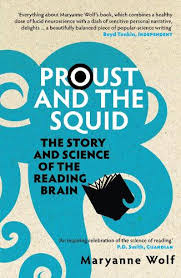
Proust and the Squid
Maryanne Wolf
The Story and Science of the Reading Brain
4.6 (213)29 mins
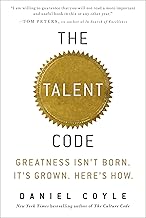
The Talent Code
Daniel Coyle
Greatness Isn't Born. It's Grown. Here's How.
4.6 (667)36 mins

Deadliest Enemy
Michael T. Osterholm and Mark Olshaker
Our War Against Killer Germs
4.6 (572)37 mins