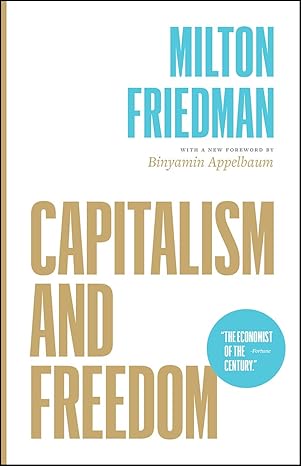
Full Book Summary of Capitalism and Freedom by Milton Friedman
By Milton Friedman
The definitive statement of Friedman's immensely influential economic philosophy
Preview
Capitalism and Freedom is a short book with a large ambition. It asks a question that sounds simple and turns out to reach into almost every corner of public life. What kind of economic system best protects a free society. Milton Friedman answers without hesitation. Competitive capitalism is not merely a useful way to organize production and exchange. It is a necessary condition for political freedom. It is not sufficient by itself, because a free society also needs law, culture, habit, and restraint. But without economic freedom, political freedom grows weak, crowded, and eventually hollow. The argument begins with a plain observation about power. Whenever political power and economic power are gathered into the same hands, freedom is in danger. A market economy breaks power into many small pieces. It lets people cooperate without first agreeing on everything else. You and I can trade even if we differ in religion, politics, background, or taste. That quiet fact matters more than it first appears. The market allows coordination without command. It creates a large space where people can choose, refuse, bargain, experiment, and walk away. Those ordinary acts are the daily practice of freedom. From there, the book turns practical. The broad principle is tested against the actual policies of a modern state. Taxes, schools, money, trade, licensing, housing, welfare, labor law, farming, monopoly, broadcasting, roads, and social insurance all come under review. Again and again, the same challenge is raised. If we say government should do more, what problem are we really trying to solve. Is coercion actually needed. Has intervention helped in the real world, or has it produced waste, privilege, and unintended harm. There is no romance here about public officials somehow rising above ordinary incentives. People in government are still people. Interests organize. Bureaucracies defend themselves. Temporary...