
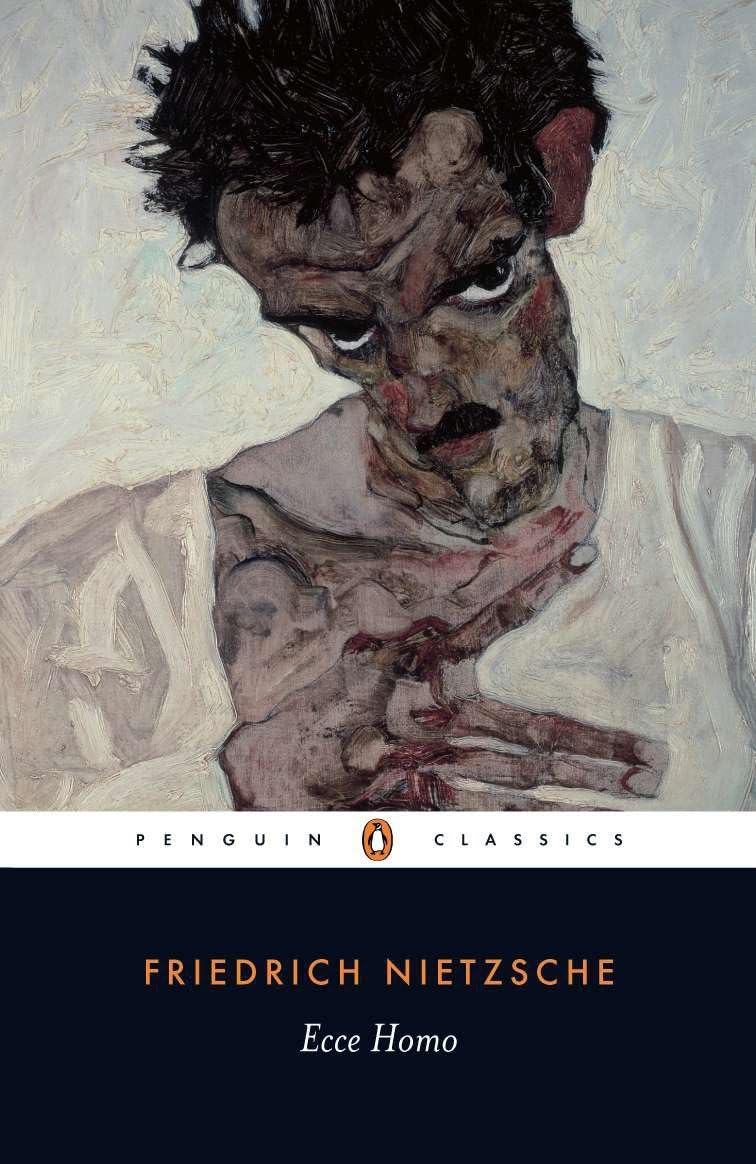
Ecce Homo Summary
By Friedrich Nietzsche
How One Becomes What One is
Summary preview
Here I stand, with a book that is less a confession than a trumpet blast. It asks a wild question, almost indecent in its frankness. How does one become what one is? That is the pulse of Ecce Homo. Not a modest memoir, not a sober account of dates and achievements, but a self portrait painted in bright, dangerous colors. The speaker looks back over his life and work, not to ask forgiveness, not to seek agreement, but to tell you what kind of fate has taken shape in him and why it matters. Friedrich Nietzsche writes as a man who feels himself standing at the edge of a great turning. He believes his books are not mere books. They are signals of a coming storm, preparations for a revaluation of all values. So he does something astonishing. He presents himself as the necessary bearer of this task. The tone shocks on purpose. He praises himself lavishly, names his own greatness, and treats his life as if it were a key to understanding a future earthquake in culture. If this sounds arrogant, that too is part of the challenge. He wants to expose how deeply we cling to false humility, herd feeling, and moral habits that weaken life. Yet beneath the boldness there is something more delicate and human. This is also a book about health, climate, food, solitude, timing, friendship, suffering, and style. The grand destiny rests on tiny details. A badly chosen place to live can cloud thought. The wrong meal can darken the spirit. Resentment can poison the body. To understand a philosopher, he suggests, you must understand the conditions under which thought becomes possible. For example, he tells us where his ideas came to him, how certain landscapes sharpened him, and why illness itself became a school of insight. He does not present suffering as noble in itself. He presents it as material that can be transformed into strength. The book moves through several lively chapters, each with its own theatrical question. Why am I so wise? Why am I so clever? Why do I write such good books? Why am I a destiny? These headings are not jokes alone, though there is plenty of mischief in them. They are ways of clearing space around his work so it can be heard properly. He wants to correct misunderstandings, distinguish himself from national vanity, religion, pessimism, and cheap idealism, and explain the inner thread running through books such as The Birth of Tragedy, Thus Spoke Zarathustra, Beyond Good and Evil, Twilight of the Idols, The Antichrist, and others. So the real drama of Ecce Homo is not simply self praise. It is self interpretation. It is a final guided tour through a life devoted to saying Yes to existence without disguise. It is the voice of someone who wants to be read slowly, musically, physiologically, and courageously. If you listen closely, you hear both laughter and lightning.
Sign up to continue reading
Get access to full book summaries, audio of the summaries, and many more.
Similar Books
Books with a similar vibe—explore more like this.
Every Time I Find the Meaning of Life, They Change It
Daniel Klein
Wisdom of the Great Philosophers on How to Live
4.7 (28)25 mins
How Proust Can Change Your Life
Alain de Botton
Valuable Insights Into Living Your Best Life
4.6 (74)24 mins
The Four Agreements
Don Miguel Ruiz & Janet Mills
A Practical Guide to Personal Freedom
4.3 (913)21 mins
The Art of Worldly Wisdom
Baltasar Gracián y Morales
A Pocket Oracle
4.3 (101)19 mins
The Art of Insubordination
Todd B. Kashdan
How to Dissent and Defy Effectively
4.1 (314)24 mins
Surrender to Lead
Jessica Kriegel, Joe Terry
The Counterintuitive Approach to Driving Extraordinary Results
4.9 (7)21 mins
Girl Code
Cara Alwill Leyba
Secrets to Sanity and Success for the Female Entrepreneur
4.9 (4)21 mins
The Gift of Struggle
Bobby Herrera
Life-Changing Lessons About Leading
4.8 (22)21 mins
The Opposite of Settling
Case Kenny
Get What You Want in Love and Life, Without Losing Your Spark
4.8 (13)25 mins
Discipline Is Destiny
Ryan Holiday
The Power of Self-Control
4.8 (891)19 mins