
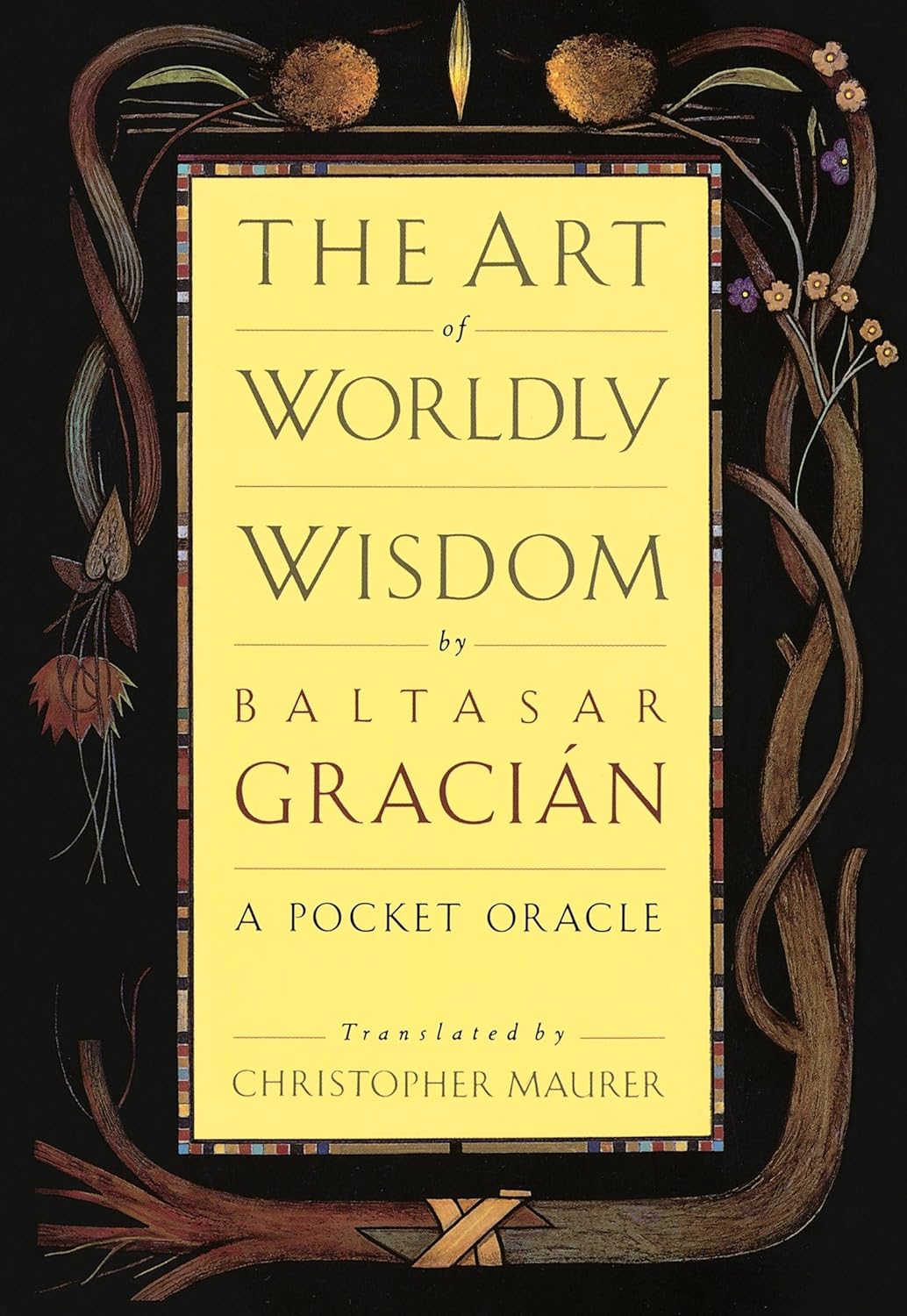
The Art of Worldly Wisdom Summary
By Baltasar Gracián y Morales
A Pocket Oracle
Summary preview
There are books that tell a tale, and there are books that hand you a lamp for walking through a difficult world. The Art of Worldly Wisdom belongs to the second kind. Baltasar Gracián y Morales does not sit you down for long argument or heavy theory. He gives you compact counsels, sharp as arrows and polished like mirrors, so that each one may show you something about yourself, about other people, and about the hidden rules of success. He writes for those who must live among ambition, vanity, envy, friendship, power, deception, and chance. In other words, he writes for anyone who must live among human beings. The book is made of three hundred maxims, each brief, but each carrying the weight of long experience. Together they form a manual for prudence. Their purpose is not to make you cynical, though they know well the crookedness of the world. Their purpose is to make you discerning. The world, as this voice sees it, is a stage crowded with appearances. Men praise what they do not admire, promise what they do not mean, and often judge by surfaces before they can be taught by truth. If you walk into such a world with innocence alone, you will be bruised. If you walk into it with bitterness alone, you will become ugly. So the book teaches another path, one of intelligent self command. You are urged to know your own gifts, hide your weaknesses, choose your company carefully, and act with timing. You must learn when to speak and when to remain silent, when to reveal intention and when to keep something in reserve. Reputation matters, but reputation without substance is smoke. Substance matters, but substance without presentation is buried treasure. So the wise person cultivates both being and seeming, always remembering that appearances open the door and character decides whether one may stay within. The counsels move through every corner of practical life. They speak of friendship and enemies, of authority and service, of learning and wit, of fortune and adversity, of ambition and restraint. Again and again the book returns to one grand lesson. Master yourself if you hope to deal well with others. Passion clouds judgment. Impulse ruins design. Vanity invites manipulation. A person who governs himself gains an inward kingdom that no accident can wholly overthrow. Yet there is also warmth in these pages. The wise life is not merely defensive. It is a life of cultivated excellence. One should become a person of depth, taste, dignity, usefulness, and graceful conduct. Wisdom here is worldly, yes, but not low. It asks you to live alertly, nobly, and effectively. It tells you that greatness is not a gift dropped from heaven. It is an art, practiced in company with reason, patience, courage, and a watchful eye.
Sign up to continue reading
Get access to full book summaries, audio of the summaries, and many more.
Similar Books
Books with a similar vibe—explore more like this.
Every Time I Find the Meaning of Life, They Change It
Daniel Klein
Wisdom of the Great Philosophers on How to Live
4.7 (28) mins
How Proust Can Change Your Life
Alain de Botton
Valuable Insights Into Living Your Best Life
4.6 (74)24 mins

Ecce Homo
Friedrich Nietzsche
How One Becomes What One is
4.4 (21) mins
The Four Agreements
Don Miguel Ruiz & Janet Mills
A Practical Guide to Personal Freedom
4.3 (913)21 mins
The Art of Insubordination
Todd B. Kashdan
How to Dissent and Defy Effectively
4.1 (314)24 mins
Surrender to Lead
Jessica Kriegel, Joe Terry
The Counterintuitive Approach to Driving Extraordinary Results
4.9 (7) mins

Girl Code
Cara Alwill Leyba
Secrets to Sanity and Success for the Female Entrepreneur
4.9 (4) mins
The Gift of Struggle
Bobby Herrera
Life-Changing Lessons About Leading
4.8 (22)21 mins
The Opposite of Settling
Case Kenny
Get What You Want in Love and Life, Without Losing Your Spark
4.8 (13) mins
Discipline Is Destiny
Ryan Holiday
The Power of Self-Control
4.8 (891) mins