
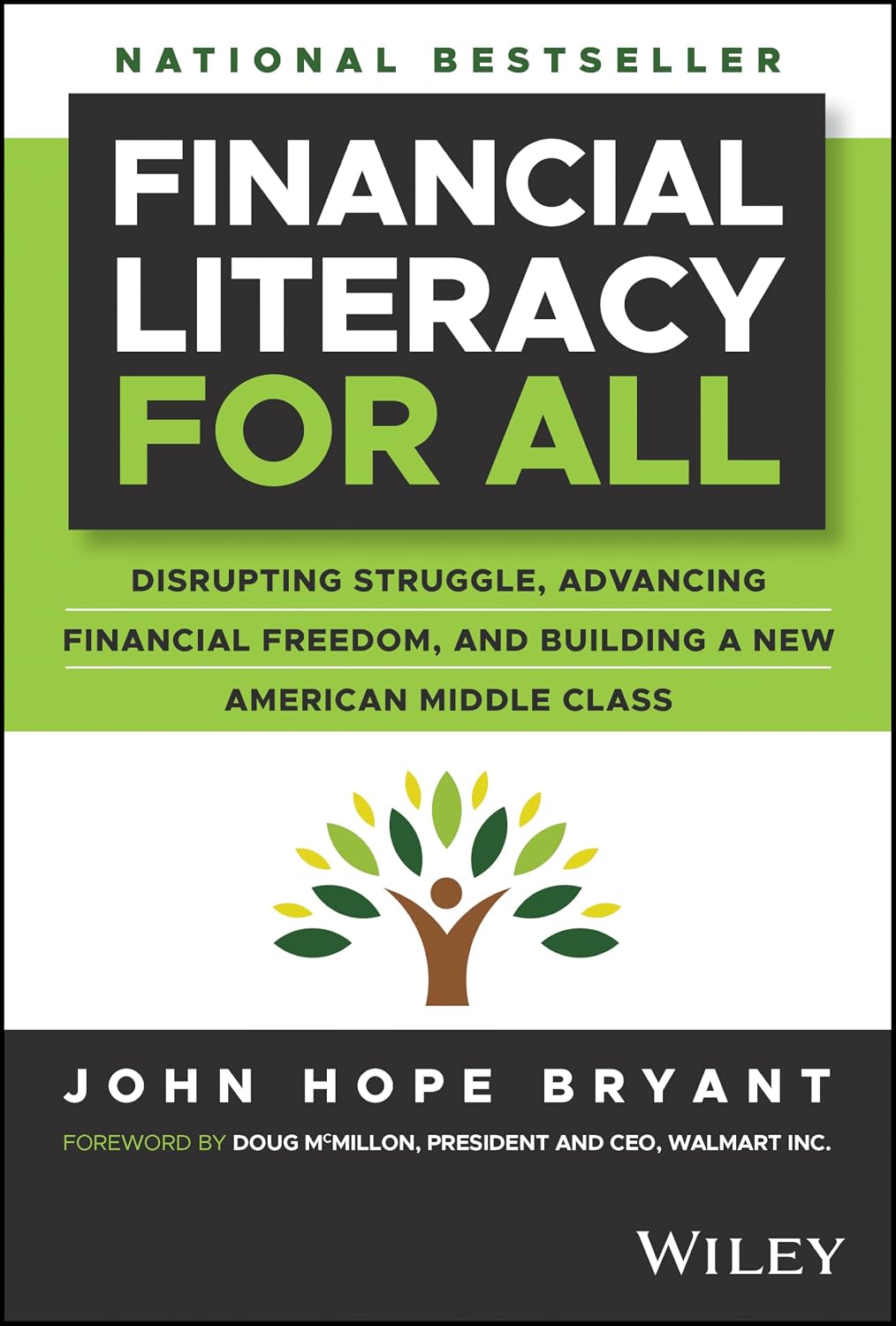
Financial Literacy for All Summary
By John Hope Bryant
Disrupting Struggle, Advancing Financial Freedom, and Building a New American Middle Class
Summary preview
Money touches almost every part of life, yet millions of people are expected to survive in a financial world they were never truly taught to understand. That is the heart of Financial Literacy for All. John Hope Bryant is not just talking about budgets, credit scores, or bank accounts. He is talking about dignity, freedom, confidence, and the power to make choices that can change a family line. The book is a call to wake up and see that financial literacy is not a luxury for the wealthy or a side topic for business schools. It is a basic life skill, as essential as reading and writing, because if you cannot understand how money works, somebody else will always be in a position to control your future. The book moves with urgency, but also with hope. It starts from a painful truth. Too many people have been left outside the language of money. They may work hard, sometimes harder than anyone else, yet still stay stuck because effort alone is not enough in a system built on rules, contracts, interest rates, taxes, debt, and investment. If you do not know the rules, you can be trapped by them. What makes the book powerful is that it does not shame people for what they do not know. It says plainly that the problem is bigger than individual mistakes. Schools have not prepared people. Communities have been underserved. Whole generations have inherited financial habits shaped by scarcity, fear, and exclusion. From there, the message becomes deeply practical. The book explains that financial literacy is about behavior as much as information. You can know a lot and still make poor choices if your mindset is built around survival instead of ownership. So the journey is not just learning terms. It is learning a new way to think. Earn money with purpose. Spend with awareness. Save consistently. Protect your credit. Understand debt before debt understands you. Build assets. Move from consumption to ownership. Teach your children. Repeat the lessons until they become culture. There is also a strong moral voice running through the pages. This book argues that expanding financial literacy can strengthen families, stabilize neighborhoods, and even improve democracy. People with knowledge and a stake in the future are harder to exploit. They can plan, participate, and build. For that reason, the book keeps widening the lens. What begins with personal choices grows into a conversation about schools, policy, business leadership, faith communities, and national priorities. What you get, then, is both a handbook and a movement. It is personal finance with a bigger mission behind it. It wants you to see money not as a mystery, not as a source of shame, and not as a game reserved for somebody else, but as a tool. Learn the tool, respect the tool, and use it well. That is how a paycheck becomes a plan, a plan becomes progress, and progress becomes generational change.
Sign up to continue reading
Get access to full book summaries, audio of the summaries, and many more.
Similar Books
Books with a similar vibe—explore more like this.
Same as Ever
Morgan Housel
A Guide to What Never Changes
4.2 (426)24 mins
The Algebra of Wealth
Scott Galloway
A Simple Formula for Financial Security
3.9 (178)21 mins
A Random Walk Down Wall Street
Burton G. Malkiel
The Time-Tested Strategy for Successful Investing
3.9 (694)17 mins
The Little Book of Market Wizards
Jack D. Schwager
Lessons from the Greatest Traders
4.5 (30)23 mins
Security Analysis
Benjamin Graham & David Dodd
Principles and Techniques
4.4 (748)26 mins
The Money Habit
Mike Michalowicz
The Worry-Free Way to Financial Independence
4.3 (30)21 mins
The Next Millionaire Next Door
Thomas J. Stanley & Sarah Stanley Fallaw
Enduring Strategies for Building Wealth
4.3 (42)19 mins
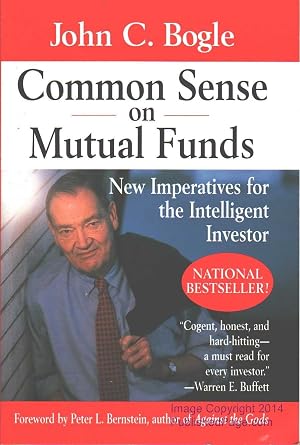
Common Sense on Mutual Funds
John C. Bogle
New Imperatives for the Intelligent Investor
4.3 (11)23 mins
Nomad Capitalist
Andrew Henderson
Reclaim Your Freedom
4.3 (2)21 mins
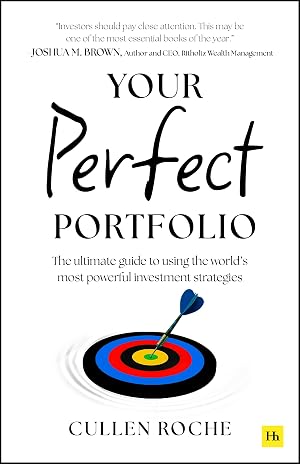
Your Perfect Portfolio
Cullen Roche
How to use the world's most powerful investing strategies
4.2 (18)21 mins