
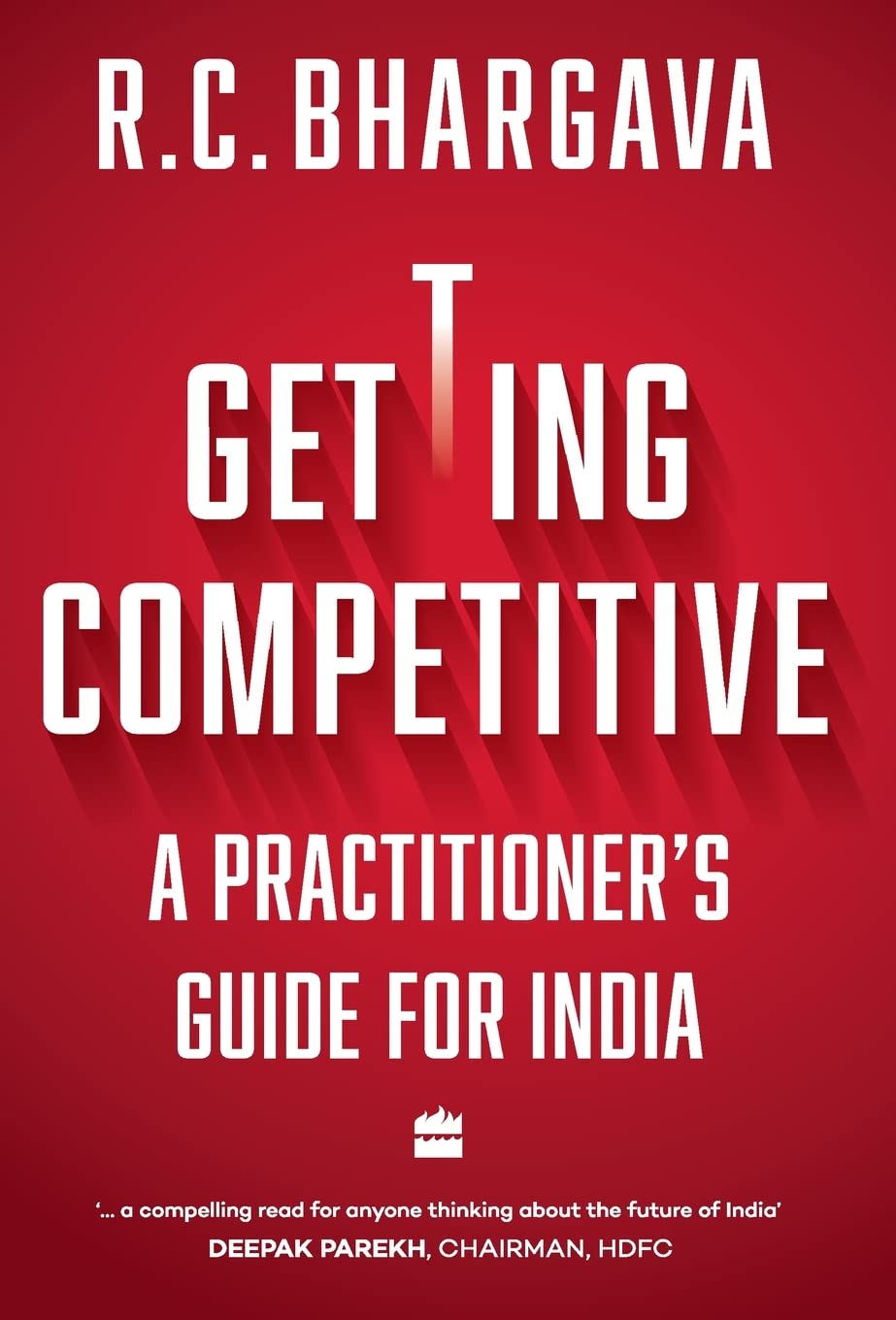
Getting Competitive Summary
By R C Bhargava
A Practitioner's Guide for India
Summary preview
Competition sounds like a simple word. Most people hear it and think of rivalry, lower prices, more choices, and a race to stay ahead. But the real story is deeper. The book explores what it truly takes for a company, an industry, and even a nation to become competitive in a world that keeps changing faster than old habits can handle. It speaks from long experience inside Indian business and public life, and it does so in a voice that is practical rather than theoretical. The argument is clear from the start. Competitiveness is not built by slogans, protection, or temporary fixes. It is built through discipline, clarity, learning, and an honest willingness to change. The setting behind the book matters a great deal. India spent decades in a controlled economy where licenses, permissions, and government protection shaped the behavior of firms. In such an environment, many businesses learned how to manage scarcity, influence regulation, and survive without having to satisfy customers at world standards. Then the walls began to come down. Liberalization exposed firms to better products, stronger systems, and tougher rivals from around the world. That moment created both anxiety and opportunity. Some organizations complained, some froze, and some decided to transform themselves. The book is really about that challenge. How do you move from comfort to capability. How do you build strength when excuses are no longer enough. What makes the book engaging is that it does not talk about competitiveness as an abstract economic concept. It talks about people, managers, workers, suppliers, dealers, governments, and customers. It shows how competitiveness grows from the everyday choices made inside an enterprise. A company becomes strong when it improves quality, reduces waste, invests in people, respects customers, and creates systems that encourage accountability. It becomes weak when it hides behind policy, tolerates inefficiency, and confuses size with excellence. You also sense throughout the book a larger concern about India itself. The message goes beyond one company or one sector. If the country wants growth, jobs, exports, and a better standard of living, it must learn to compete with confidence. That means better infrastructure, more sensible regulation, stronger institutions, and a culture that values performance. It also means replacing old mental habits with a new seriousness about productivity and execution. R C Bhargava writes with the authority of someone who has seen these shifts firsthand. The result is a grounded, persuasive account of why competitiveness matters, what prevents it, and what leaders must do to create it. The book invites you to look at business not as a protected enclosure but as a living test of character, competence, and courage.
Sign up to continue reading
Get access to full book summaries, audio of the summaries, and many more.
Similar Books
Books with a similar vibe—explore more like this.
Competition Demystified
Bruce C. Greenwald & Judd Kahn
A Radically Simplified Approach to Business Strategy
4.4 (648)23 mins

The Brand Benefits Playbook
Allen Weiss, Debbie J. MacInnis
Why Customers Aren't Buying What You're Selling--And What to Do About It
4.8 (803)20 mins

The Science of Scaling
Benjamin Hardy, Blake Erickson
Grow Your Business Bigger and Faster Than You Think Possible
4.8 (22)20 mins

The Heart of Transformation
Michael J. Leckie
Build the Human Capabilities That Change Organizations for Good
4.7 (64)25 mins

Process!
Mike Paton, Lisa González
How Discipline and Consistency Will Set You and Your Business Free
4.6 (5)23 mins

The Startup Lifecycle
Gregory Shepard
The Definitive Guide to Building a Startup from Idea to Exit
4.5 (346)21 mins

High Growth Handbook
Elad Gil
Scaling Startups from 10 to 10,000 People
4.5 (413)19 mins

7 Principles of Transformational Leadership
Hugh Blane
Create a Mindset of Passion, Innovation, and Growth
4.5 (14)27 mins

Grow the Pie
Alex Edmans
How Great Companies Deliver Both Purpose and Profit
4.5 (16)24 mins

The Diary of a CEO
Steven Bartlett
The 33 Laws of Business and Life
4.4 (628)25 mins