
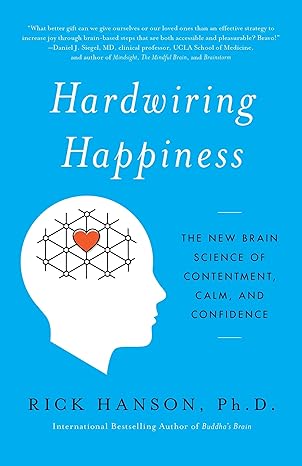
Hardwiring Happiness
By Rick Hanson
The New Brain Science of Contentment, Calm, and Confidence
Introduction
Most of us are good at learning from what hurts. A sharp word, a setback, a fear, a disappointment, these can sink in fast. The brain is built to notice danger and remember it. That helped our ancestors survive, but it often leaves us carrying too much stress, self doubt, resentment, and sadness. Meanwhile, the good in life, a kind glance, a sense of accomplishment, a moment of peace, often passes through us like water through a sieve. We have a good day, and then one criticism wipes it out. We are loved, yet we still feel not quite safe, not quite enough. The heart of this book is simple and deeply hopeful. You can change that. Hardwiring Happiness is about turning passing moments of well being into lasting inner strengths. It shows how to take the ordinary experiences of everyday life and help them become part of you. Not by pretending life is perfect. Not by denying pain. Not by covering over real wounds with positive thinking. Instead, the invitation is to grow resources inside yourself so you can meet life as it is. More calm in the face of pressure. More confidence when self criticism flares. More gratitude when the mind wants to dwell on lack. More love, resilience, and peace. The core idea rests on a striking truth from neuroscience. The brain changes with experience. What you repeatedly feel and focus on gradually shapes neural structure. As the saying goes, “neurons that fire together, wire together.” If you keep having anxious, irritated, or defeated reactions, those pathways can grow stronger. But if you repeatedly take in experiences of safety, satisfaction, and connection, and really let them land, you can build those pathways too. This is not abstract theory. It is practical training for the mind. Rick Hanson offers a method called HEAL, a clear way to help beneficial experiences become woven into the brain. Have a positive experience. Enrich it. Absorb it. And, when appropriate, Link positive and negative material so old pain can be soothed and gradually replaced. The method is gentle, grounded, and flexible. You can use it in a few breaths while washing dishes, sitting in traffic, talking with a friend, or remembering someone who cares about you. What follows is both a science based guide and a compassionate way of living. It explores why the brain has a negativity bias, how inner strengths are built, how to use attention skillfully, and how to nourish key needs for safety, satisfaction, and connection. Along the way, there are stories, examples, and simple practices that make the ideas feel close to home. The overall message is wonderfully empowering. Lasting happiness is not something you chase outside yourself. It is something you can grow, little by little, inside your own nervous system and your own life.
Sign up to continue reading
Get access to full book summaries, audio of the summaries, and many more.
Similar Books
Books with a similar vibe—explore more like this.
The How of Happiness
Sonja Lyubomirsky
A New Approach to Getting the Life You Want
4.6 (309)27 mins

My Grandmother's Hands
Resmaa Menakem
Racialized Trauma and the Pathway to Mending Our Hearts and Bodies
4.6 (167)30 mins
Together
Vivek H. Murthy
The Healing Power of Human Connection in a Sometimes Lonely World
4.6 (820)23 mins
Positivity
Barbara L. Fredrickson
Top-Notch Research Reveals the 3 to 1 Ratio That Will Change Your Life
4.5 (984)26 mins
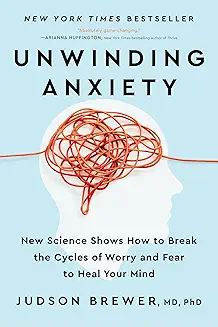
Unwinding Anxiety
Judson Brewer
New Science Shows How to Break the Cycles of Worry and Fear to Heal Your Mind
4.5 (421)33 mins
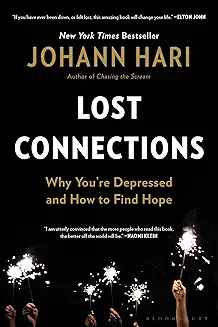
Lost Connections
Johann Hari
Uncovering the Real Causes of Depression – and the Unexpected Solutions
4.5 (1028)34 mins
Come as You Are
Emily Nagoski
The Surprising New Science That Will Transform Your Sex Life
4.5 (1394)34 mins

Atlas of the Heart
Brené Brown
Mapping Meaningful Connection and the Language of Human Experience
4.5 (1028)31 mins

Reasons to Stay Alive
Matt Haig
An optimistic memoir about depression and anxiety
4.5 (923)27 mins

Can't Even
Anne Helen Petersen
How Millennials Became the Burnout Generation
4.4 (429)23 mins