
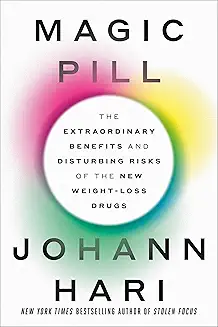
Magic Pill Summary
By Johann Hari
The Extraordinary Benefits and Disturbing Risks of the New Weight-Loss Drugs
Summary preview
For a long time, we were told a strange modern fairy tale about fat, hunger, and willpower. The story said that if you became very overweight, it was mostly because you were weak, greedy, or lazy. It said your body was like a machine and your mind was the driver. So if you ate too much, the answer was simple. Grip the wheel harder. Show some discipline. Count your calories. Push away the plate. If you failed, that failure was supposed to tell you something shameful about who you are. This book begins by saying that story is not just cruel. It is wrong. It has trapped millions of people in misery, self hatred, and confusion. The real question is not why some people lack willpower. The real question is why so many human bodies, all over the world, have been pushed into a state where they are desperately trying to gain weight and then cling to it. Once you ask that question, the whole landscape changes. You stop staring at the individual in front of the fridge and start looking at the forces that have shaped appetite, metabolism, food, stress, sleep, movement, and the way modern life hijacks all of them. Johann Hari sets out to understand this by doing something deeply personal and very public. He looks at the explosion of the new weight loss drugs that many people are calling a miracle, a revolution, even a magic pill. He tries them himself. He watches his own body change. He feels the strange quieting of hunger. He sees how rapidly the world is reorganizing itself around these medications. But instead of stopping at a simple before and after story, he asks a bigger question. If these drugs work so well for many people, what exactly are they fixing. Are they solving the whole problem, or only one part of it. What follows is part memoir, part investigation, and part moral challenge. We move through laboratories, clinics, supermarkets, schools, support groups, policy debates, and the intimate hidden places where people suffer in silence. We meet scientists who explain that body weight is tightly regulated by biology, not chosen in the way we pretend. We meet people who have been shamed by doctors, family, and strangers, and who discover with shock that their hunger was never imaginary. We also meet critics who worry that the rush toward medication could distract us from changing the poisoned environment that helped create this crisis in the first place. The result is a book about much more than weight. It is about power, profit, stigma, class, trauma, and the stories a society tells about blame. It is about the relief of finally being believed by your own body. It is also about the danger of thinking there is one neat pharmaceutical answer to a mess built over decades. The promise of a magic pill is real, but the book keeps pulling us back to a harder truth. Hunger is biological, yes. But it is...
Sign up to continue reading
Get access to full book summaries, audio of the summaries, and many more.
Similar Books
Books with a similar vibe—explore more like this.
Hidden Valley Road
Robert Kolker
Inside the Mind of an American Family
4.5 (893)32 mins

The Song of Roland
Anonymous
Enter a World of Medieval Heroism, Where Honor Reigns Supreme
4.9 (3)20 mins
Livewired
David Eagleman
The inside story of the Ever-changing brain
4.8 (544)28 mins
Why We Sleep
Matthew Walker
Unlocking the Power of Sleep and Dreams
4.8 (1560)17 mins

Utilitarianism
John Stuart Mill
Explore a Timeless Ethics Classic
4.8 (46)24 mins
Every Living Thing
Jason Roberts
The Great and Deadly Race to Know All Life
4.8 (7)22 mins
The Midnight Library
Matt Haig
A Fantasy Novel About the Choices That Lead to a Life Well-Lived
4.7 (4782)32 mins
My Grandmother's Hands
Resmaa Menakem
Racialized Trauma and the Pathway to Mending Our Hearts and Bodies
4.6 (167)30 mins

Losing Eden
Lucy Jones
Why Our Minds Need the Wild
4.6 (641)28 mins

Frankenstein
Mary Shelley
The Modern Prometheus
4.6 (419)24 mins