
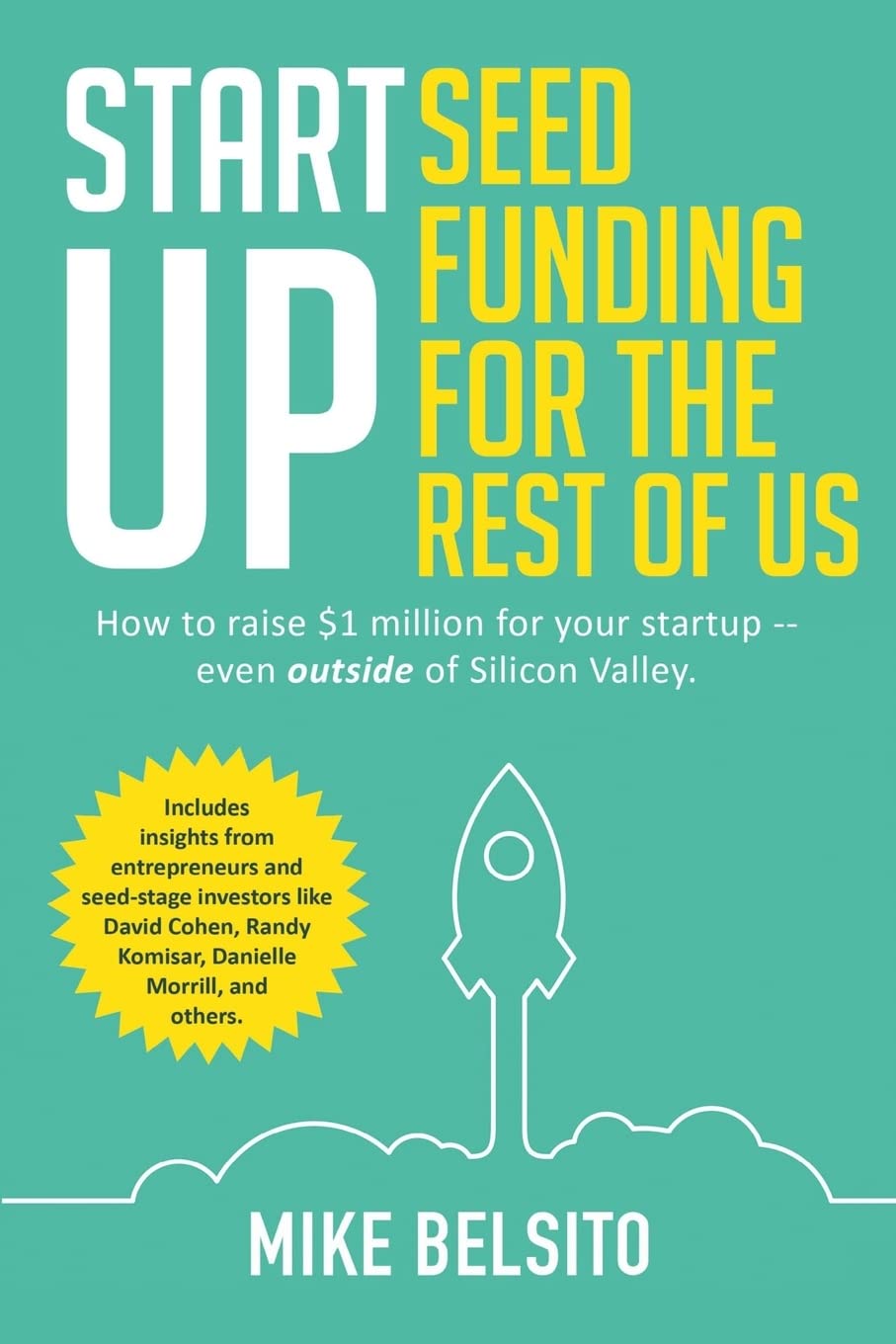
Startup Seed Funding for the Rest of Us Summary
By Mike Belsito
How to Raise $1 Million for Your Startup – Even Outside of Silicon Valley
Summary preview
Most startup advice is written for the tiny slice of companies that fit the classic venture capital story. It assumes you are building in Silicon Valley, chasing explosive growth, and pitching investors who want billion dollar outcomes. This book pushes back on that narrow picture. It speaks to founders building real businesses in the rest of the country, often outside the major tech hubs, often without wealthy networks, and often without a clear path to the kind of venture financing that gets all the headlines. The core message is simple and freeing. Raising seed capital is possible even if you are not the kind of company traditional VCs usually chase. But to do it well, you need to understand what kind of business you are building, what kind of money actually fits it, and how to approach fundraising in a practical, human way. Mike Belsito writes from lived experience. He knows what it is like to build far from the coasts, to piece together early capital from angels, seed funds, customers, and personal relationships, and to navigate a fundraising landscape that rarely feels designed for everyday founders. That perspective gives the book its heartbeat. This is not a glossy fantasy about overnight success. It is a guide for entrepreneurs who are serious, resourceful, and willing to do the hard work of matching their company with the right funding path. One of the most valuable things the book does is widen the lens. It explains that startup financing is not one thing. There are many ways to fund a young company, and not every dollar is equal. Some money comes with expectations of rapid scale and big exits. Some money is patient. Some money is relational. Some money is expensive in hidden ways even if it looks easy at first. The book helps you sort through all of that. It asks you to get honest about your growth ambitions, your business model, your market size, and your own goals as a founder. Only then can you choose wisely. Along the way, the book breaks fundraising into understandable parts. It looks at bootstrapping, friends and family capital, angel investors, seed funds, accelerators, equity crowdfunding, bank loans, revenue based approaches, and more. It also gets into the mechanics that founders tend to find intimidating, such as valuation, notes, SAFEs, cap tables, investor updates, and the actual process of asking for money. Just as important, it talks about trust. Investors are betting on people before they are betting on spreadsheets. So the way you build relationships, tell your story, show traction, and demonstrate self awareness matters a lot. What makes the whole thing work is its grounded tone. You are not told to imitate unicorn founders or memorize buzzwords. You are encouraged to build a company that makes sense, to seek capital that aligns with reality, and to remember that fundraising is a tool, not the mission. The mission is building something valuable. Money can help, but only if it helps you build the...
Sign up to continue reading
Get access to full book summaries, audio of the summaries, and many more.
Similar Books
Books with a similar vibe—explore more like this.

Girl Code
Cara Alwill Leyba
Secrets to Sanity and Success for the Female Entrepreneur
4.9 (4)21 mins

The Brand Benefits Playbook
Allen Weiss, Debbie J. MacInnis
Why Customers Aren't Buying What You're Selling--And What to Do About It
4.8 (803)20 mins
The Science of Scaling
Benjamin Hardy, Blake Erickson
Grow Your Business Bigger and Faster Than You Think Possible
4.8 (22)20 mins
The Fixer
Bradley Tusk
Saving Startups from Death by Politics
4.8 (5)32 mins
No One Succeeds Alone
Robert Reffkin
Learn Everything You Can from Everyone You Can
4.8 (9)23 mins
The Toyota Way
The Toyota Way
14 Management Principles from the World's Greatest Manufacturer
4.7 (661)21 mins
The Obstacle is the Way
Ryan Holiday
The Timeless Art of Turning Trials into Triumph
4.7 (959)30 mins

Steve Jobs#
Walter Isaacson
The penetrating biography of Steve Jobs.
4.7 (29)39 mins
Clockwork
Mike Michalowicz
Design Your Business to Run Itself
4.7 (46)29 mins
The Gap and the Gain
Dan Sullivan with Benjamin Hardy
The High Achievers' Guide to Happiness, Confidence, and Success
4.7 (376)22 mins