
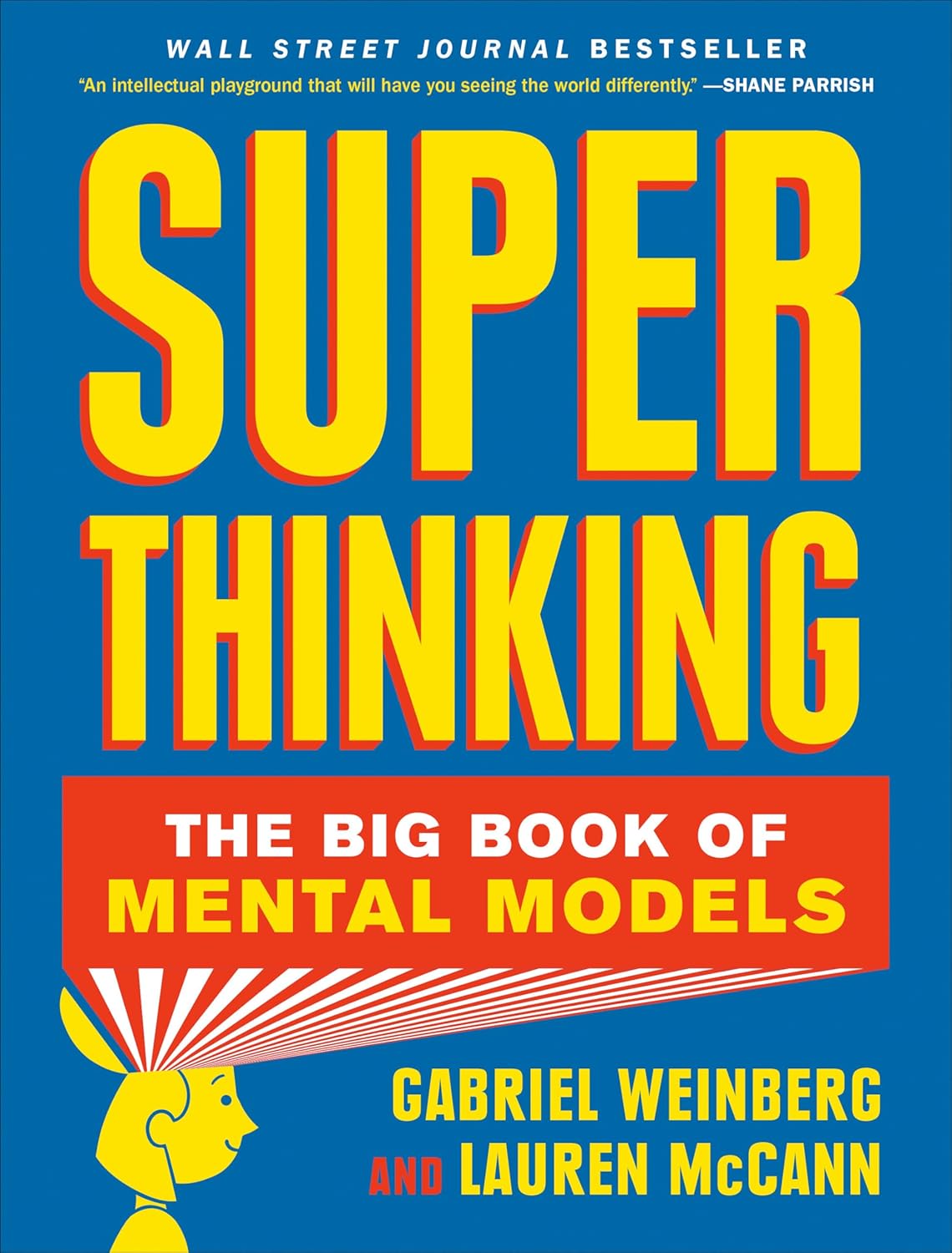
Super Thinking Summary
By Gabriel Weinberg with Lauren McCann
The Big Book of Mental Models
Summary preview
Most of us walk through life using our minds in a strangely limited way. We rely on habits, hunches, and whatever explanation happens to come first. Sometimes that works fine. But often it leaves us making avoidable mistakes, missing better options, and feeling confused by problems that are not actually as messy as they seem. The big idea here is simple and powerful. You can think better by learning mental models, which are just the most useful ways of understanding how the world works. That is the heart of Super Thinking by Gabriel Weinberg with Lauren McCann. The book is really an invitation to upgrade your mind. Not by becoming a genius overnight, and not by memorizing complicated theories for their own sake, but by collecting practical models you can use every day. A mental model helps you see patterns. It gives you a shortcut to what matters. It can help you decide, predict, persuade, plan, and avoid traps. In other words, it can help you live more wisely. A lot of us already use a few mental models without naming them. We think about incentives when we wonder why someone acted a certain way. We think about compounding when we save money or build a skill over time. We think about opportunity cost when we choose one thing and give up another. The trouble is that most people only have a handful of these tools, and they use them inconsistently. When all you have is one favorite lens, every problem starts to look the same. The book pushes back against that. It says you need a toolkit, not a single trick. What makes the approach especially useful is that it stays grounded. The models come from many places, including business, psychology, economics, science, and everyday experience, but they are always brought back to ordinary life. You are shown how to make better choices at work, in relationships, in money, in learning, and in personal goals. The aim is not to impress you with abstract knowledge. The aim is to help you notice hidden causes, ask better questions, and choose more effectively. Along the way, there is also an important warning. Mental models are powerful, but they are not magic. Use the wrong model, or use a good one at the wrong time, and you can fool yourself just as easily. So the deeper lesson is not only to collect models, but to hold them lightly, compare them, and keep testing them against reality. As the book puts it, the value comes from having a “latticework” of models rather than a single framework. What follows is a journey through that latticework. You will see how the best models reveal what drives behavior, why systems behave in surprising ways, how decisions can be sharpened, and where human judgment so often goes off track. By the end, the world does not become simpler exactly, but it does become more legible. And once you can see more clearly, you can act with a...
Sign up to continue reading
Get access to full book summaries, audio of the summaries, and many more.
Similar Books
Books with a similar vibe—explore more like this.
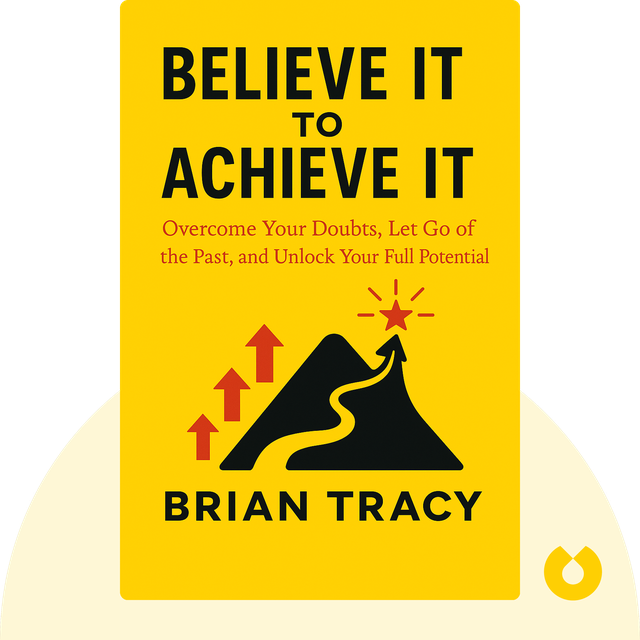
Believe It to Achieve It
Brian Tracy, Christina Stein
Overcome Your Doubts, Let Go of the Past, and Unlock Your Full Potential
4.8 (32)22 mins

The New Emotional Intelligence
Travis Bradberry
Master your emotional skills for lasting success
4.7 (48)22 mins
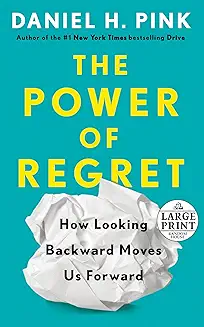
The Power of Regret
Daniel H. Pink
How Looking Backward Moves us Forward
4.5 (1024)22 mins
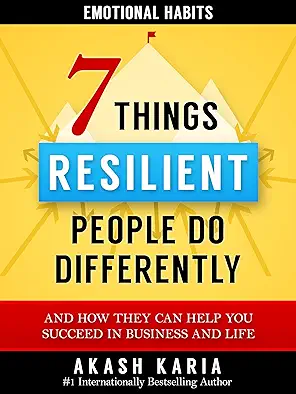
Emotional Habits
Akash Karia
7 Things Resilient People Do Differently
4.4 (300)23 mins
The Laws of Human Nature
Robert Greene
What affects your day-to-day life
4.4 (940)32 mins
How Highly Effective People Speak
Peter Andrei
How High Performers Use Psychology to Influence With Ease
4.4 (153)21 mins

Insight
Tasha Eurich
Why We're Not as Self-Aware as We Think, and How Seeing Ourselves Clearly Helps Us Succeed at Work and in Life
4.4 (49)31 mins

The Psychology of Winning
Denis Waitley
Ten Qualities of a Total Winner
4.4 (66)35 mins
Crucial Conversations
Kerry Patterson, Joseph Grenny, Ron McMillan, Al Switzler
Tools for Talking When Stakes Are High
4.3 (658)32 mins
The Power to Change
Campbell Macpherson
How to Harness Change to Make It Work for You
4.3 (121)28 mins